Artwork
The Fourth Month (from the series Fashionable Monthly Visits to Temples in the Four Seasons)
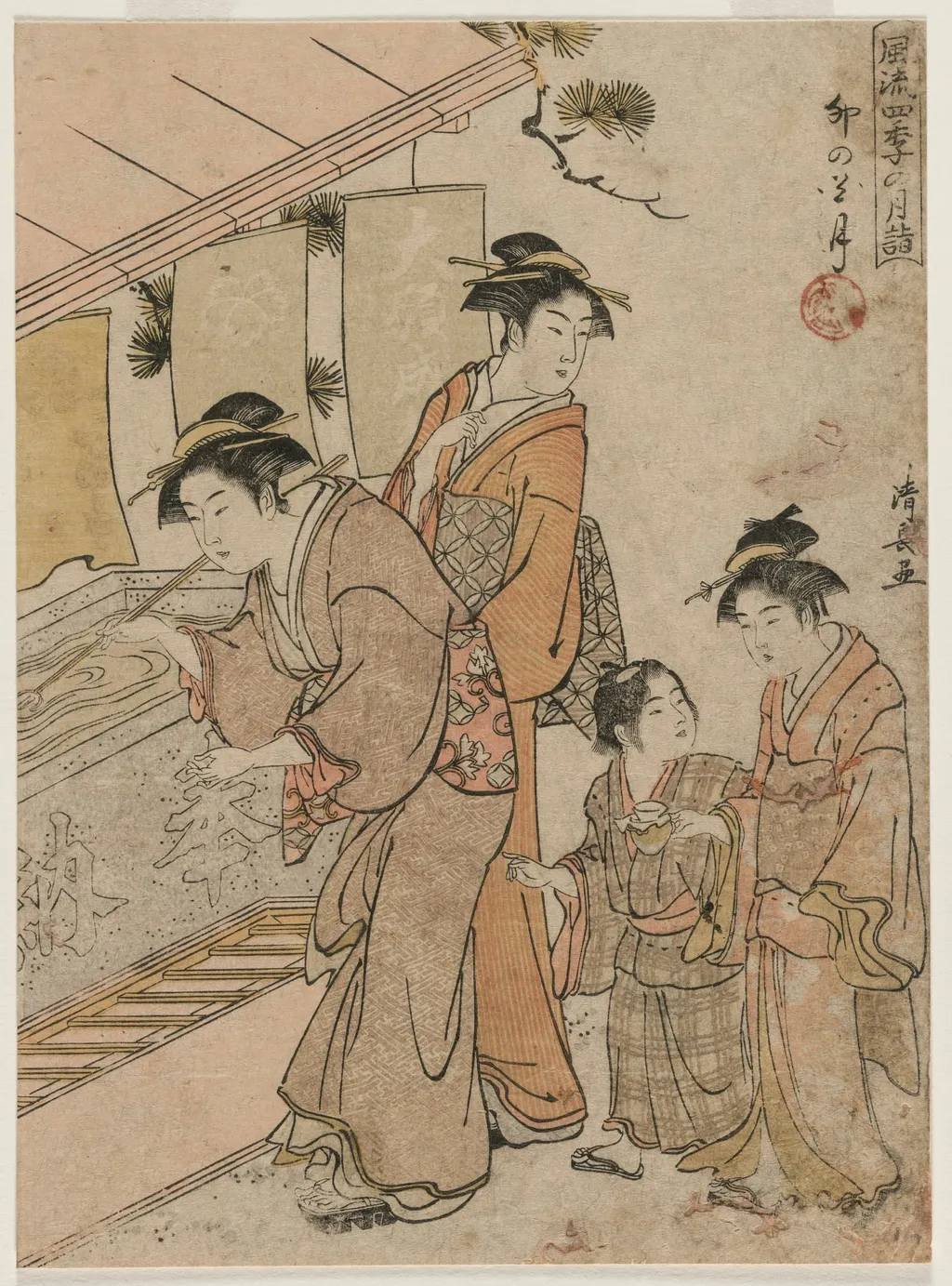
The Fourth Month (from the series Fashionable Monthly Visits to Temples in the Four Seasons) is a print by the Romanticist artist Torii Kiyonaga. It dates from 1784 and is held in the collection of the Cleveland Museum of Art.
About this work
Overview
It captures a moment of quiet movement through a temple grounds in spring, rendered in the ukiyo-e tradition with muted tones and delicate linework.
Created in 1784 by Torii Kiyonaga, this woodblock print is part of a twelve-part series depicting seasonal temple visits among Edo’s urban elite. It captures a moment of quiet movement through a temple grounds in spring, rendered in the ukiyo-e tradition with muted tones and delicate linework. The print is now in the collection of The Cleveland Museum of Art, where it serves as an example of late 18th-century Japanese civilian life.
Subject & Meaning
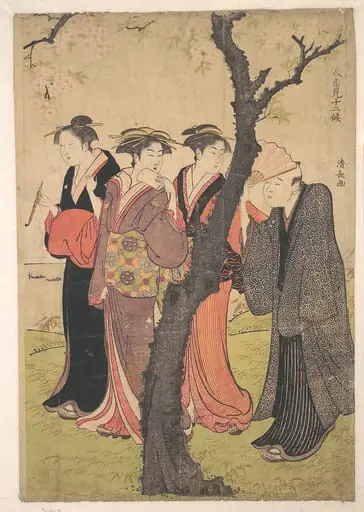
The scene portrays four figures—two women in ornate kimono engaged in conversation, a younger woman, and a child carrying a small bag—strolling near a temple structure. Their attire and demeanor suggest middle- to upper-class status, reflecting the cultural practice of seasonal temple visits as both religious and social rituals. The calm, unhurried pace implies a moment of respite from urban life, emphasizing quiet contemplation over spectacle.
Technique & Style
Kiyonaga employs fine, controlled lines to define robes and architecture, with subtle gradations of color to suggest light and texture. The robes feature intricate, softly rendered patterns, while the background is minimized to focus attention on the figures. Soft shading and limited palette—predominantly pale pinks, grays, and greens—create a serene atmosphere. The composition balances verticality and horizontal movement, typical of Kiyonaga’s mature style.
History & Provenance
Produced during the height of Kiyonaga’s career, this print was part of a commercially published series commissioned for the Edo market. It circulated widely as a collectible print, reflecting the public’s interest in seasonal customs. The Cleveland Museum of Art acquired it in the 20th century as part of its growing collection of Japanese prints, preserving it as a representative work of late Edo-period printmaking.
Context
In late 18th-century Edo, temple visits during seasonal transitions were common among townspeople, blending spiritual observance with leisure. Artists like Kiyonaga documented these rituals, transforming everyday activities into refined visual narratives. This print aligns with a broader trend in ukiyo-e that elevated ordinary moments into aesthetic experiences, catering to a growing literate and affluent urban class.
Legacy
Kiyonaga’s series helped define the genre of seasonal ukiyo-e, influencing later artists in their depiction of daily life. While not as widely known as some of his contemporaries’ works, this print remains a quiet testament to the elegance of Edo-period social customs. Its preservation in major collections ensures continued study of how art reflected the rhythms of civilian life in pre-modern Japan.
Artist & collection

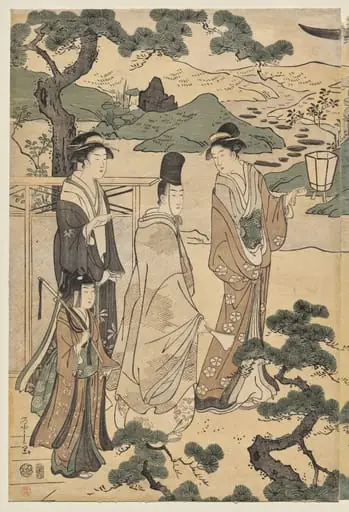 The Matsukaze Chapter of the Tale of Genji (from the series The Tale of Genji in Elegant Modern Dress)
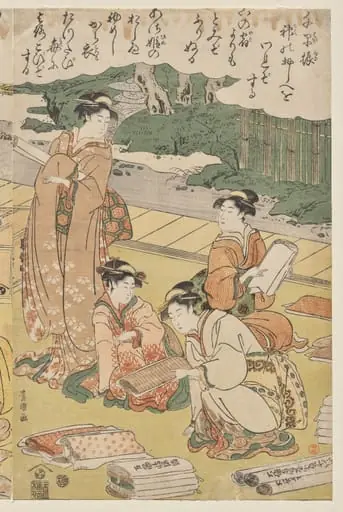 Women Making Clothing
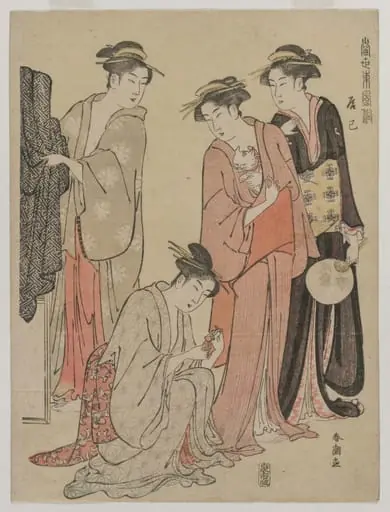 Women of the Tatsumi District (from the series Eastern Customs of the Present Day)
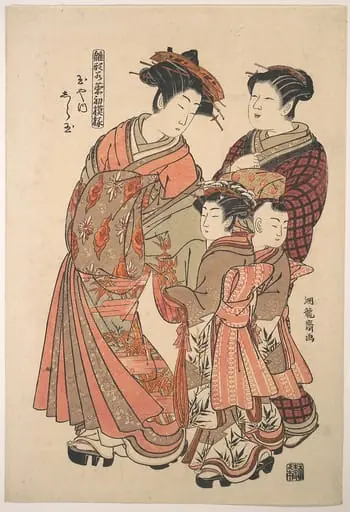 『雛形若菜初模様 玉や内 しら玉』|The Courtesan Shiratama of the Tamaya Brothel, from the series “A Pat-tern Book of the Year’s First Designs, Fresh as Spring Herbs” (“Hinagata wakana hatsu moyō”)
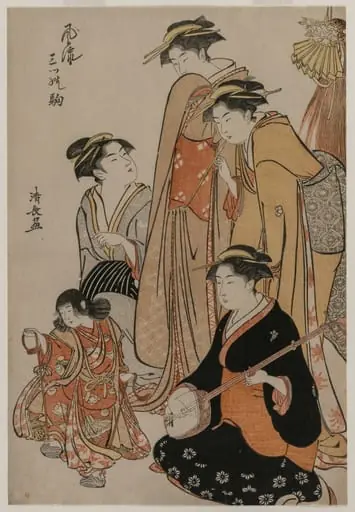 Women Watching a Girl Dance on Shells (From the series Fashionable Presentations of Three Horses)
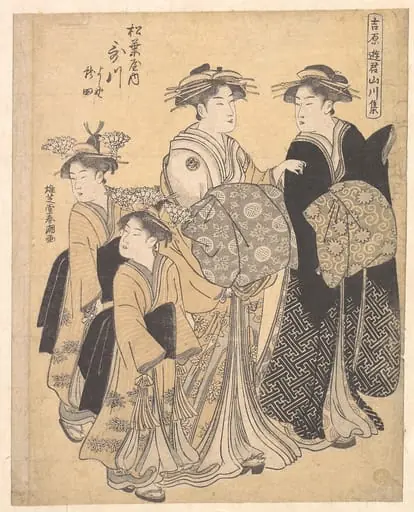 Untitled
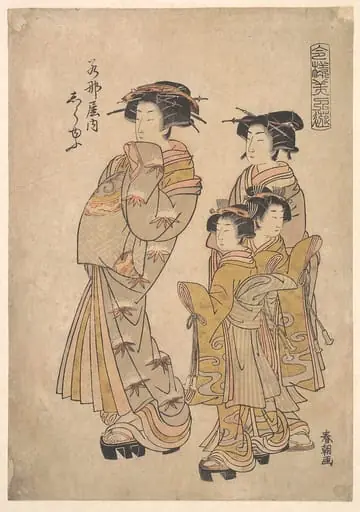 Untitled
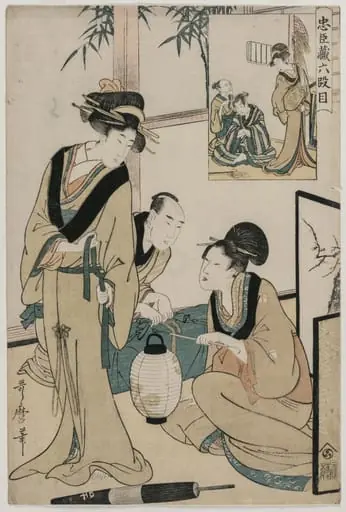 Chushingura: Act VI of The Storehouse of Loyalty
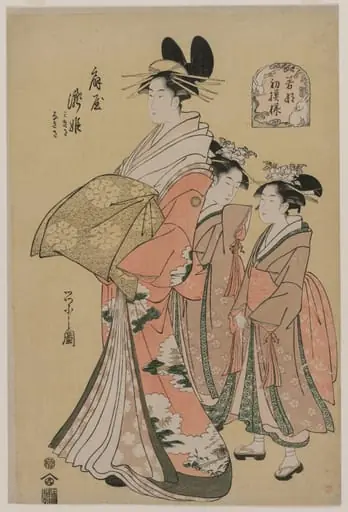 The Courtesan Takihime and Attendants (from the series New Patterns of Young Greens)
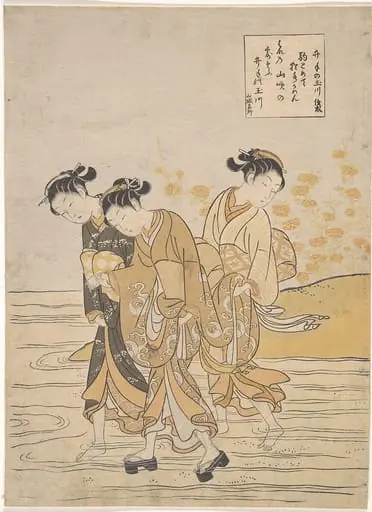 井手の玉川|Jewel River at Ide (Ide no Tamagawa)