Artwork
Cârciumă
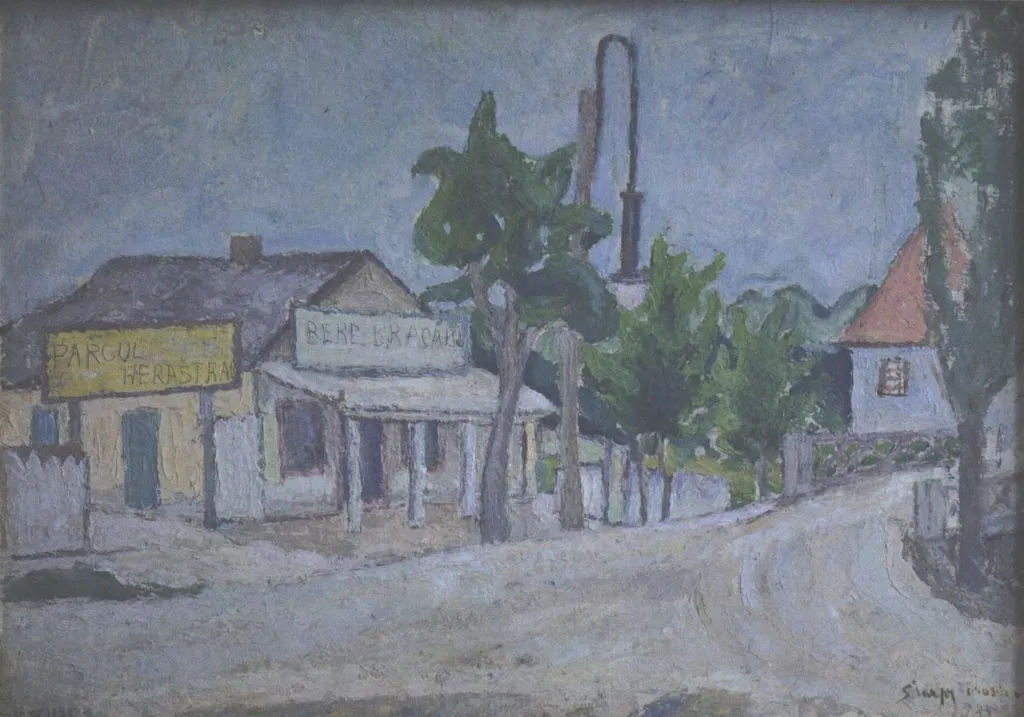
Cârciumă is a print by Sirarpy Torossian. It dates from 950 and is held in the collection of the Bucharest Municipality Museum.
About this work
Overview
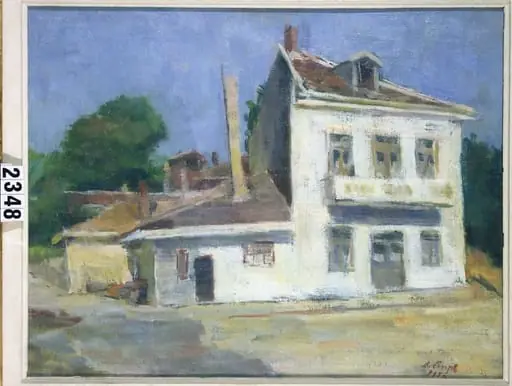
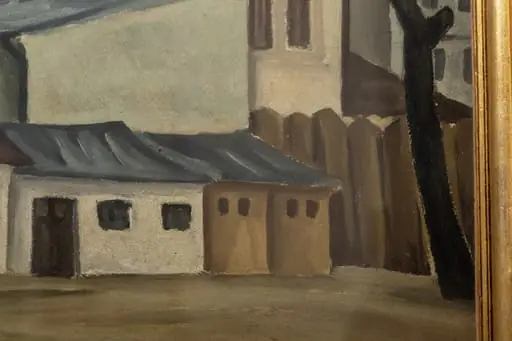
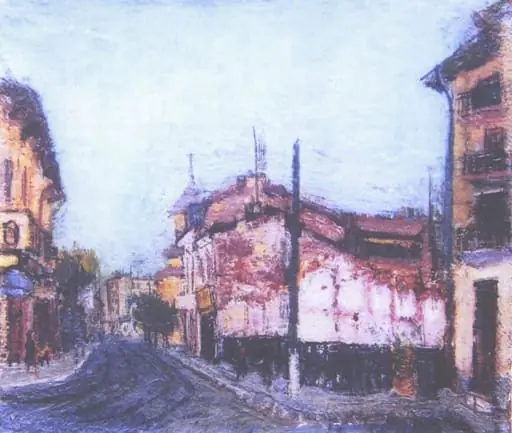
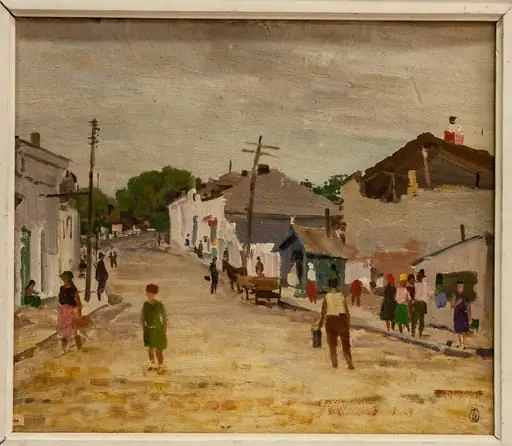
Cârciumă, attributed to Sirarpy Torossian and dated to around 950, is part of the collection of the Museum of Ethnography. The work presents a modest urban scene rendered in a subdued palette, offering a quiet glimpse into a daily setting rather than a staged tableau.
Subject & Meaning
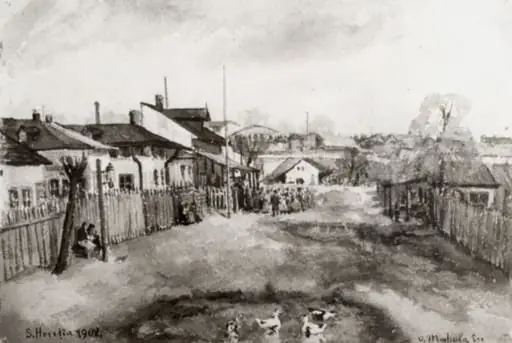
The composition depicts a narrow street flanked by three unadorned structures. A yellow sign bearing the words “Parcul Herăstrău” and a white façade marked “Becuri Brașov” suggest communal spaces, perhaps a tavern or rest stop, hinting at the social function of the locale.
Technique & Style
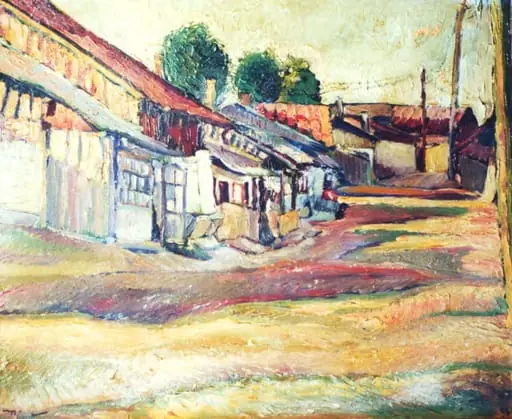
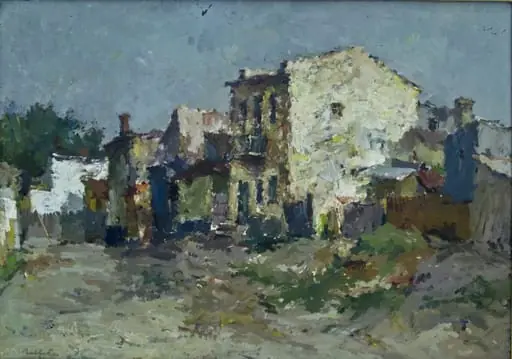
Executed with loose brushwork, the painting merges muted blues, yellows, and grays, allowing forms to dissolve into one another. The handling of paint emphasizes atmosphere over detail, creating a sense of immediacy akin to a candid snapshot of ordinary life.
History & Provenance
The piece entered the Museum of Ethnography’s holdings at an unspecified date, where it remains catalogued under the title Cârciumă. Its attribution to Torossian and its early dating are based on museum records.
Context
Set within a period traditionally associated with early medieval art, the work’s modest scale and everyday subject contrast with the more formal religious imagery of its era, reflecting a localized visual culture focused on communal gathering places.
Artist & collection
Artist
Sirarpy Torossian made paintings and prints in the mid-1900s. Two works to know are the 1945 painting Nud and the print Cârciumă. Nud shows a figure without clothes—simple, direct lines and quiet colors. Cârciumă…