Artwork
Casă de la Tulcea
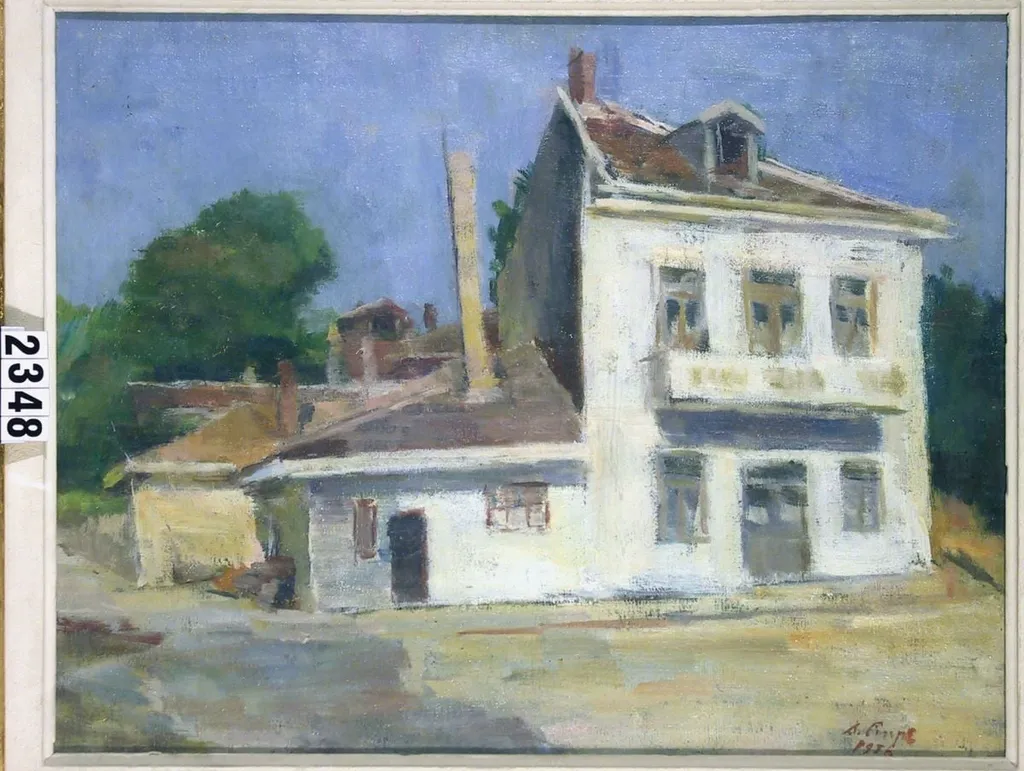
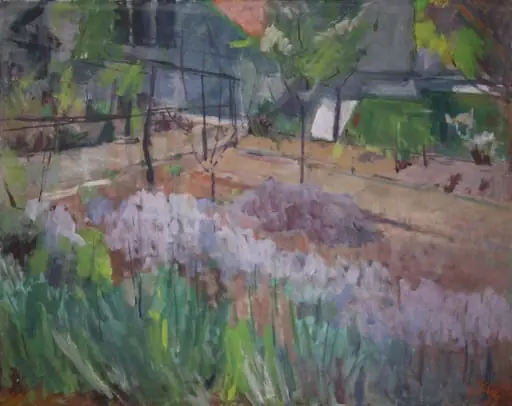
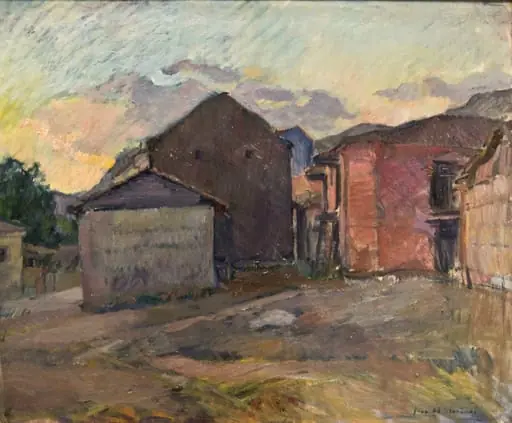
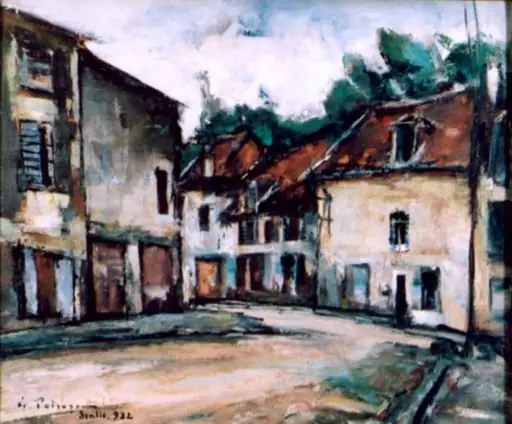
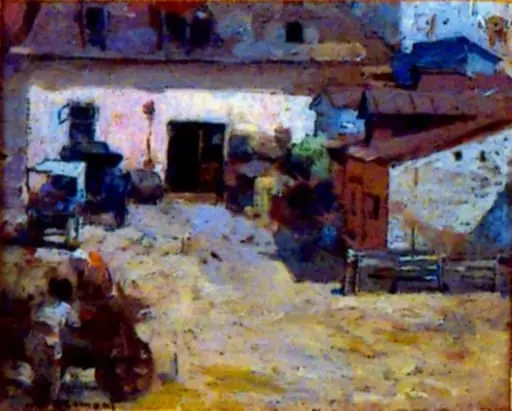
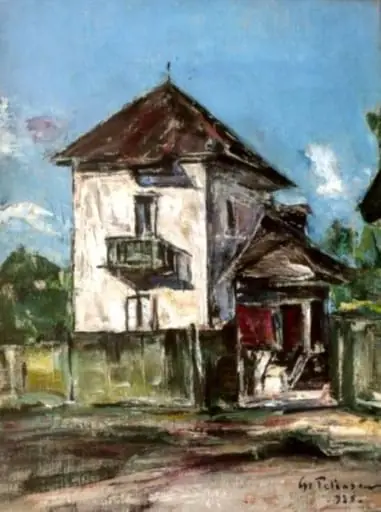
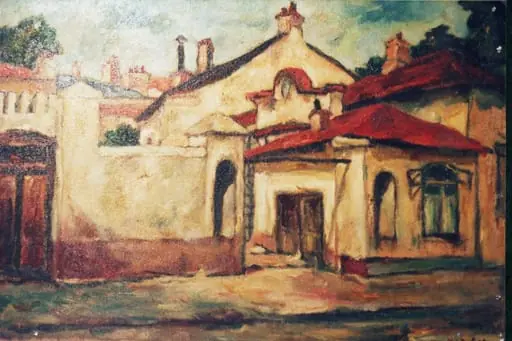
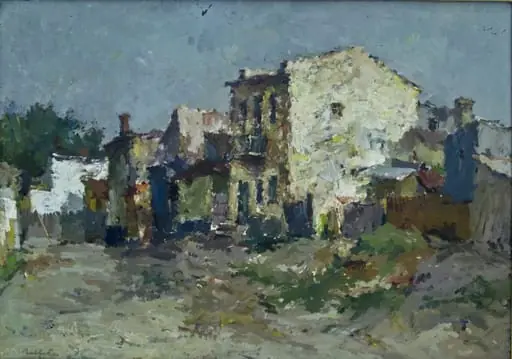
Casă de la Tulcea is a print by Aurel Ciupe. It is held in the collection of the Brukenthal National Museum. This image depicts two modest dwellings in Tulcea, rendered with loose, sketch-like brushwork.
About this work
Overview
The handling of paint suggests immediacy, as if the scene was captured in a single sitting, with little emphasis on fine detail.
This image depicts two modest dwellings in Tulcea, rendered with loose, sketch-like brushwork. The houses are positioned side by side, their forms simplified and grounded in muted tones of brown and gray. A single tree rises behind them, and the sky is washed in pale blue. The handling of paint suggests immediacy, as if the scene was captured in a single sitting, with little emphasis on fine detail.
Subject & Meaning
The two houses, differing in size and condition, suggest contrasts in domestic life—one worn and weathered, the other more open and intact. Their simplicity invites quiet observation rather than narrative. The open windows and bare walls imply daily routines, while the absence of figures emphasizes solitude and the passage of time in a quiet corner of the Danube region.
Technique & Style
The painting employs loose, rapid brushstrokes that prioritize atmosphere over precision. Color is restrained, with earthy tones blending softly to suggest texture and light. Chiaroscuro is subtly used to define form through gentle shifts in value rather than stark contrasts. The lack of sharp outlines and the fluid transitions between surfaces reflect an approach rooted in observation rather than idealization.
History & Provenance
The work originates from Tulcea, a port town on the Danube in Romania. It likely dates to the late 19th or early 20th century, a period when local artists began documenting everyday architecture with greater realism. Its provenance remains unrecorded in major collections, suggesting it may have been privately held or part of a regional artistic circle rather than a nationally recognized work.
Context
During the time this image was made, Romanian artists increasingly turned to rural and provincial subjects, moving away from grand historical themes. Tulcea, as a multicultural river town, offered quiet, unidealized scenes of daily life. This painting aligns with a broader regional trend of capturing ordinary structures with honesty, reflecting a shift toward social and environmental realism in visual culture.
Legacy
Though not widely exhibited or reproduced, the work contributes to a quiet archive of Romanian regional painting. Its unembellished depiction of vernacular architecture offers insight into how local artists recorded their surroundings without romanticism. It stands as a modest but persistent record of domestic life in a specific time and place.
Artist & collection
Artist
Aurel Ciupe made quiet, warm-toned paintings and prints of Romanian life in the mid-1900s.