Artwork
Brandes and Leloir in "Cabotins" (Brandès et Leloir dans "Cabotins")
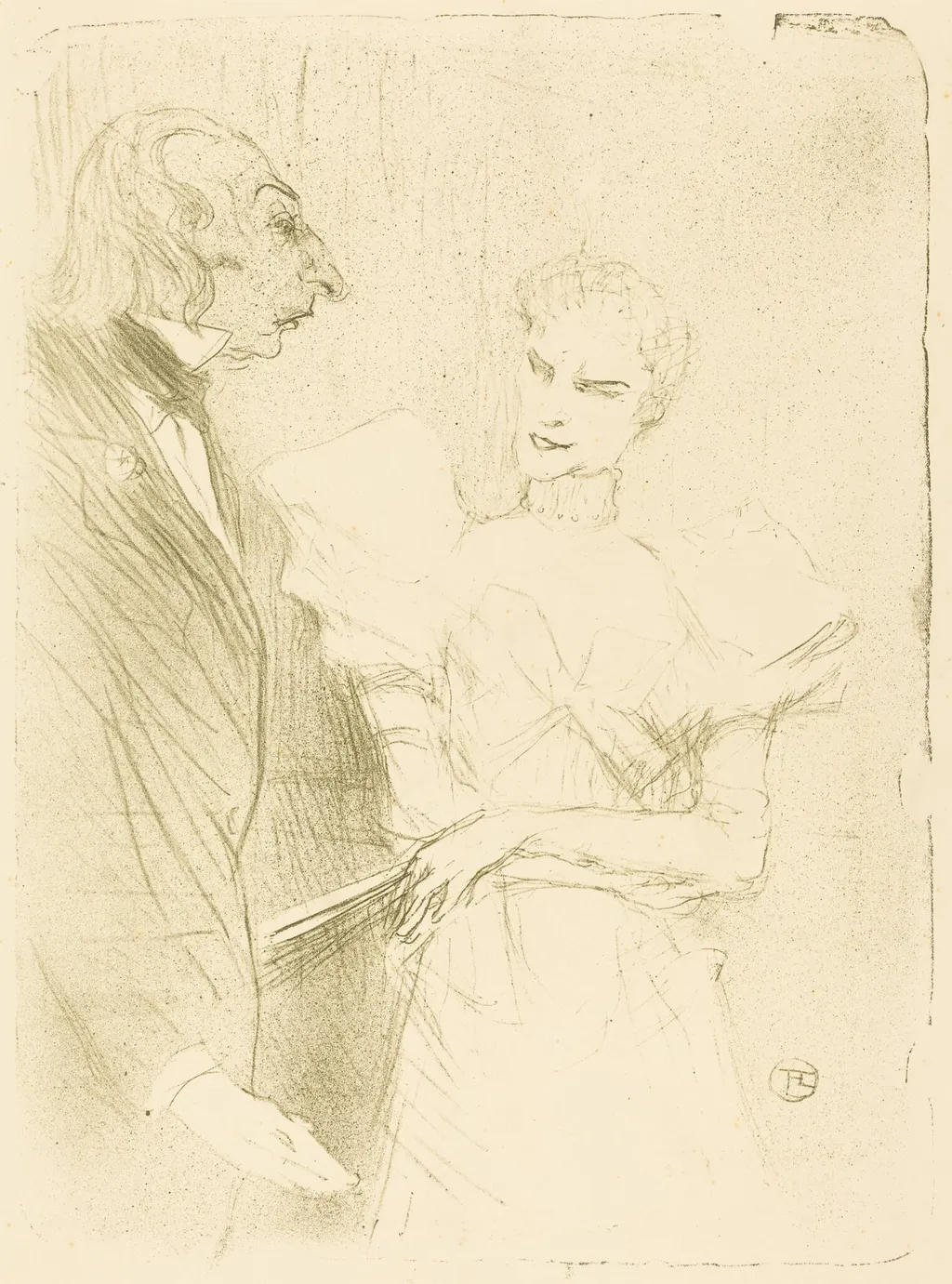
Brandes and Leloir in "Cabotins" (Brandès et Leloir dans "Cabotins") is an ink print by the Impressionist artist Henri de Toulouse-Lautrec. It dates from 1894 and is held in the collection of the National Gallery of Art.
About this work
Overview
This 1894 lithograph by Henri de Toulouse-Lautrec captures actors Brandes and Leloir in a scene from the play *Cabotins*, reflecting the artist's fascination with Paris's theatrical world.
Subject & Meaning
The lithograph portrays the two actors in theatrical attire, a man in a suit and a woman in a high-necked dress with a bow, conveying the vibrant energy of late 19th-century Parisian performance culture.
Technique & Style
Executed in olive green on velin paper, the work features bold, loose lines and minimal detail, imbuing the figures with a sense of dynamic movement and immediacy.
History & Provenance
Created in 1894 by Toulouse-Lautrec, a French artist known for documenting Paris's nightlife and theatrical scenes, amidst his own life marked by aristocratic lineage and physical challenges from adolescence.
Context
The piece is characteristic of Toulouse-Lautrec's oeuvre, which often explored the decadent and vibrant culture of late 19th-century Paris, through his unique, expressive printmaking style.
Legacy
As part of Toulouse-Lautrec's body of work focusing on performers and nightlife, this lithograph contributes to the artist's enduring legacy as a chronicler of Paris's fin-de-siècle cultural landscape.
Artist & collection
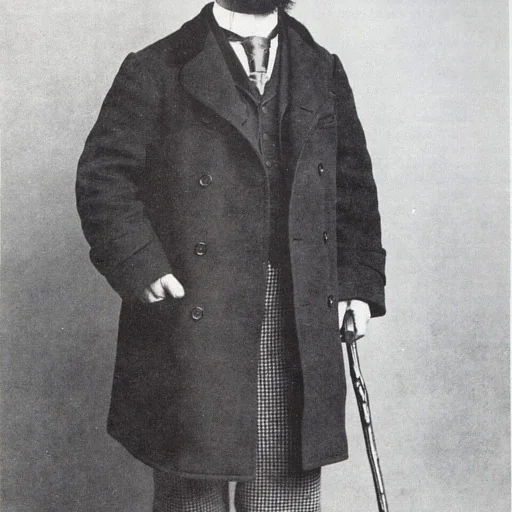
Artist
Comte Henri Marie Raymond de Toulouse-Lautrec-Montfa (24 November 1864 – 9 September 1901), known as Toulouse-Lautrec (French: ), was a French painter, printmaker, draughtsman, caricaturist, and illustrator.

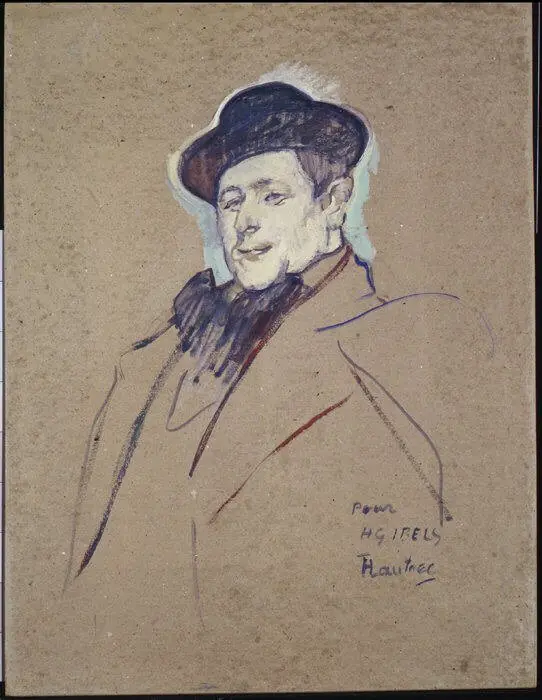
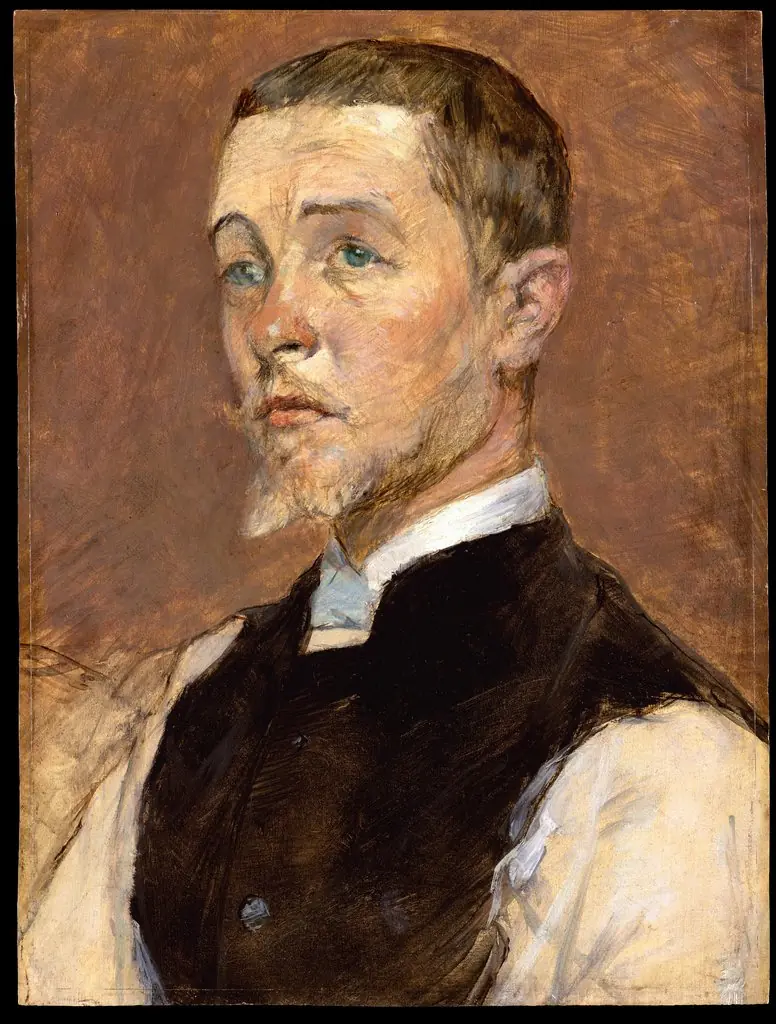
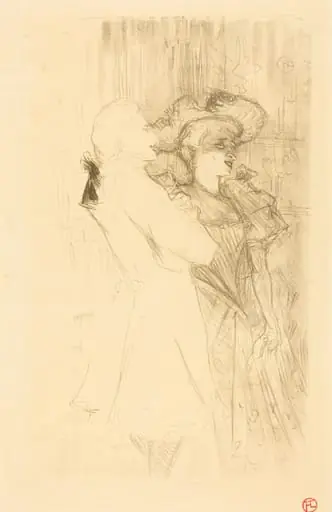 Lender and Auguez in "La chanson de fortunio" (Lender et Auguez dans "La chanson de fortunio")
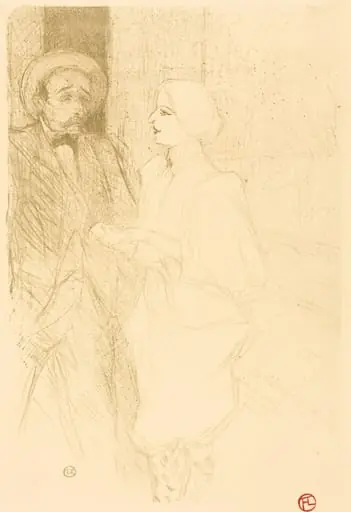 Yahne and Mayer in "L'age difficile" (Yahne et Mayer dans "L'age difficile")
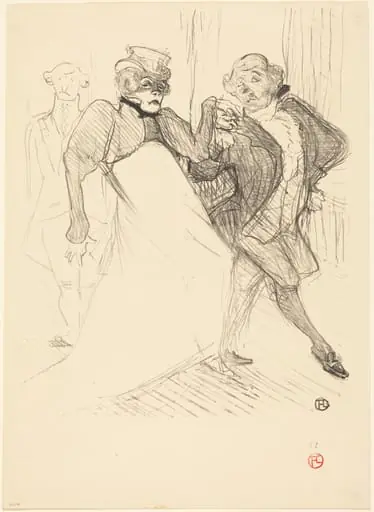 Rejane and Galipaux in "Madame Sans-Gêne" (Réjane et Galipaux dans "Madame Sans-Gêne")
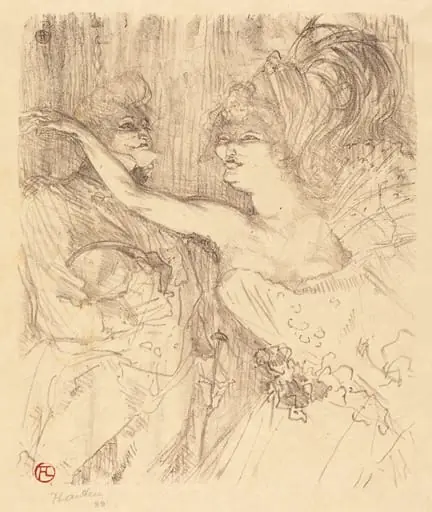 Guy and Mealy in "Paris qui marche" (Guy et Mealy dans "Paris qui marche")
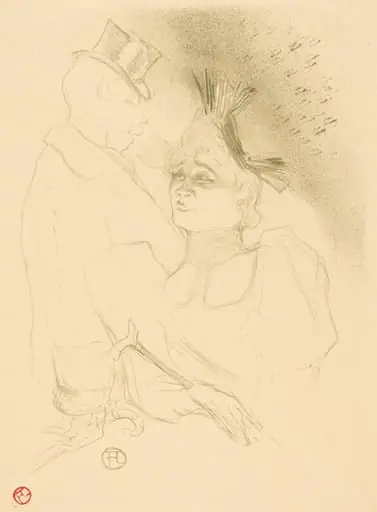 Mlle. Lender and Baron (Mlle. Lender et Baron)
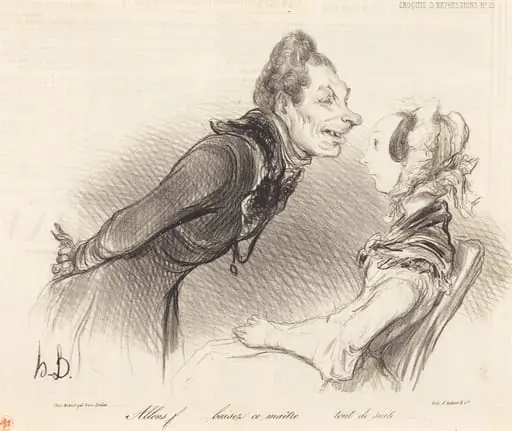 Allons... baisez ce maitre... tout de suite...
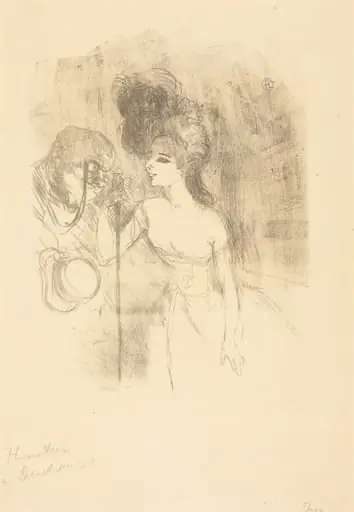 Anna Held and Baldy (Anna Held et Baldy)
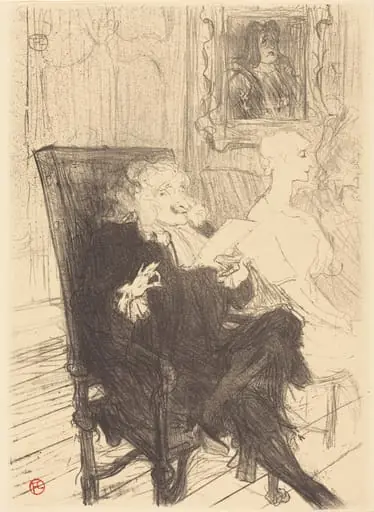 Leloir and Moreno in "Les femmes savantes" (Leloir et Moreno dans "Les femmes savantes")
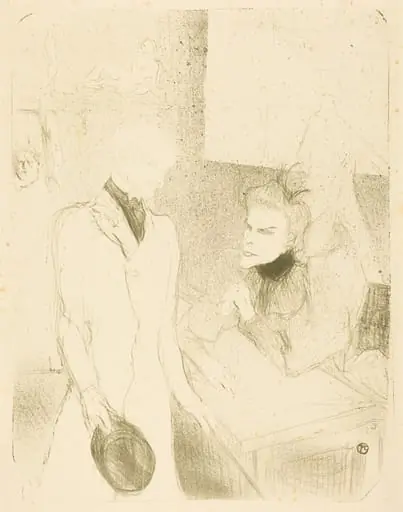 Brandes and Le Bargy in "Cabotins" (Brandès et Les Bargy dans "Cabotins")