Artwork
Guy and Mealy in "Paris qui marche" (Guy et Mealy dans "Paris qui marche")
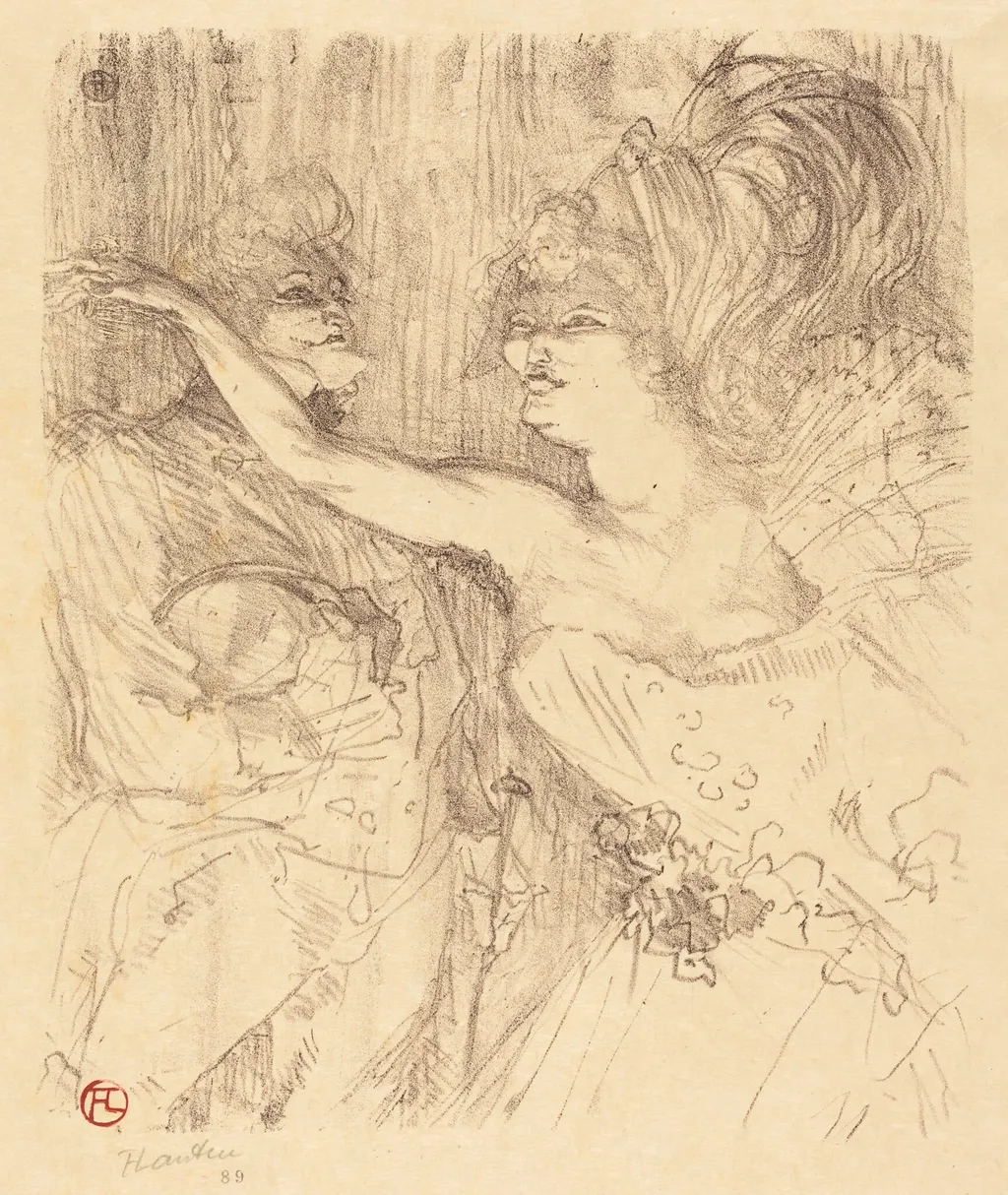
Guy and Mealy in "Paris qui marche" (Guy et Mealy dans "Paris qui marche") is an ink print by the Impressionist artist Henri de Toulouse-Lautrec. It dates from 1898 and is held in the collection of the National Gallery of Art.
About this work
Overview
Unlike traditional portraiture, it prioritizes immediacy and atmosphere, reflecting Toulouse-Lautrec’s immersion in Paris’s popular entertainment circuits.
Created in 1898, this lithograph by Henri de Toulouse-Lautrec captures two performers from the theatrical revue 'Paris qui marche.' Executed in violet-brown ink on delicate Japan paper, the work exemplifies his mastery of lithography as a medium for conveying motion and character. Unlike traditional portraiture, it prioritizes immediacy and atmosphere, reflecting Toulouse-Lautrec’s immersion in Paris’s popular entertainment circuits.
Subject & Meaning
The figures, Guy and Mealy, were stage performers known for their comedic routines. Toulouse-Lautrec portrays them not as idealized celebrities but as individuals caught mid-gesture, revealing the physicality and rhythm of their act. Their presence underscores his interest in performers who occupied the margins of polite society, rendering their labor and presence with dignity rather than spectacle.
Technique & Style
Toulouse-Lautrec employed lithography to achieve fluid, gestural lines and a restrained palette dominated by warm earth tones. The background’s muted golden-brown field recedes softly, directing focus to the figures’ dynamic postures. His loose, economical strokes convey movement without detail, echoing the spontaneity of live performance and the immediacy of stage lighting.
History & Provenance
The print was produced as part of a series documenting performances at Parisian music halls, likely intended for limited distribution among patrons and collectors. It entered institutional collections in the early 20th century, preserved for its significance in documenting the intersection of theater, print culture, and urban life in fin-de-siècle France.
Context
In the 1890s, Parisian cabarets and revues like 'Paris qui marche' offered new forms of public entertainment, drawing audiences from diverse social classes. Toulouse-Lautrec, excluded from aristocratic circles due to his physical condition, found kinship among performers. His work documents this cultural shift, where art increasingly reflected the rhythms of everyday urban life.
Legacy
This lithograph contributes to a broader body of work that redefined printmaking as a vehicle for modern social observation. Toulouse-Lautrec’s approach influenced later artists in capturing movement and psychological presence with minimal means. His focus on performers as subjects helped shift artistic attention from elite subjects to the lived experience of the city’s working entertainers.
Own this work as a print
Artist & collection
Artist
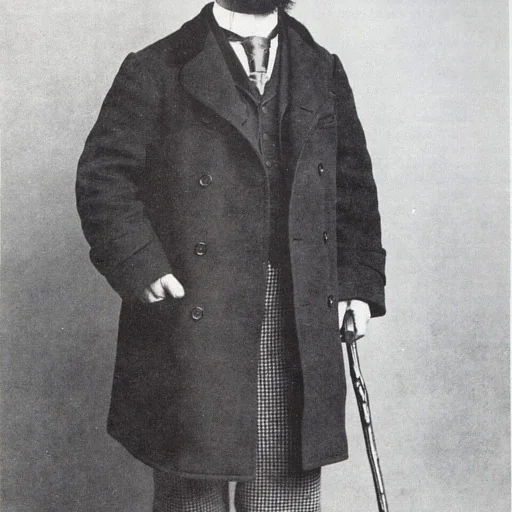
Comte Henri Marie Raymond de Toulouse-Lautrec-Montfa (24 November 1864 – 9 September 1901), known as Toulouse-Lautrec (French: ), was a French painter, printmaker, draughtsman, caricaturist, and illustrator.

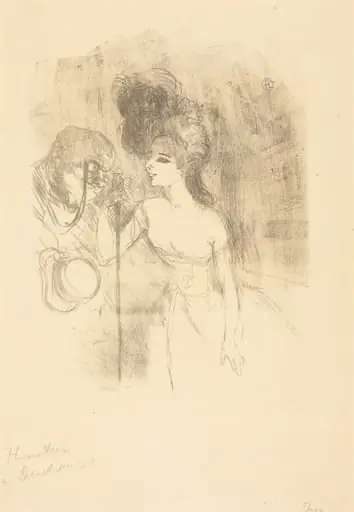 Anna Held and Baldy (Anna Held et Baldy)
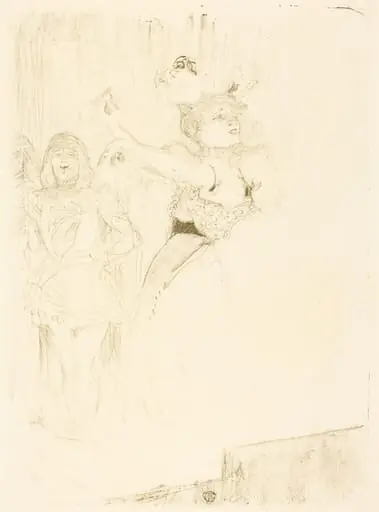 Lender Dancing the Bolero in "Chilperic" (Lender dansant le pas du boléro dans "Chilpéric")
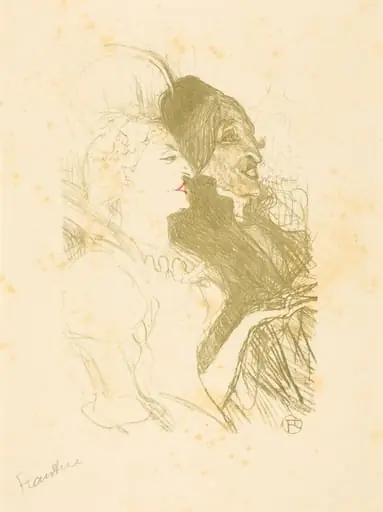 Carnival (Carnaval)
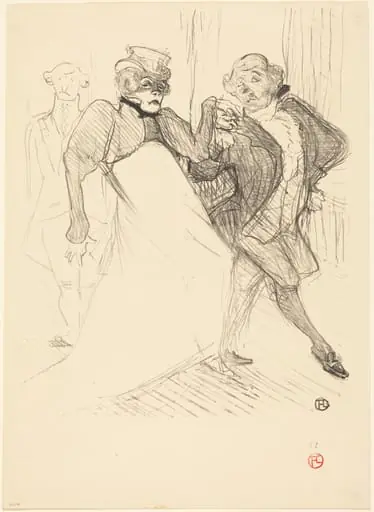 Rejane and Galipaux in "Madame Sans-Gêne" (Réjane et Galipaux dans "Madame Sans-Gêne")
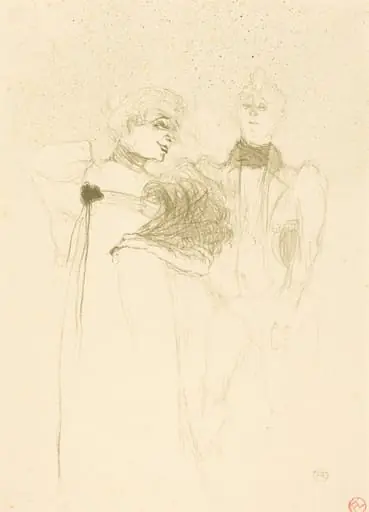 Mlle. Lender in "Madame Satan" (Mlle. Lender dans "Madame Satan")
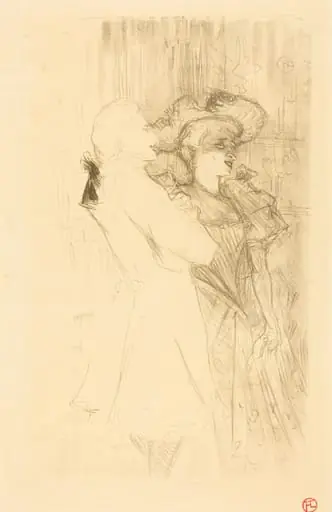 Lender and Auguez in "La chanson de fortunio" (Lender et Auguez dans "La chanson de fortunio")
 At the Opera: Mme. Caron in "Faust" (A l'opéra: Mme. Caron dans "Faust")
 Carnival (Carnaval)
 A Princely Idyl, Clara Ward
 Scène de cabinet particulier (planche en hauteur) (Scene in a Private Room) (vertical plate)