Artwork
Ducarre at the Ambassadeurs (Ducarre aux ambassadeurs)
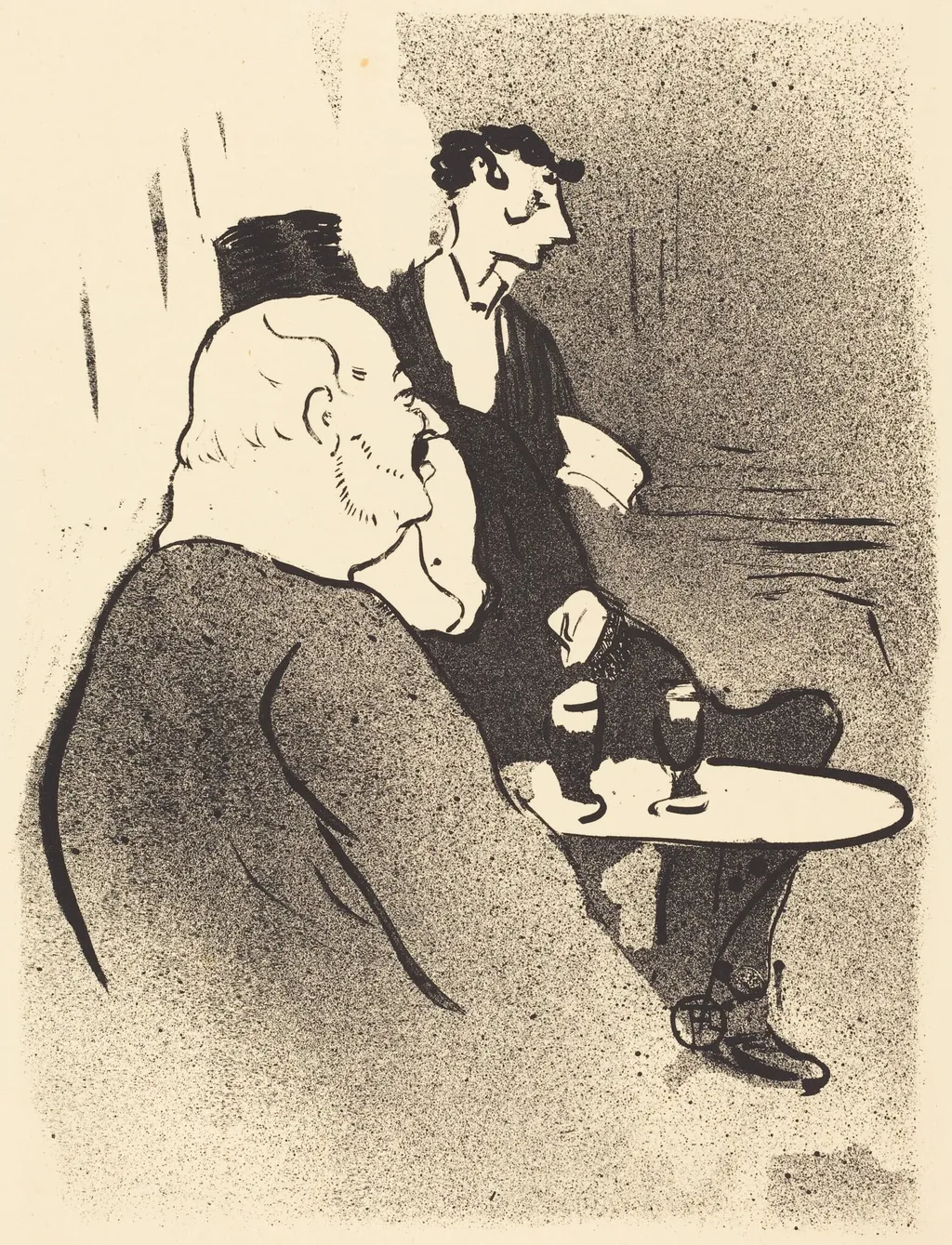
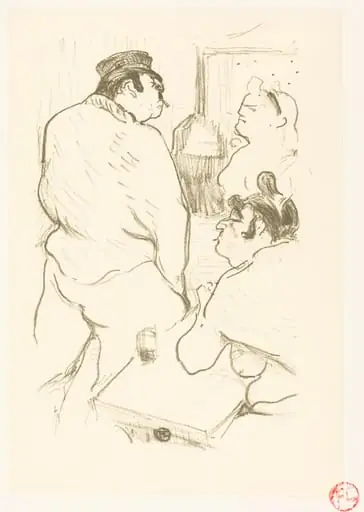
Ducarre at the Ambassadeurs (Ducarre aux ambassadeurs) is an ink print by the Impressionist artist Henri de Toulouse-Lautrec. It dates from 1893 and is held in the collection of the National Gallery of Art.
About this work
Overview
Ducarre at the Ambassadeurs is a 1893 lithograph by Henri de Toulouse-Lautrec, executed in black on velin paper. It captures a moment from Parisian nightlife, a subject central to the artist's oeuvre.
Subject & Meaning
The lithograph depicts two men in a dimly lit setting, one serving (with tray) and the other observing, set against a muted, shadowy background. The scene conveys the intimacy and quiet moments within the city's vibrant cabaret culture.
Technique & Style
Characterized by bold lines and minimal detailing, the work showcases Toulouse-Lautrec's expressive simplicity. The strategic use of light and shadow enhances depth and atmospheric tension in the composition.
History & Provenance
Created in 1893, the piece reflects Toulouse-Lautrec's immersion in Paris's late 19th-century entertainment world, a fascination partly rooted in his personal experiences and physical condition.
Context
Emerging from the artist's fascination with performers and social nightlife scenes, *Ducarre at the Ambassadeurs* situates itself within Toulouse-Lautrec's broader exploration of Paris's decadent and theatrical underbelly.
Artist & collection
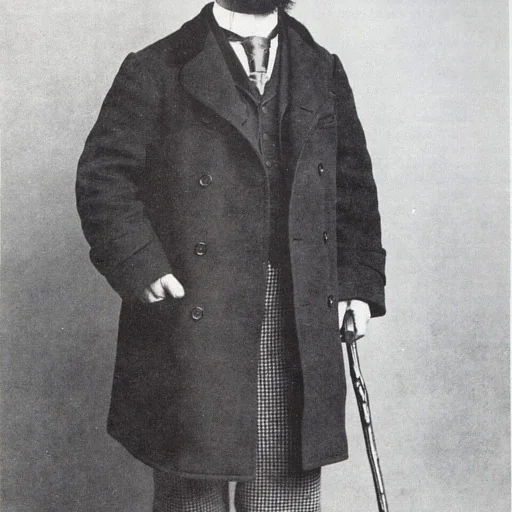
Artist
Comte Henri Marie Raymond de Toulouse-Lautrec-Montfa (24 November 1864 – 9 September 1901), known as Toulouse-Lautrec (French: ), was a French painter, printmaker, draughtsman, caricaturist, and illustrator.

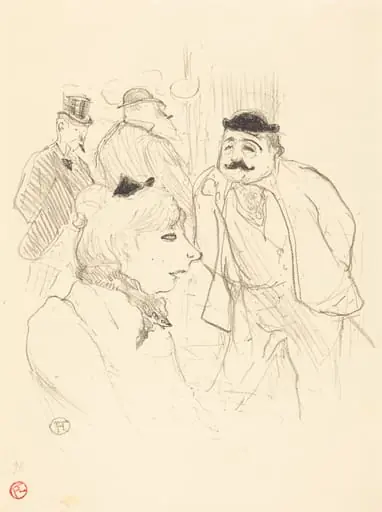 La Tige (Moulin-Rouge)
 Terror of Grenelle (La terreur de Grenelle)
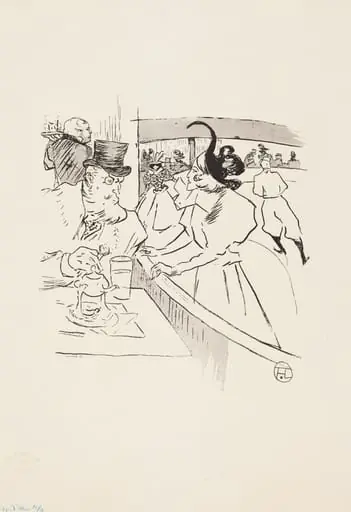 In the Skating Professional Beauty
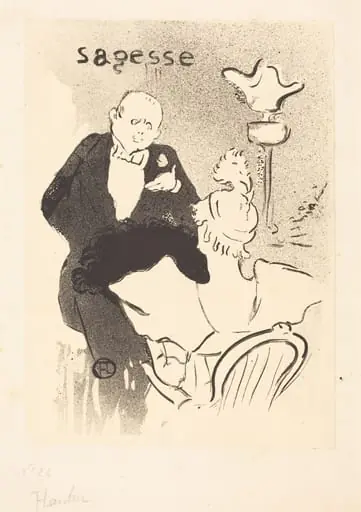 Wisdom (Sagesse)
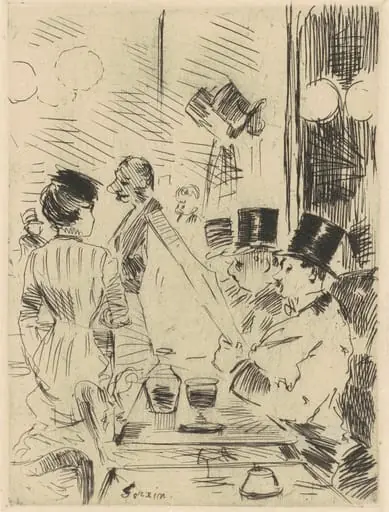 Le Cafe
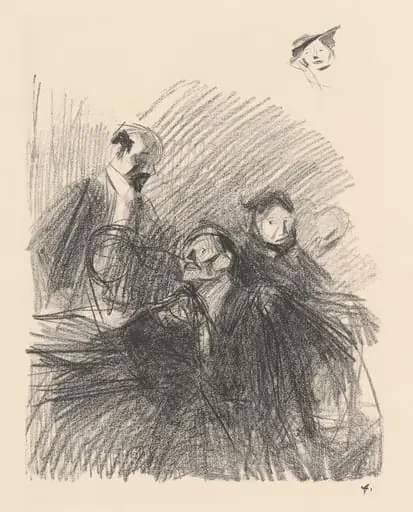 Scène d'audience (les deux avocats) (Scene of a Hearing (The Two Lawyers))
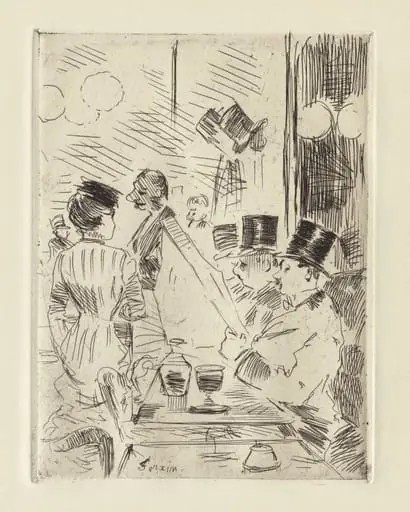 The Café of the New Athens
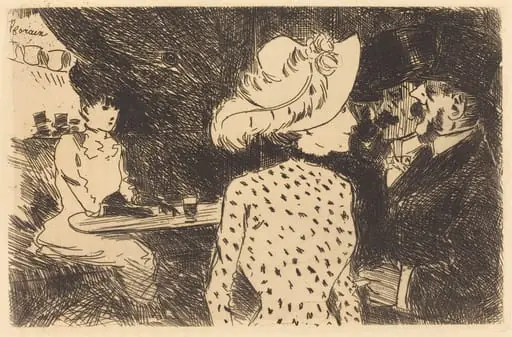 Les Folies-Bergère (planche refusée, 2e planche) (The Folies Bergère) (refused plate, second plate)
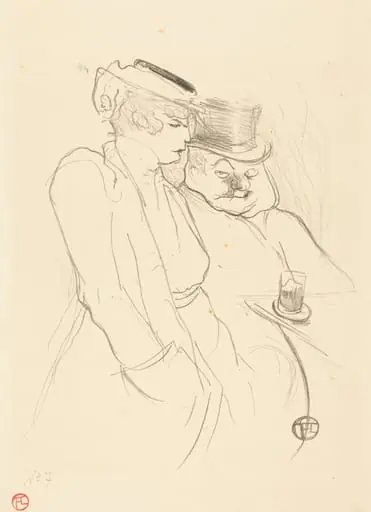 En quarante
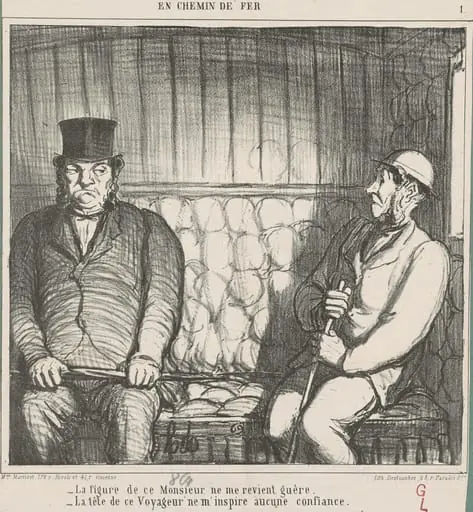 La figure de ce monsieur ne me revient guère ...