Artwork
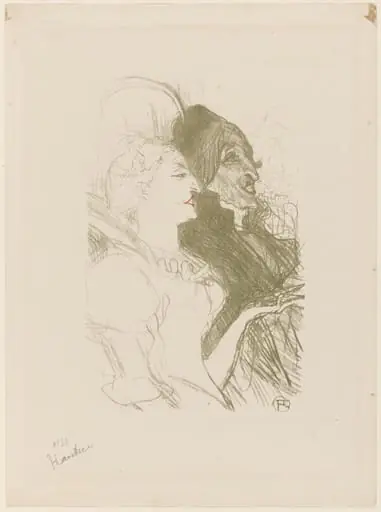
Carnival (Carnaval)
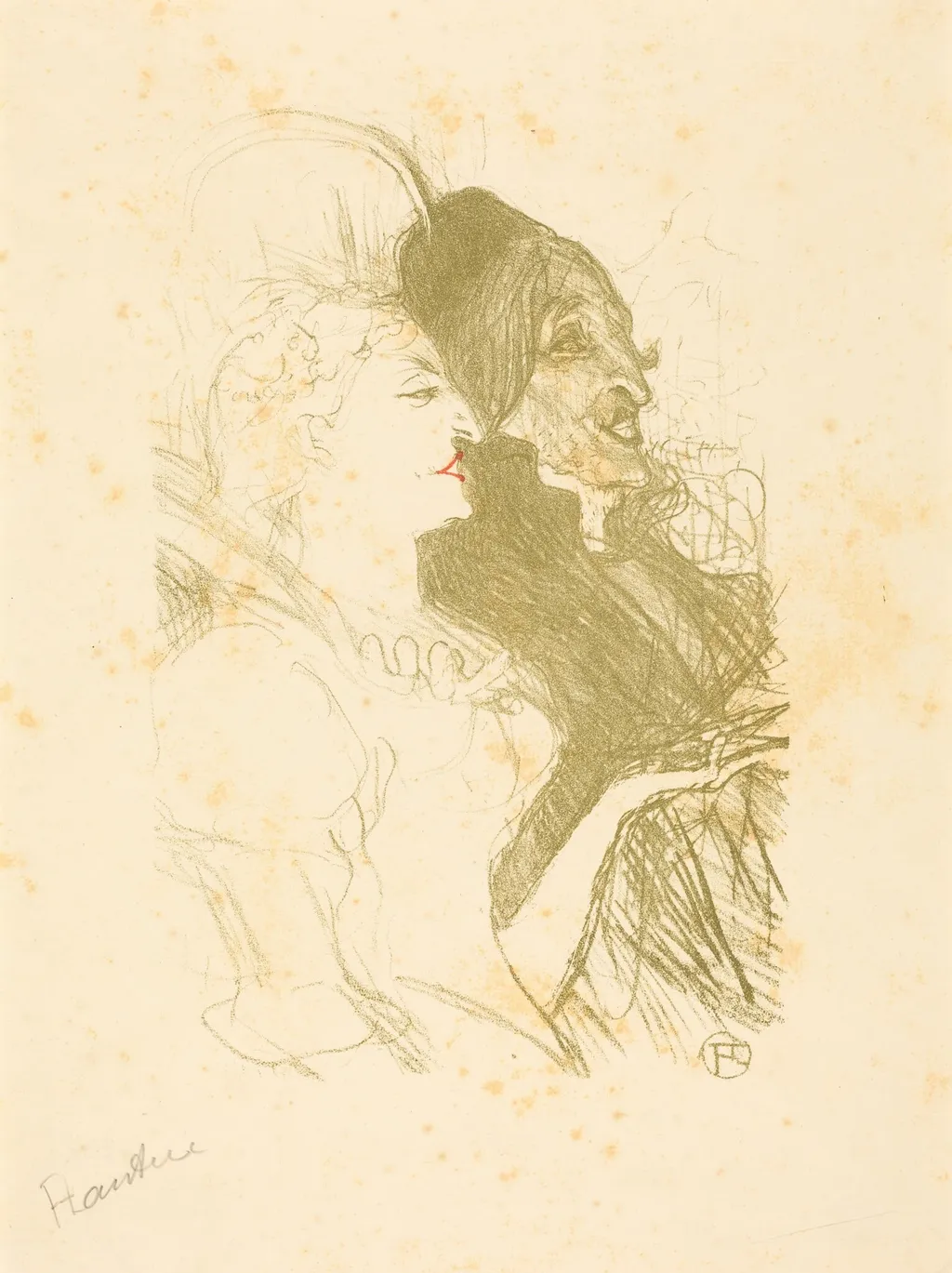
Carnival (Carnaval) is an ink print by the Impressionist artist Henri de Toulouse-Lautrec. It dates from 1894 and is held in the collection of the National Gallery of Art.
About this work
Overview
Executed in olive green and red on velin paper, the work reflects his deep engagement with urban entertainment culture.
Henri de Toulouse-Lautrec produced the lithograph *Carnival* in 1894, capturing a moment from Paris’s festive season. Executed in olive green and red on velin paper, the work reflects his deep engagement with urban entertainment culture. Though born into nobility, Toulouse-Lautrec’s physical condition led him to immerse himself in the city’s underbelly, where he found compelling subjects among performers and patrons of nightlife venues.
Subject & Meaning
The scene portrays masked figures and musicians in a crowded interior, suggesting the anonymity and performative nature of carnival celebrations. A woman in an elaborate gown and a man in a top hat dominate the foreground, their poised postures contrasting with the blurred motion around them. The imagery conveys both the exuberance and isolation inherent in such gatherings, where identity is temporarily disguised and social boundaries blur.
Technique & Style
Toulouse-Lautrec employed lithography to achieve sharp, expressive lines and a restrained palette dominated by muted tones with selective bursts of red. His use of flat planes and angular contours echoes Japanese woodblock prints, while the dynamic composition guides the eye through the chaotic space. The absence of deep perspective enhances the immediacy of the moment, reinforcing the sensory overload of the event.
History & Provenance
Created during a period of prolific printmaking, *Carnival* was part of a series documenting Parisian entertainments. It was likely produced for a limited audience, circulated among collectors and art circles familiar with Toulouse-Lautrec’s work. The print’s survival in good condition reflects its early recognition within avant-garde circles, though its exact early ownership remains undocumented.
Context
In the 1890s, Parisian carnival events offered a rare space where class distinctions were temporarily suspended. Toulouse-Lautrec, frequenting Montmartre’s cabarets and masked balls, observed these gatherings not as spectacle but as human theater. His prints from this era document a society in transition, where modernity, leisure, and marginality intersected in the city’s nocturnal spaces.
Legacy
Though less celebrated than his posters for the Moulin Rouge, *Carnival* exemplifies Toulouse-Lautrec’s ability to distill complex social dynamics into single images. His lithographs influenced later generations of graphic artists and illustrators, particularly in their use of line and psychological insight. The work remains a quiet but significant record of how urban festivity was perceived and rendered in late 19th-century France.
Artist & collection
Artist
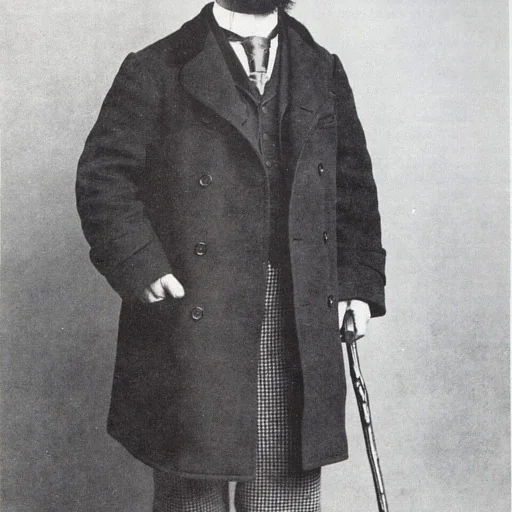
Comte Henri Marie Raymond de Toulouse-Lautrec-Montfa (24 November 1864 – 9 September 1901), known as Toulouse-Lautrec (French: ), was a French painter, printmaker, draughtsman, caricaturist, and illustrator.

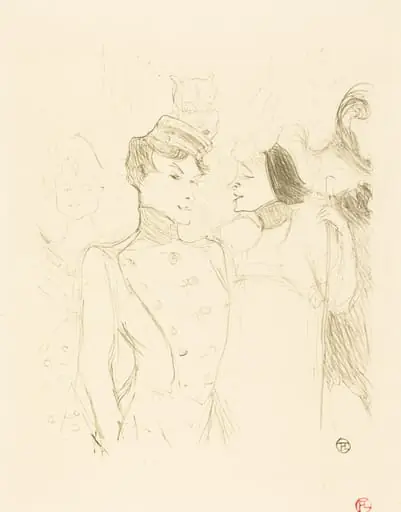 Lender and Lavalliere (Lender et Lavallière)
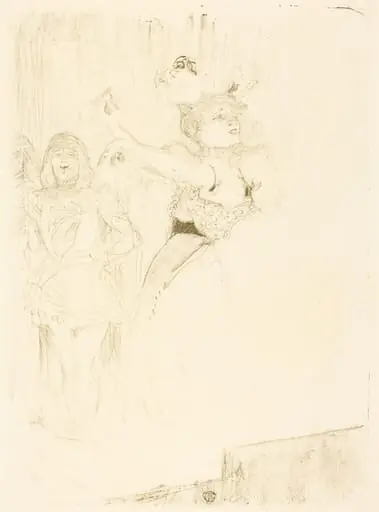 Lender Dancing the Bolero in "Chilperic" (Lender dansant le pas du boléro dans "Chilpéric")
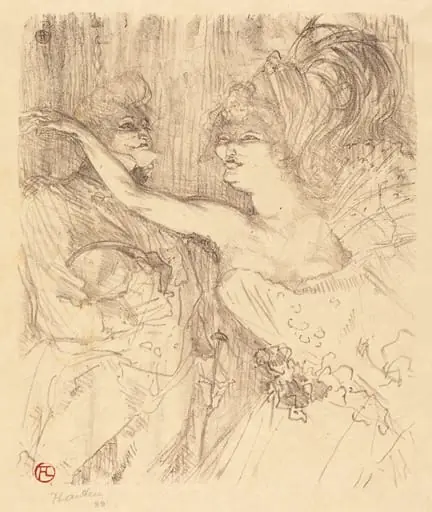 Guy and Mealy in "Paris qui marche" (Guy et Mealy dans "Paris qui marche")
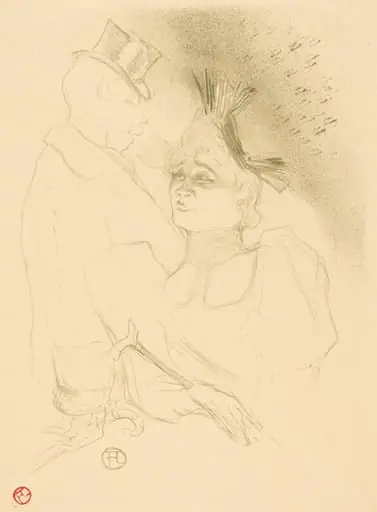 Mlle. Lender and Baron (Mlle. Lender et Baron)
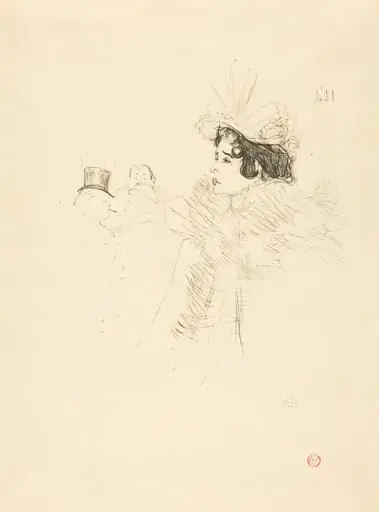 Miss May Belfort in the Irish and American Bar, rue Royale (Miss Belfort Belfort au Irish and American Bar, Rue Royale)
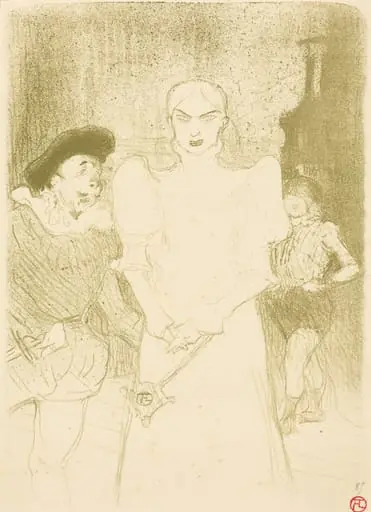 At the Opera: Mme. Caron in "Faust" (A l'opéra: Mme. Caron dans "Faust")
 Carnival (Carnaval)