Artwork
Lender and Lavalliere (Lender et Lavallière)
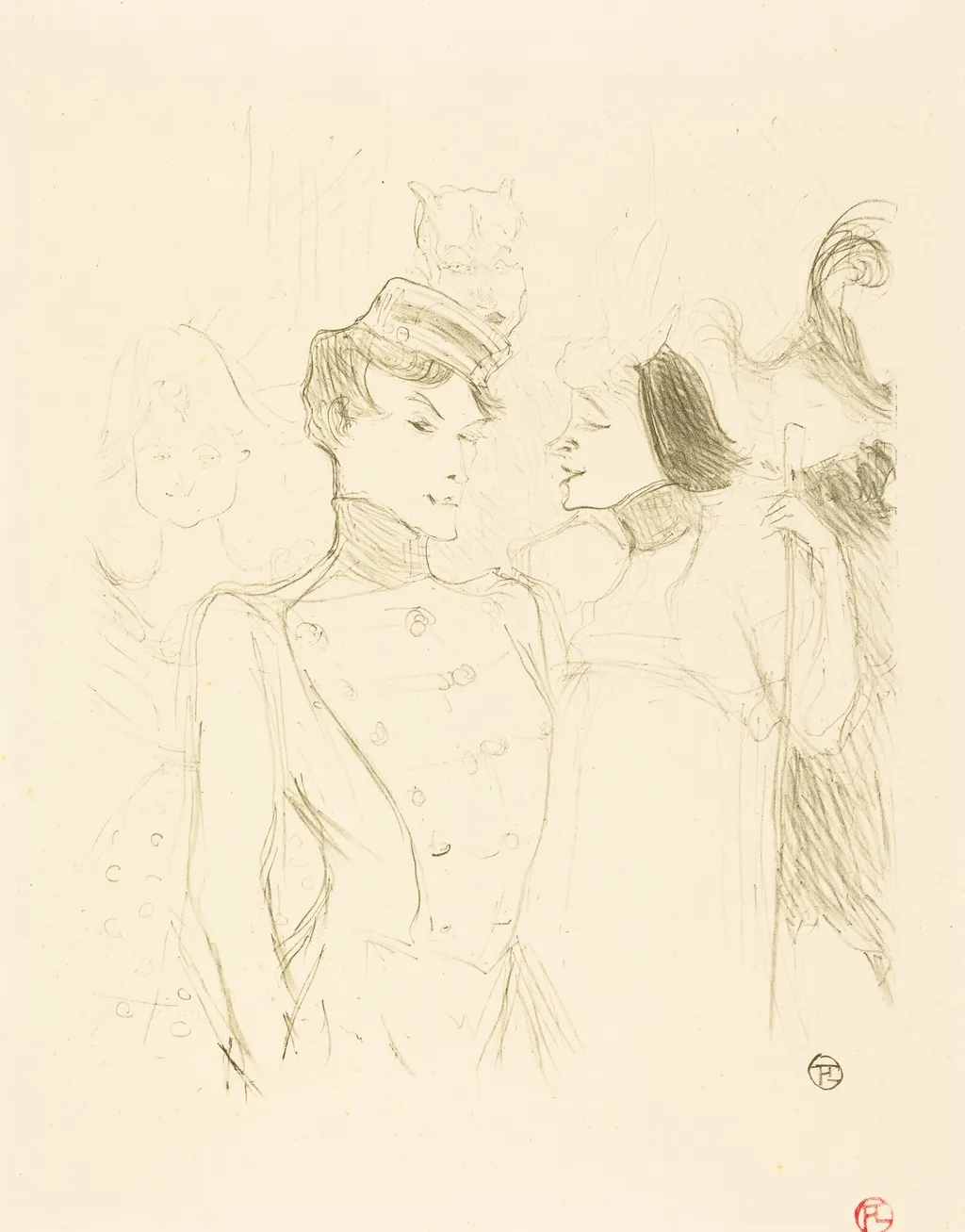
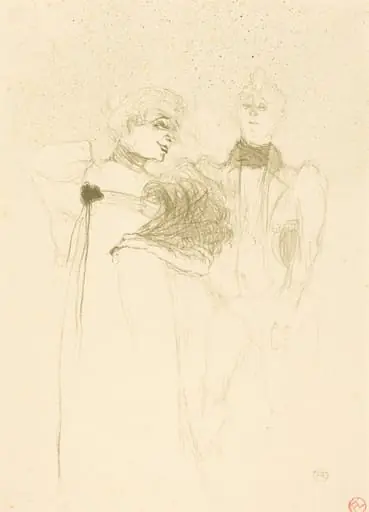
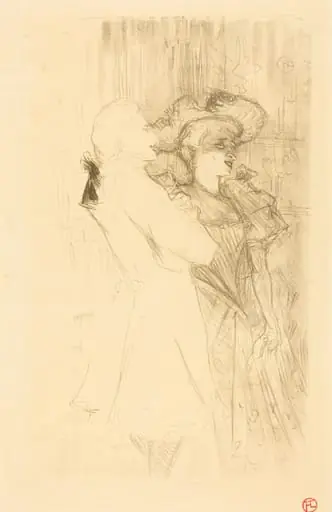
Lender and Lavalliere (Lender et Lavallière) is an ink print by the Impressionist artist Henri de Toulouse-Lautrec. It dates from 1895 and is held in the collection of the National Gallery of Art.
About this work
Overview
As a printmaker, Lautrec favored lithography for its immediacy, allowing him to translate the fleeting energy of urban performers into portable images.
Created in 1895, *Lender and Lavallière* is a lithograph rendered in olive green by Henri de Toulouse-Lautrec. It captures two women associated with Paris’s nightlife, rendered with rapid, expressive lines that emphasize motion over precision. As a printmaker, Lautrec favored lithography for its immediacy, allowing him to translate the fleeting energy of urban performers into portable images. The muted tone and loose draftsmanship reflect his interest in candid, unidealized moments.
Subject & Meaning
The two figures, likely performers or patrons of Montmartre’s cabarets, are portrayed without narrative context, their identities hinted at through posture and attire rather than detail. One holds a fan or slender object, the other wears a dark hat and fitted jacket. Their interaction is ambiguous, suggesting casual companionship or transient connection. Lautrec’s focus on such figures—neither glamorous nor tragic—reveals his empathy for those living on the margins of respectable society.
Technique & Style
Lautrec employed lithography, a process allowing direct drawing on stone with greasy crayons, which suited his spontaneous approach. The olive-green ink, applied unevenly, creates a soft, weathered texture. Lines are hurried and overlapping, conveying movement rather than form. Details like buttons or folds in fabric are suggested with minimal strokes. The absence of shading or perspective reinforces the flat, graphic quality characteristic of his mature style.
History & Provenance
Produced during Lautrec’s most prolific printmaking period, this work emerged from his close engagement with Montmartre’s entertainment circles. It was likely part of a series of lithographs documenting performers and patrons, circulated among collectors and art enthusiasts. While its early ownership is undocumented, its survival reflects the growing appreciation for printmaking as a legitimate art form in late 19th-century France.
Context
In 1890s Paris, lithography was widely used for posters and illustrations, but Lautrec elevated it into fine art. His work coincided with the rise of modernist interest in everyday life and the influence of Japanese prints, which favored flat planes and bold outlines. Unlike academic painting, his subjects were drawn from real social spaces—cabarets, brothels, and backstage areas—offering an unvarnished view of urban culture.
Legacy
Lautrec’s prints, including *Lender and Lavallière*, helped redefine printmaking as a medium for personal expression rather than mere reproduction. His candid portrayals of marginalized figures influenced later artists exploring urban alienation and psychological realism. The work’s informal energy and restrained palette remain emblematic of his ability to capture the rhythm of modern life without sentimentality.
Artist & collection
Artist
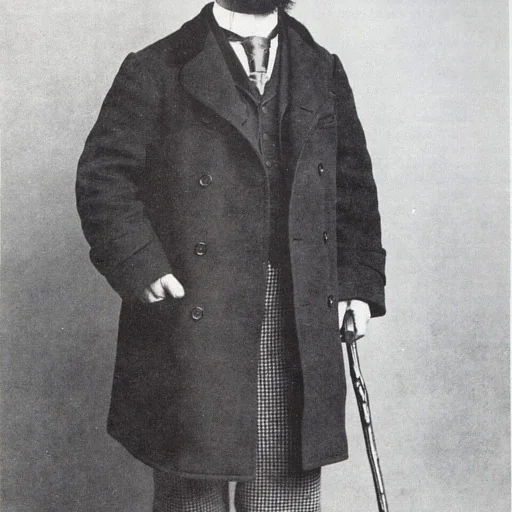
Comte Henri Marie Raymond de Toulouse-Lautrec-Montfa (24 November 1864 – 9 September 1901), known as Toulouse-Lautrec (French: ), was a French painter, printmaker, draughtsman, caricaturist, and illustrator.

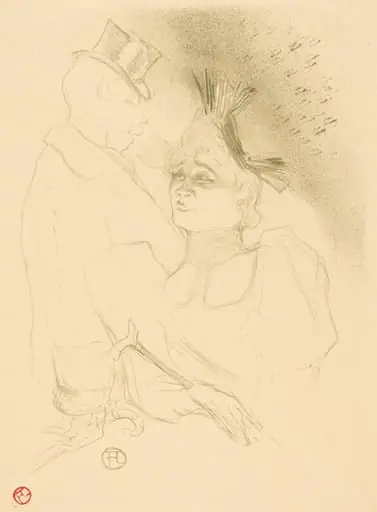 Mlle. Lender and Baron (Mlle. Lender et Baron)
 Mlle. Lender in "Madame Satan" (Mlle. Lender dans "Madame Satan")
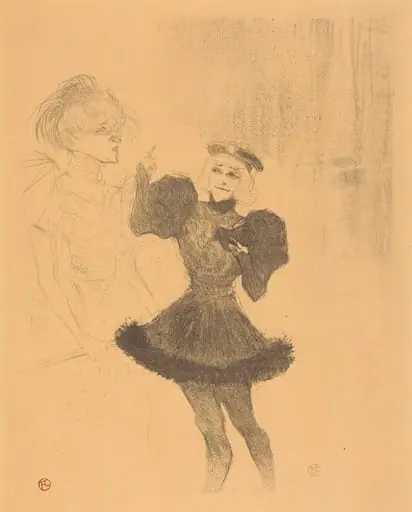 Lender and Lavalliere in "Le fils de l'Aretin" (Lender et Lavallière dans "Le fils de l'Arétin")
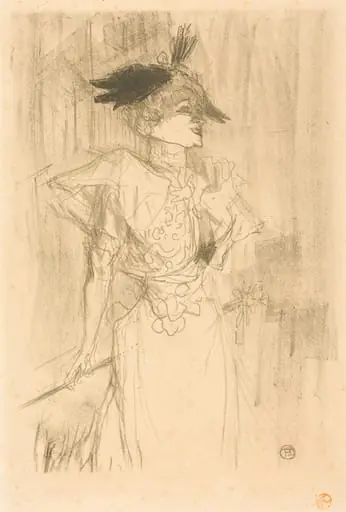 Mlle. Marcelle Lender, Standing (Mlle. Marcelle Lender, debout)
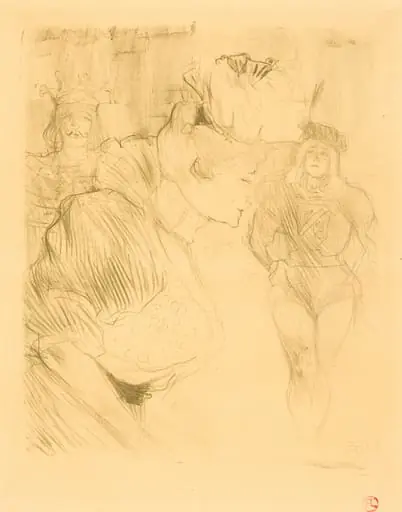 Lender Bowing (Lender saluant)
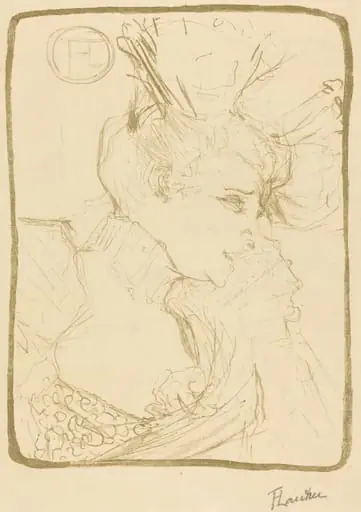 Bust of Mademoiselle Marcelle Lender (Mademoiselle Marcelle Lender, en buste)
 Lender and Auguez in "La chanson de fortunio" (Lender et Auguez dans "La chanson de fortunio")
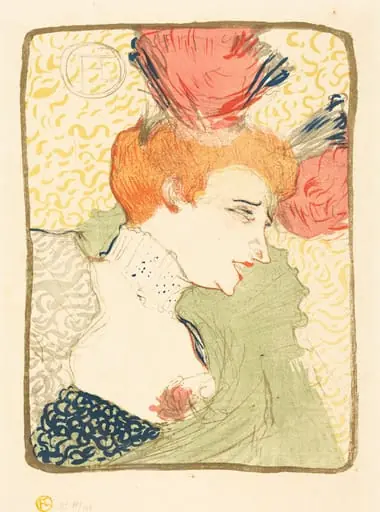 Bust of Mademoiselle Marcelle Lender (Mademoiselle Marcelle Lender, en buste)