Artwork
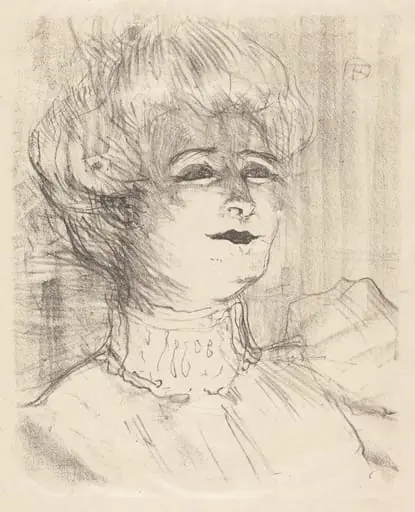
Bust of Mademoiselle Marcelle Lender (Mademoiselle Marcelle Lender, en buste)
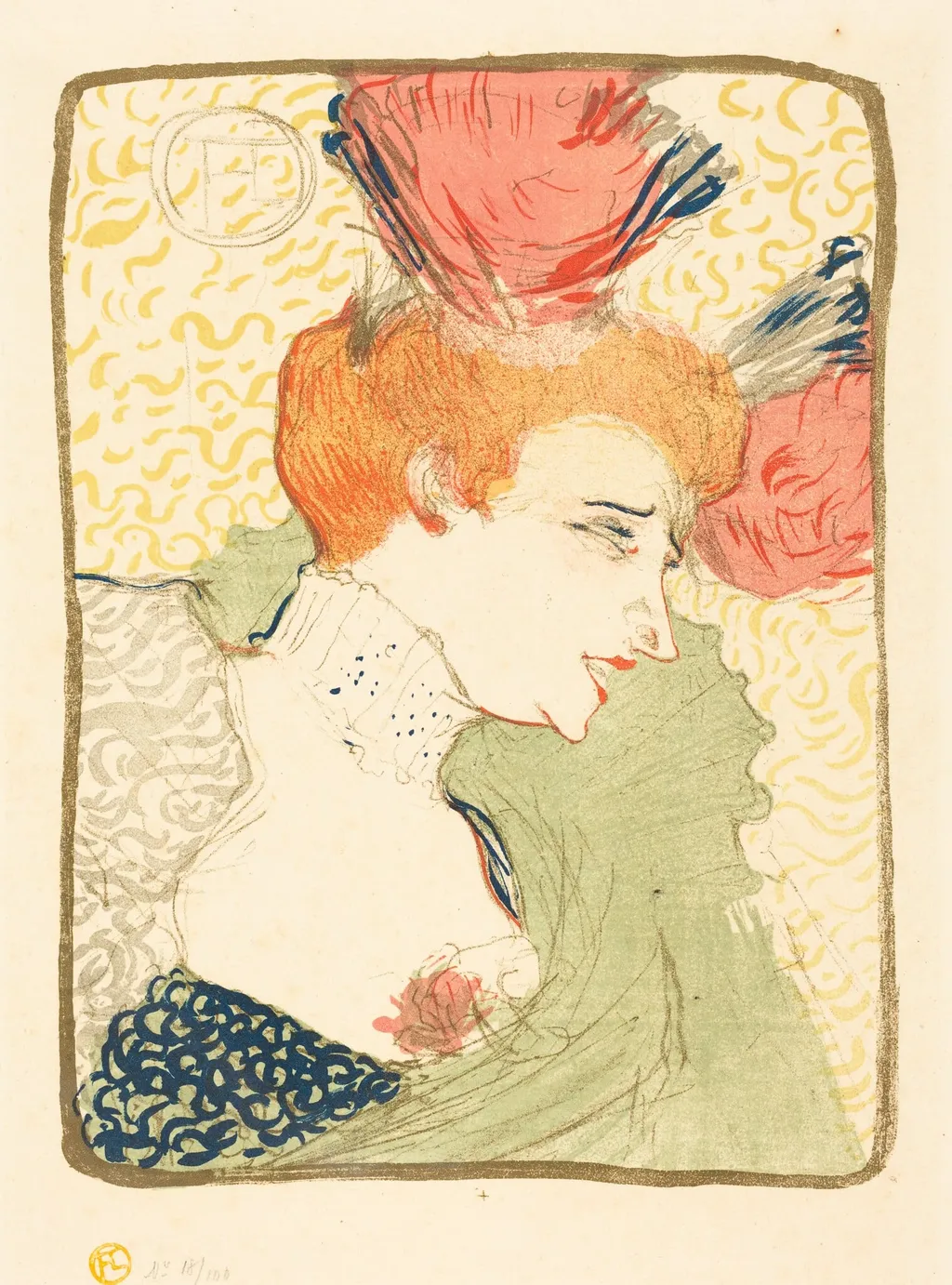
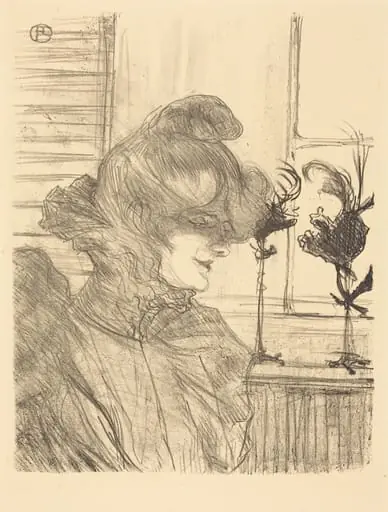
Bust of Mademoiselle Marcelle Lender (Mademoiselle Marcelle Lender, en buste) is an ink print by the Impressionist artist Henri de Toulouse-Lautrec. It dates from 1895 and is held in the collection of the National Gallery of Art.
About this work
Overview
Executed on wove paper, the work reflects Lautrec’s interest in capturing individuals from the city’s entertainment world.
Created in 1895, this color lithograph by Henri de Toulouse-Lautrec depicts Mademoiselle Marcelle Lender, a performer known for her stage presence in Parisian cabarets. Executed on wove paper, the work reflects Lautrec’s interest in capturing individuals from the city’s entertainment world. The print’s spontaneous energy and vivid palette distinguish it as a characteristic example of his graphic style, blending observation with expressive technique.
Subject & Meaning
Marcelle Lender was a dancer and singer active in Montmartre’s nightlife, frequently appearing in revues. Lautrec portrayed her in profile, emphasizing her distinctive hat and attire rather than her identity as a celebrity. The composition avoids idealization, presenting her as a figure of the moment—part of the vibrant, transient world of performers. Her turned gaze suggests introspection, distancing her from the viewer and reinforcing the quiet dignity often found in Lautrec’s portraits.
Technique & Style
Lautrec employed color lithography, layering inked stones to build tone and hue with minimal detail. Bold outlines and flat areas of color—especially the vivid red hat—contrast with the muted greens and blues of her dress. The background, composed of loose, swirling strokes in yellow and gray, adds motion without defining space. The rough, sketch-like quality conveys immediacy, as if the image were drawn in real time, reflecting his affinity for capturing fleeting gestures.
History & Provenance
The print was produced during a period when Lautrec was deeply engaged with the theatrical scene, often creating posters and portraits of performers. It was likely made for private circulation or as part of a limited edition, common for his graphic works. While specific early ownership records are sparse, the piece entered institutional collections in the 20th century, valued for its representation of fin-de-siècle Parisian culture and Lautrec’s innovative printmaking.
Context
In the 1890s, Parisian cabarets and music halls became centers of artistic and social experimentation. Lautrec, though born into nobility, immersed himself in these spaces, documenting their inhabitants with empathy and precision. His lithographs, including this one, emerged alongside the rise of commercial print culture, offering an alternative to academic art by celebrating the everyday and the marginalized with formal innovation.
Legacy
This work exemplifies Lautrec’s influence on modern graphic art, demonstrating how lithography could convey psychological depth and visual rhythm without traditional realism. His approach to portraiture—focusing on costume, posture, and atmosphere over facial detail—paved the way for later expressionist and poster artists. Though not widely exhibited in his lifetime, such prints now anchor discussions of late 19th-century visual culture and the democratization of art through print.
Artist & collection
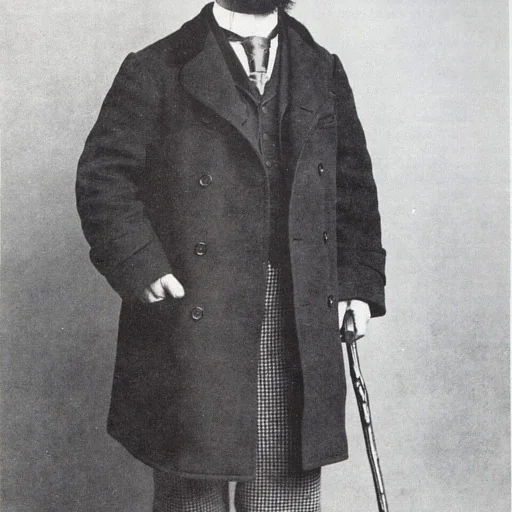
Artist
Comte Henri Marie Raymond de Toulouse-Lautrec-Montfa (24 November 1864 – 9 September 1901), known as Toulouse-Lautrec (French: ), was a French painter, printmaker, draughtsman, caricaturist, and illustrator.