Artwork
Lender Full Face in "Chilperic" (Lender de face dans "Chilpéric")
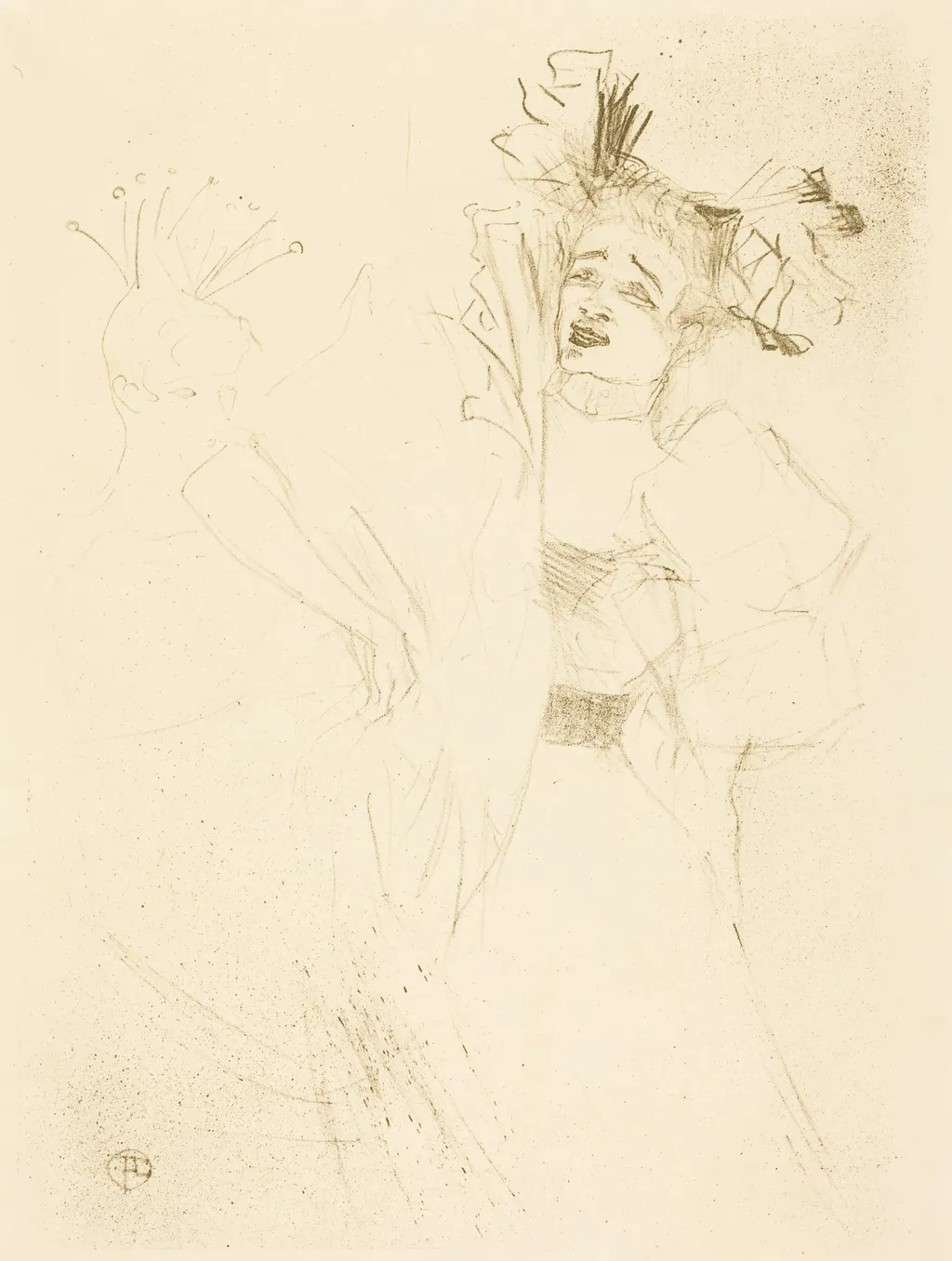
Lender Full Face in "Chilperic" (Lender de face dans "Chilpéric") is an ink print by the Impressionist artist Henri de Toulouse-Lautrec. It dates from 1895 and is held in the collection of the National Gallery of Art.
About this work
Overview
It depicts an actor in character for the play 'Chilperic,' rendered with the precision and tonal subtlety characteristic of his printmaking during this period.
Created in 1895, this lithograph in olive green is one of Henri de Toulouse-Lautrec’s portraits of performers from the Parisian theater. It depicts an actor in character for the play 'Chilperic,' rendered with the precision and tonal subtlety characteristic of his printmaking during this period. Unlike his more dynamic cabaret scenes, this work focuses on a single figure, capturing a moment of stillness amid theatrical spectacle.
Subject & Meaning
The subject is a male performer portrayed in full face, likely portraying the titular character of the popular 1890s comic opera 'Chilperic.' His exaggerated facial features—prominent nose and sharp chin—suggest a caricatured stage persona, common in French theater of the time. The quiet, direct gaze and restrained posture imply introspection, contrasting with the exaggerated roles actors typically performed, hinting at the tension between public persona and private self.
Technique & Style
Toulouse-Lautrec employed lithography to achieve a muted, atmospheric effect, using a single olive-green ink to model form through tonal gradations rather than line. The background is left sparse and neutral, directing focus to the face. His brushwork in the stone is deliberate yet fluid, emphasizing texture in the hat and coat while simplifying the rest of the figure. The composition avoids theatrical flourish, favoring psychological presence over spectacle.
History & Provenance
The print was produced during a period when Toulouse-Lautrec was deeply engaged with theater posters and character studies, following his earlier success with cabaret imagery. It was likely made as a standalone print or for a promotional portfolio related to the play. Its survival in private and institutional collections reflects its status as a refined example of his later graphic work, distinct from his more widely known posters.
Context
In mid-1890s Paris, comic operas like 'Chilperic' enjoyed popularity among middle-class audiences, blending satire with historical farce. Toulouse-Lautrec, drawn to the backstage world of performers, often documented actors both on and off stage. This lithograph aligns with his broader interest in capturing the humanity behind public roles, reflecting a cultural moment where theater blurred with social observation.
Legacy
Though less celebrated than his cabaret posters, this lithograph exemplifies Toulouse-Lautrec’s ability to convey psychological depth through minimal means. It influenced later portrait printmakers who sought to merge realism with expressive distortion. Its quiet intensity stands as a counterpoint to the flamboyance of his other works, revealing a quieter, more introspective strand in his artistic vision.
Artist & collection
Artist
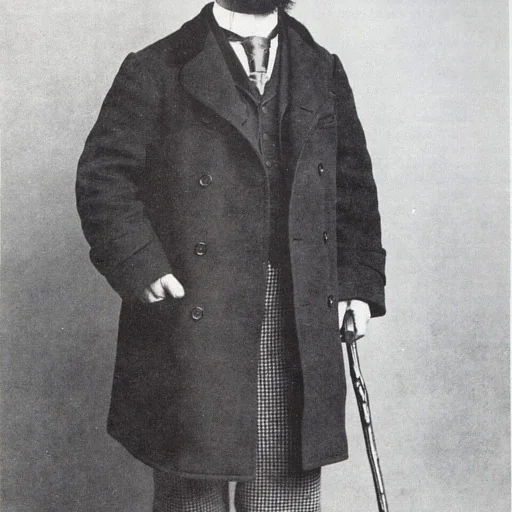
Comte Henri Marie Raymond de Toulouse-Lautrec-Montfa (24 November 1864 – 9 September 1901), known as Toulouse-Lautrec (French: ), was a French painter, printmaker, draughtsman, caricaturist, and illustrator.

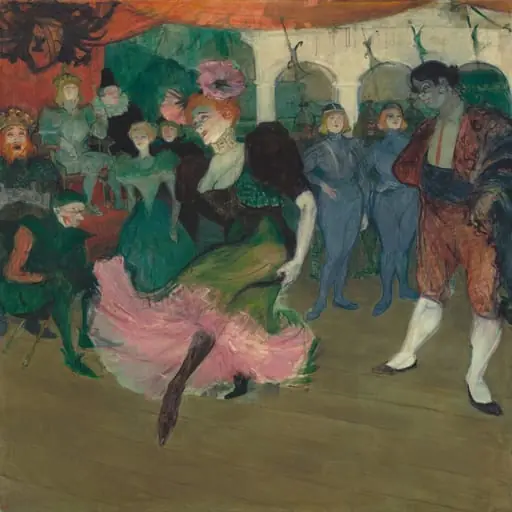
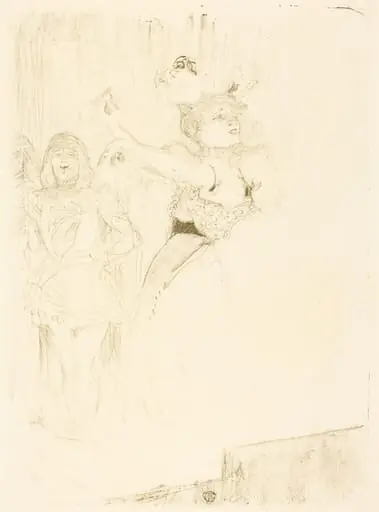 Lender Dancing the Bolero in "Chilperic" (Lender dansant le pas du boléro dans "Chilpéric")
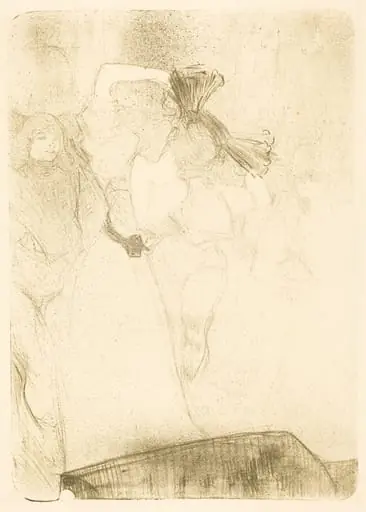 Lender from the Back Dancing the Bolero in "Chilperic" (Lender de dos, dansant le boléro dans "Chilpéric")
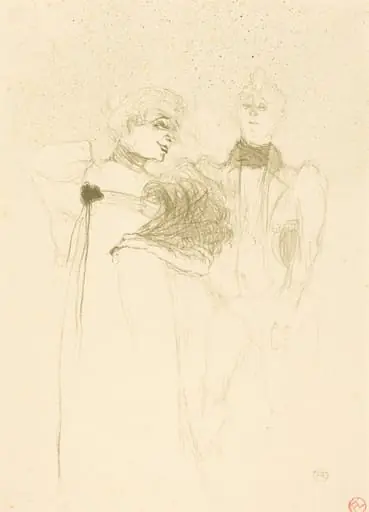 Mlle. Lender in "Madame Satan" (Mlle. Lender dans "Madame Satan")
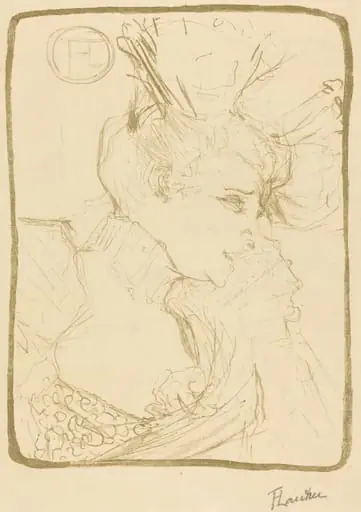 Bust of Mademoiselle Marcelle Lender (Mademoiselle Marcelle Lender, en buste)
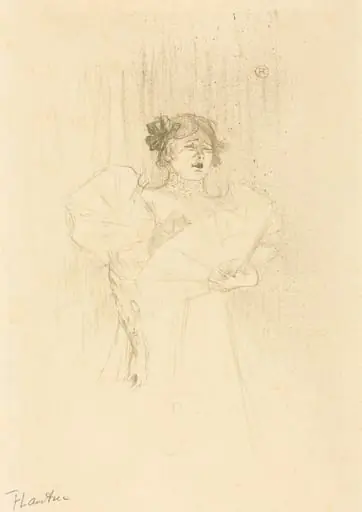 Luce Myres Full Face (Luce Myrès, de face)
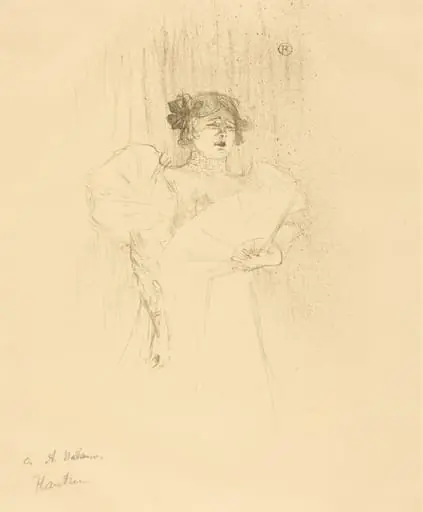 Luce Myres Full Face (Luce Myrès, de face)
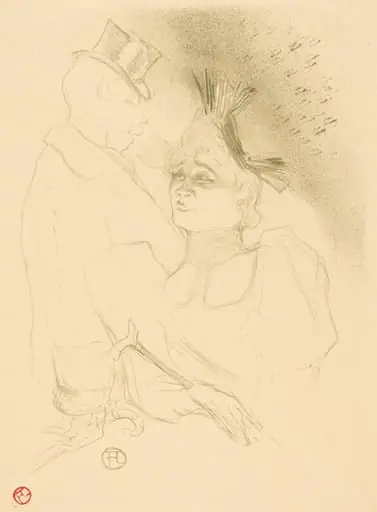 Mlle. Lender and Baron (Mlle. Lender et Baron)
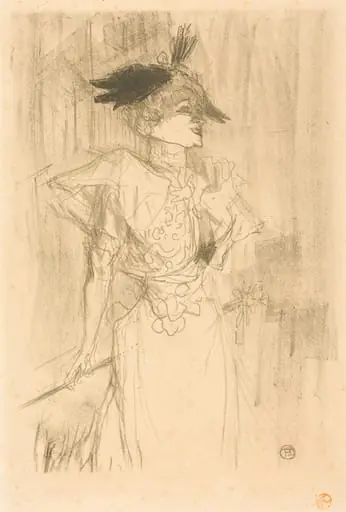 Mlle. Marcelle Lender, Standing (Mlle. Marcelle Lender, debout)
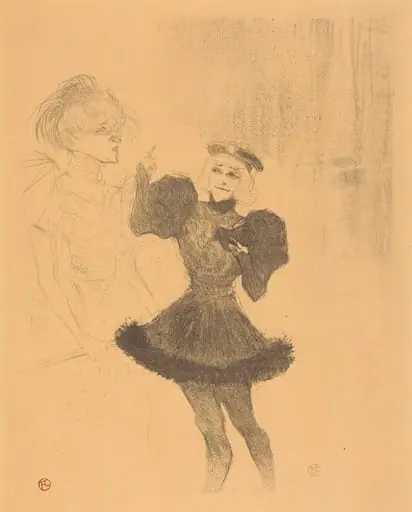 Lender and Lavalliere in "Le fils de l'Aretin" (Lender et Lavallière dans "Le fils de l'Arétin")
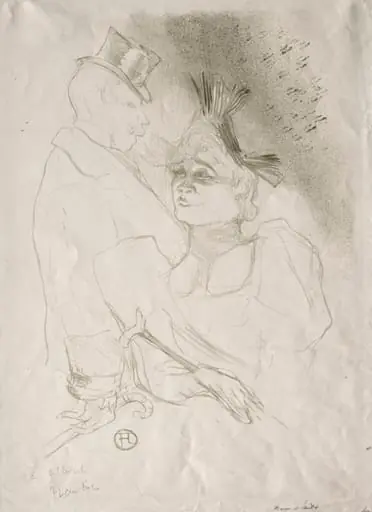 Lender and Baron