Artwork
Miss Loïe Fuller
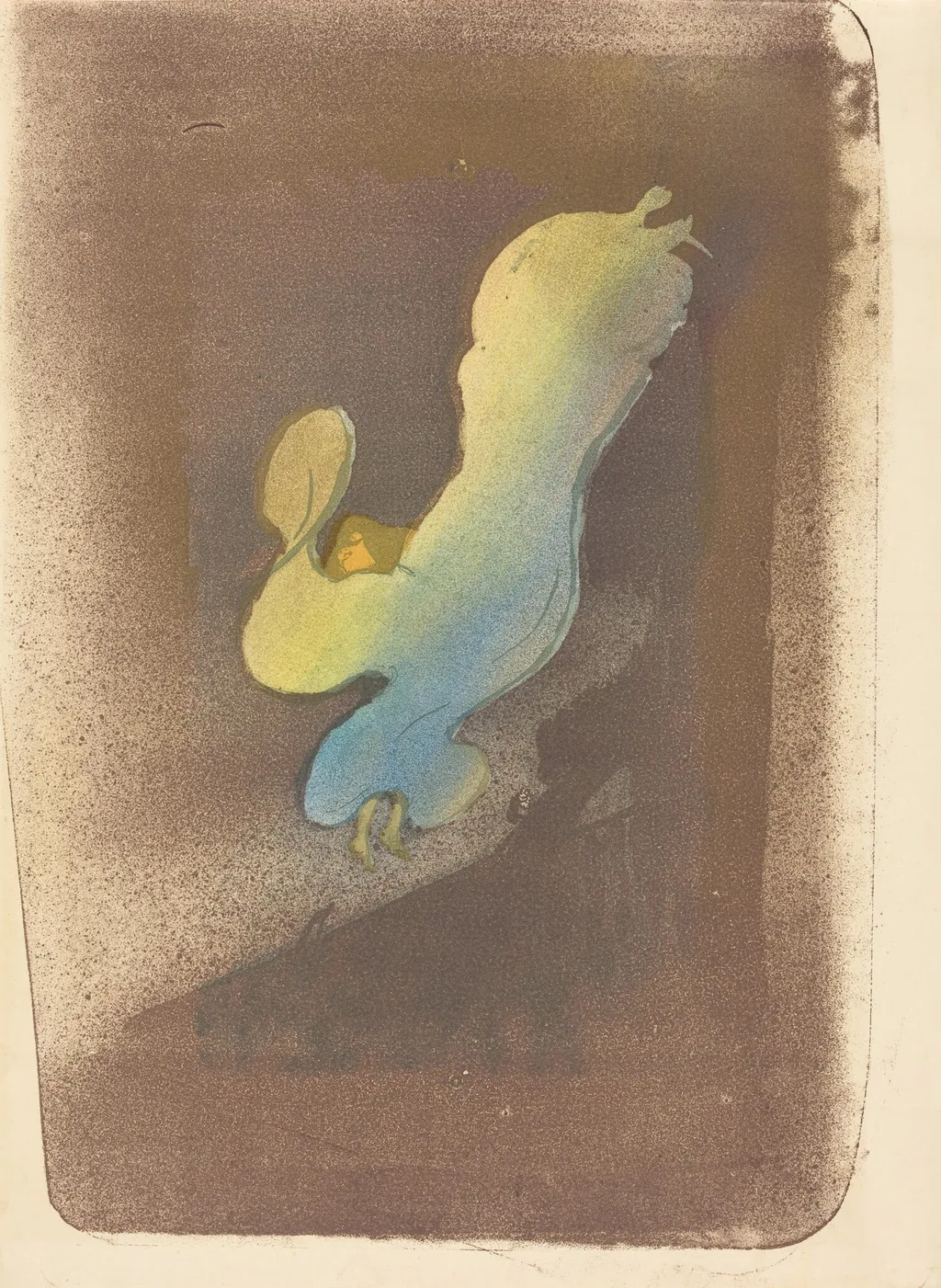
Miss Loïe Fuller is an ink print by the Impressionist artist Henri de Toulouse-Lautrec. It dates from 1893 and is held in the collection of the National Gallery of Art.
About this work
Overview
Miss Loïe Fuller is a 1893 color lithograph by Henri de Toulouse-Lautrec, portraying the renowned dancer in a dynamic pose, characterized by a flowing, billowing costume set against a dark background.
Subject & Meaning
The print captures Loïe Fuller in mid-dance, her curved arms and swirling fabric conveying motion. As a prominent figure in Parisian entertainment, her depiction reflects Toulouse-Lautrec's fascination with theatrical subjects and nightlife.
Technique & Style
Executed in soft blues and yellows, the lithograph features a quick, sketchy style that emphasizes the capture of movement, with the dark background enhancing the figure's prominence.
History & Provenance
Created in 1893 by Toulouse-Lautrec, a French artist of aristocratic lineage, known for his works on Parisian nightlife and theatre. Specific provenance details are not provided.
Context
Part of Toulouse-Lautrec's broader oeuvre focusing on late 19th-century Parisian nightlife and performance art, aligning with the era's interest in capturing modernity and entertainment.
Legacy
As one of Toulouse-Lautrec's theatrical subjects, Miss Loïe Fuller contributes to his legacy of documenting Paris's vibrant cultural scene, though its specific impact or notable exhibitions are not detailed here.
Artist & collection
Artist
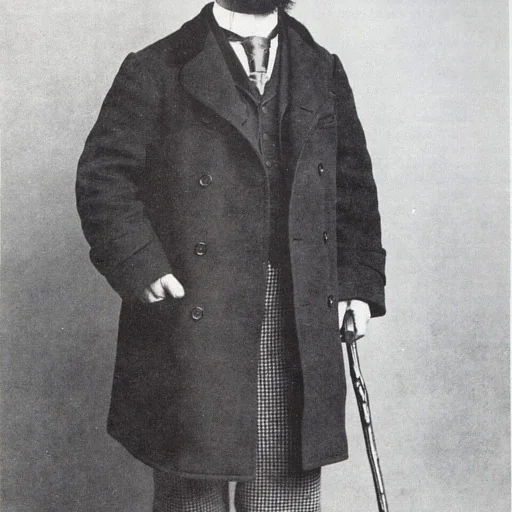
Comte Henri Marie Raymond de Toulouse-Lautrec-Montfa (24 November 1864 – 9 September 1901), known as Toulouse-Lautrec (French: ), was a French painter, printmaker, draughtsman, caricaturist, and illustrator.