Artwork
Paula Brébion
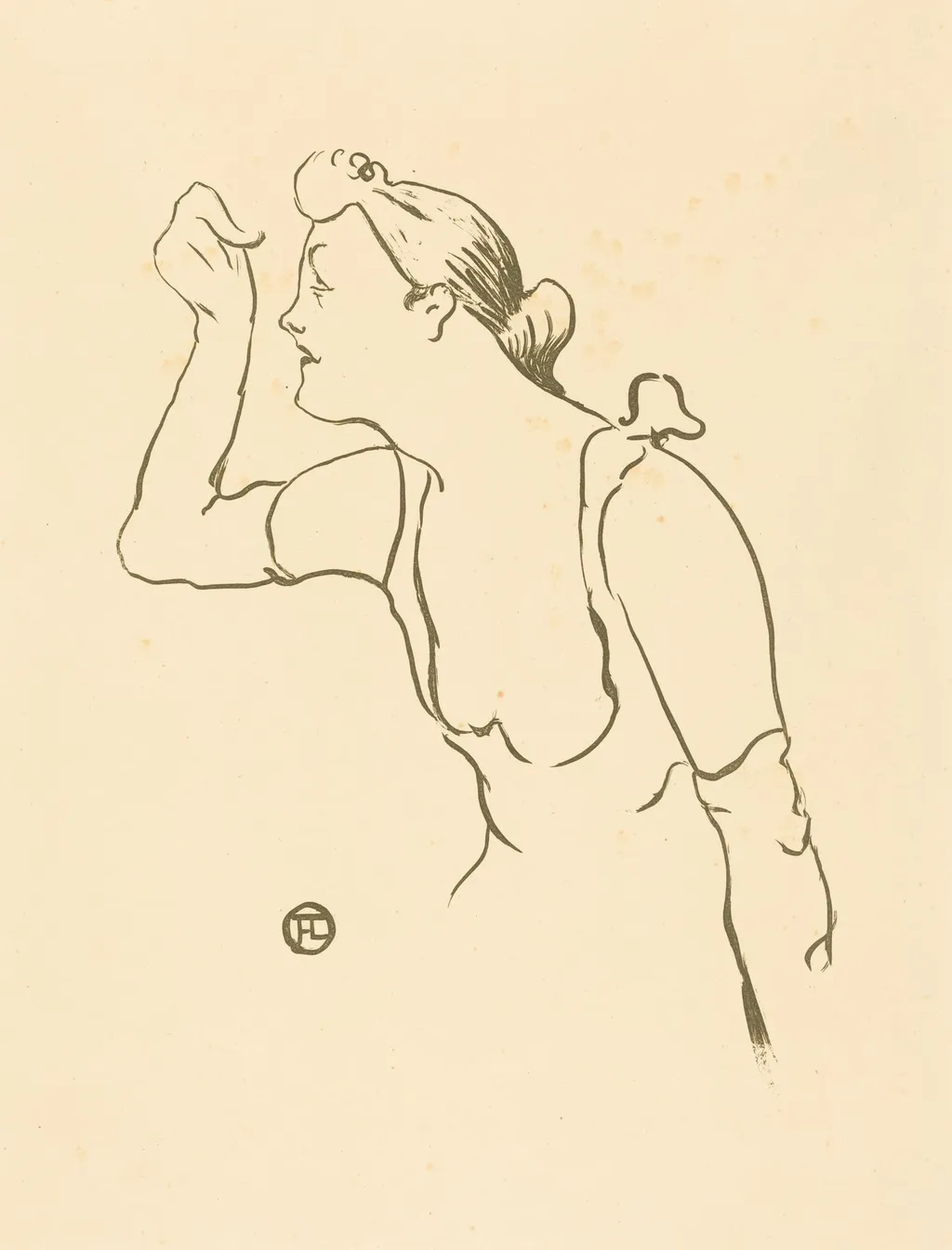
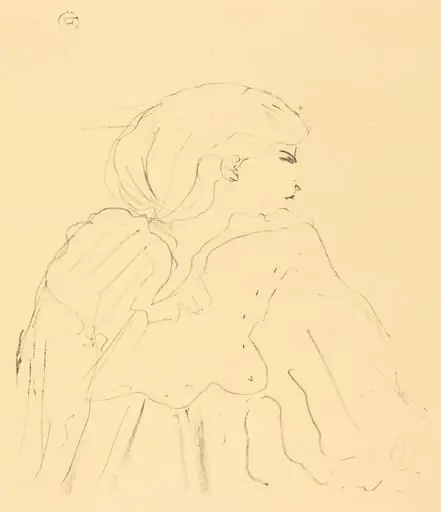
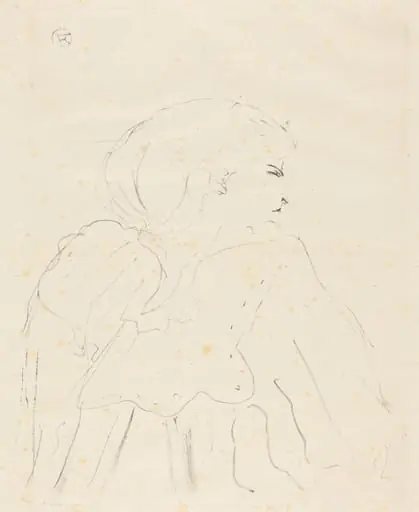
Paula Brébion is an ink print by the Impressionist artist Henri de Toulouse-Lautrec. It dates from 1893 and is held in the collection of the National Gallery of Art.
About this work
Overview
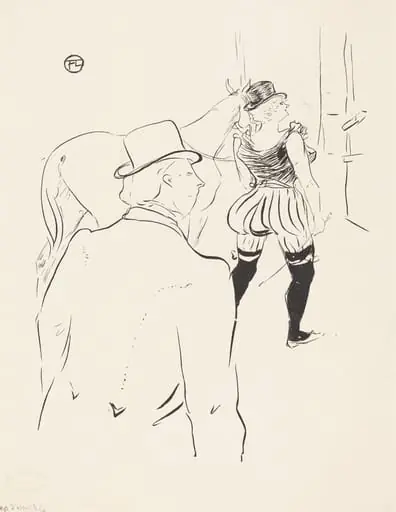
Created in 1893, this lithograph by Henri de Toulouse-Lautrec depicts Paula Brébion, a performer active in Parisian music halls. Executed in olive green ink on velin paper, the work belongs to a series of graphic studies capturing figures from the city’s entertainment circles. Its restrained palette and minimal lines reflect Lautrec’s interest in capturing presence over ornamentation.
Subject & Meaning
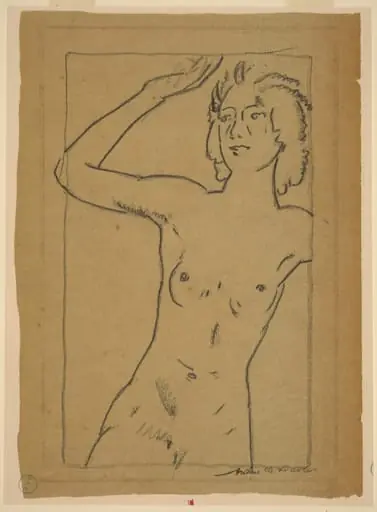
Paula Brébion, a singer and stage performer, is shown mid-motion, one arm raised as if gesturing or reaching. Her posture suggests a moment of theatrical expression, not posed grandeur. Lautrec avoids idealization, presenting her as a working artist in a fleeting gesture, aligning with his broader focus on the unvarnished reality of performers behind the scenes.
Technique & Style
Lautrec employed lithography to achieve fluid, spontaneous lines. The figure is rendered with sparse, confident strokes—no modeling, no shading, no background detail. The paper’s texture remains visible, reinforcing the immediacy of the drawing. This reduction of form to essential contours was characteristic of his graphic approach, prioritizing rhythm over realism.
History & Provenance
The print originates from Lautrec’s prolific period of poster and print production in the early 1890s, when he regularly documented performers he encountered in Montmartre. While specific ownership history is not documented here, the work aligns with his broader practice of producing limited-edition prints for collectors and friends, often circulating outside commercial galleries.
Context
During the 1890s, Parisian artists increasingly turned to everyday life as subject matter, rejecting academic conventions. Lithography, newly accessible and affordable, allowed for rapid reproduction and direct expression. Lautrec’s work contributed to this shift, using the medium to capture the transient energy of cabarets and theaters with a modern, unembellished eye.
Legacy
This lithograph exemplifies Lautrec’s influence on modern graphic art, demonstrating how simplicity and observation could convey psychological presence. His approach to portraiture—focusing on posture and gesture rather than facial detail—resonated with later artists exploring expression through line, helping redefine the potential of printmaking in the 20th century.
Artist & collection
Artist
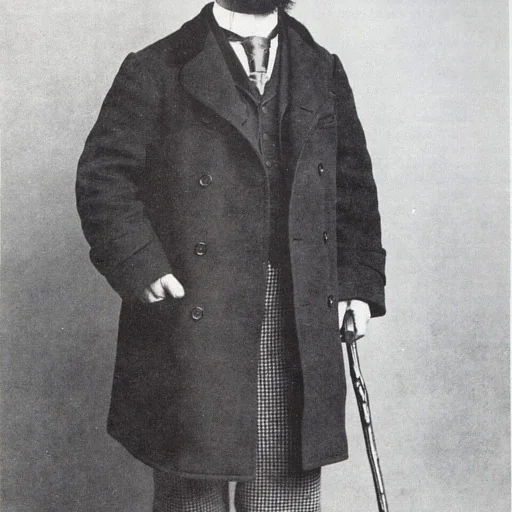
Comte Henri Marie Raymond de Toulouse-Lautrec-Montfa (24 November 1864 – 9 September 1901), known as Toulouse-Lautrec (French: ), was a French painter, printmaker, draughtsman, caricaturist, and illustrator.