Artwork
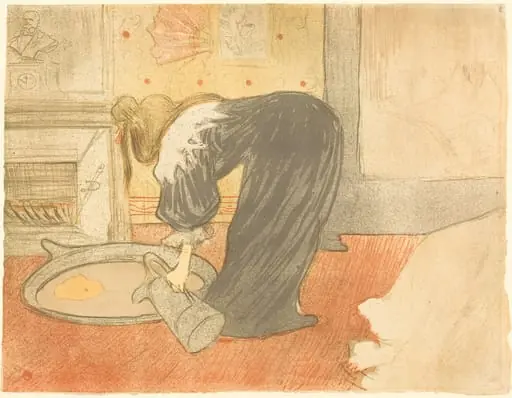
Woman at the Tub (Femme au tub)
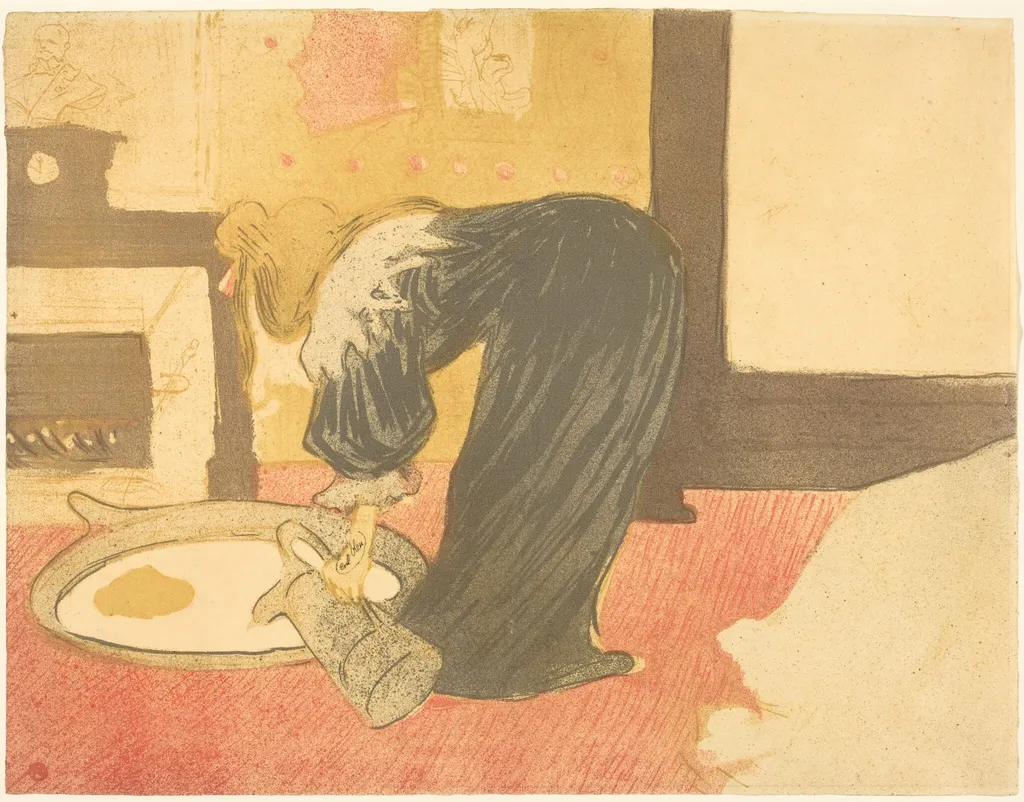
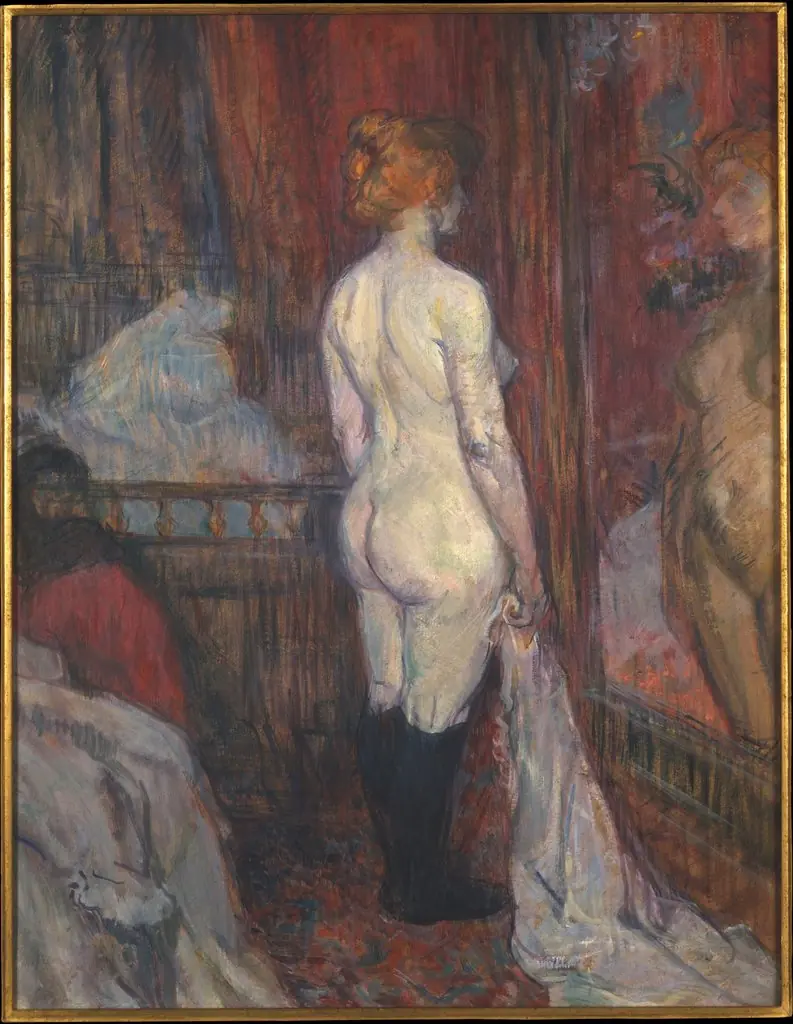
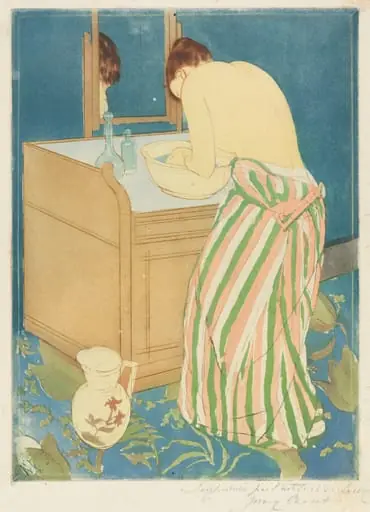
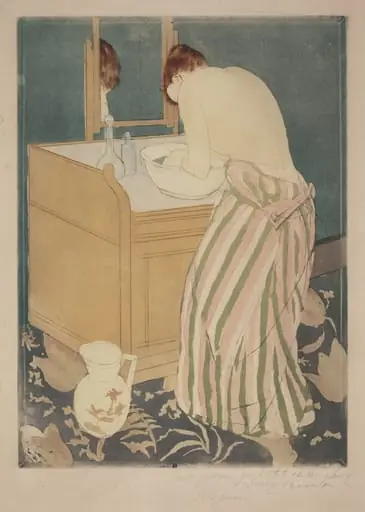
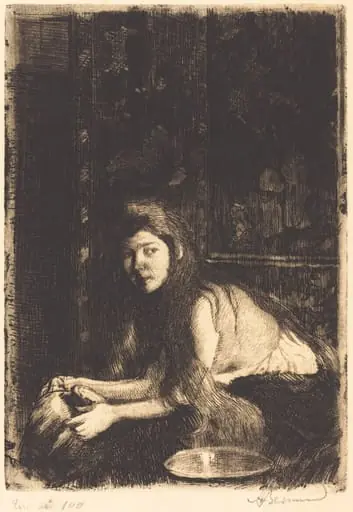
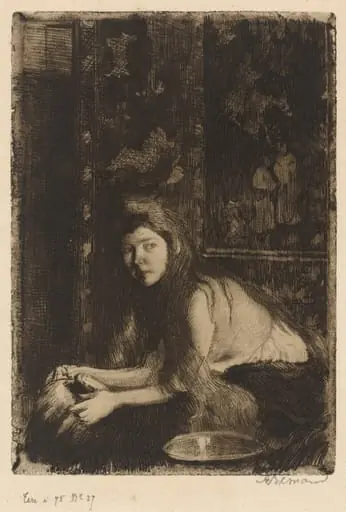
Woman at the Tub (Femme au tub) is an ink print by the Impressionist artist Henri de Toulouse-Lautrec. It dates from 1896 and is held in the collection of the National Gallery of Art. Henri de Toulouse‑Lautrec’s 1896 color lithograph titled *Woman at the Tub* is a trial proof executed on wove paper.
About this work
Overview
Henri de Toulouse‑Lautrec’s 1896 color lithograph titled *Woman at the Tub* is a trial proof executed on wove paper. The composition captures a private interior scene, rendered in a loose, sketch‑like manner that differs from his more polished commercial prints. As a work from the artist’s mature period, it reflects his interest in everyday moments within the nocturnal world of Paris.
Subject & Meaning
The image presents a woman bent over a bathtub, her face concealed by falling hair, while a loose robe drapes her form. A small dog watches from the floor, which bears a smear of red pigment, suggesting a recent activity. The cramped setting, with a fireplace and a cluttered shelf, conveys an intimate, unvarnished glimpse of domestic life that borders on the theatrical.
Technique & Style
Created as a lithographic trial, the print employs bold, uneven color areas and vigorous, sketchy lines that emphasize spontaneity over finish. The use of wove paper allows the pigments to spread subtly, enhancing the atmospheric dimness. The artist’s handling of line and hue underscores the immediacy of the scene, characteristic of his experimental approach to printmaking during the 1890s.
History & Provenance
The print has been retained in collections that specialize in 19th‑century French lithography, illustrating the artist’s broader oeuvre.
The work originates from Toulouse‑Lautrec’s prolific period of documenting Parisian nightlife, though this particular piece focuses on a quieter, private moment. As a trial proof, it was not intended for public exhibition, and it remains a valuable example of his process. The print has been retained in collections that specialize in 19th‑century French lithography, illustrating the artist’s broader oeuvre.
Context
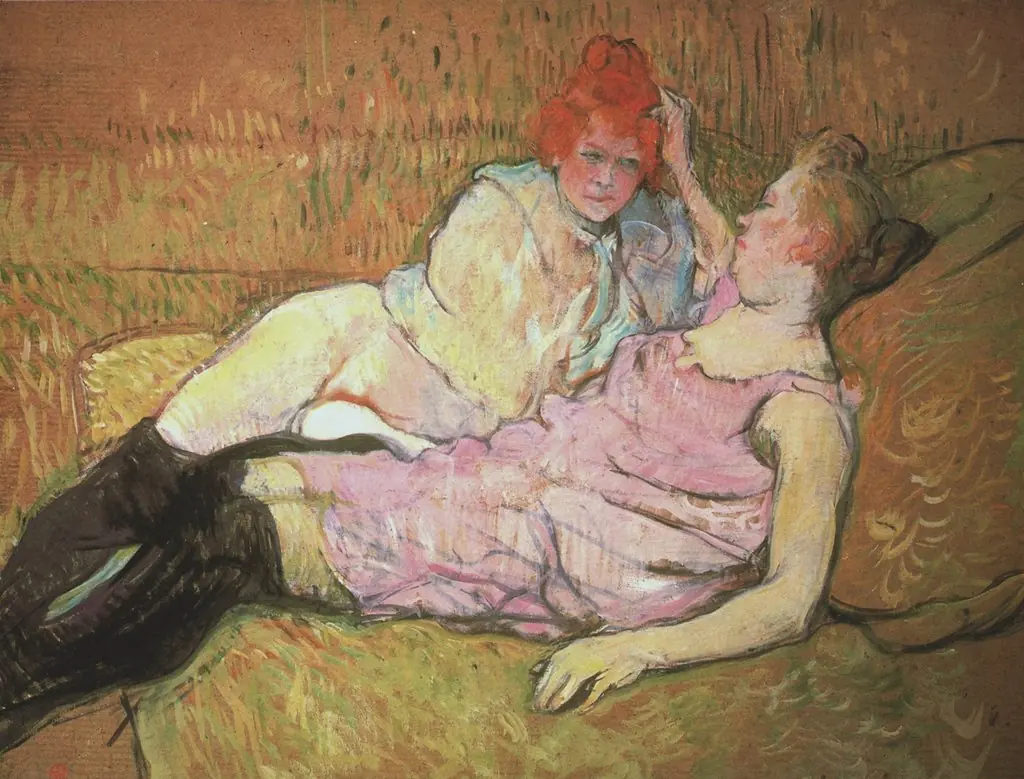
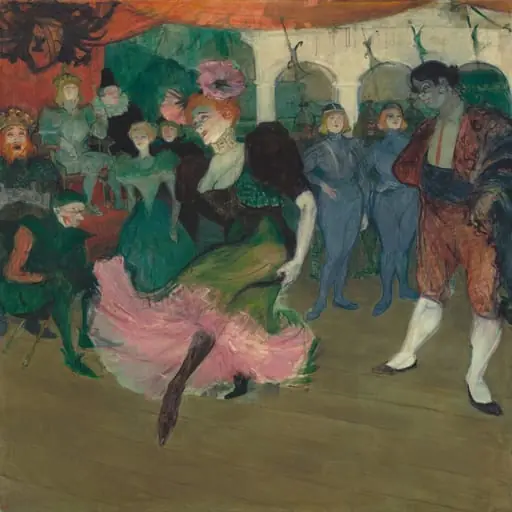
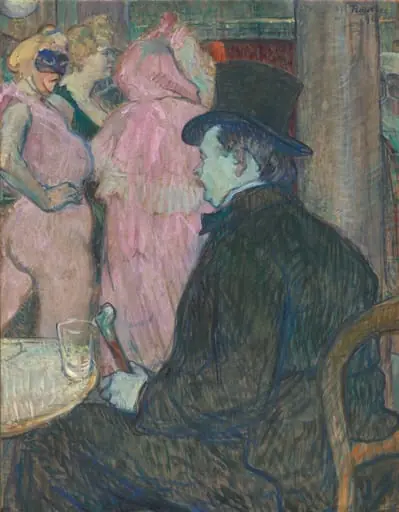
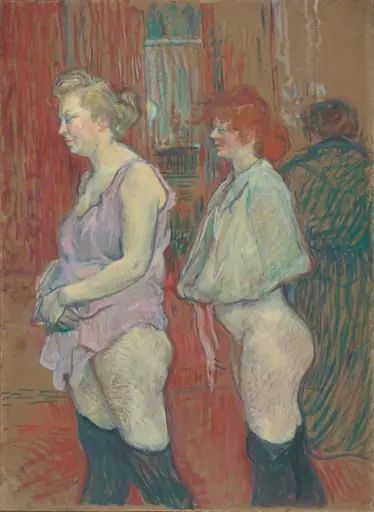
Produced amid the bohemian milieu of late‑19th‑century Montmartre, the lithograph aligns with Toulouse‑Lautrec’s fascination with the city's cabarets, brothels, and theatrical venues. While many of his works portray public performance, this interior scene extends his visual inquiry to the behind‑the‑scenes reality of the same social world, offering a counterpoint to his more public depictions.
Artist & collection
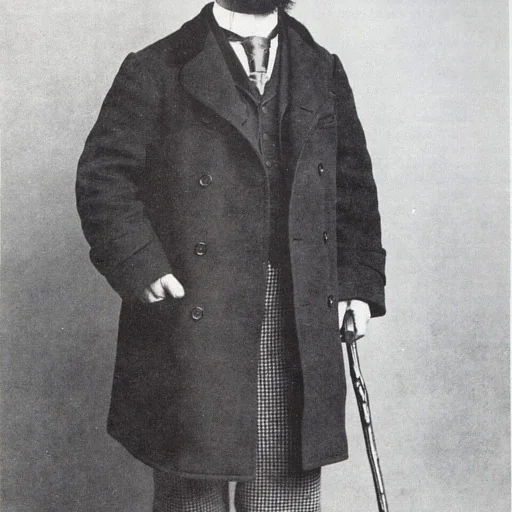
Artist
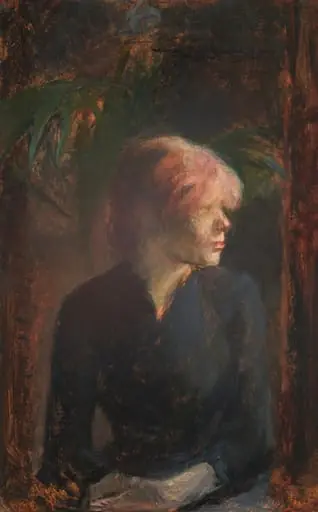
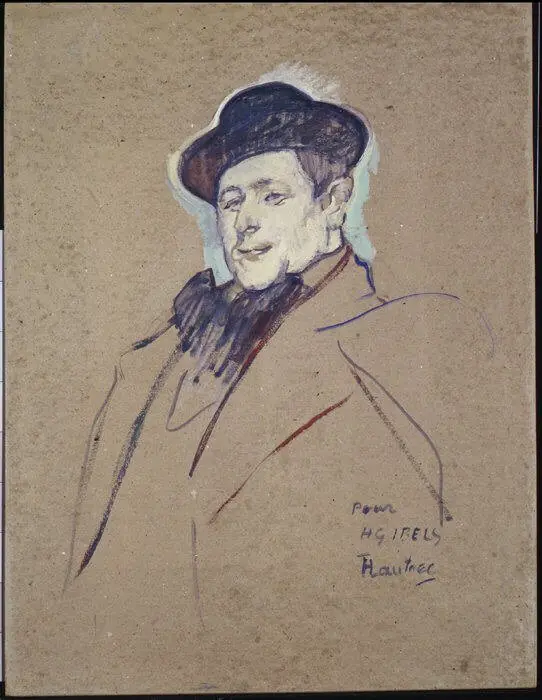
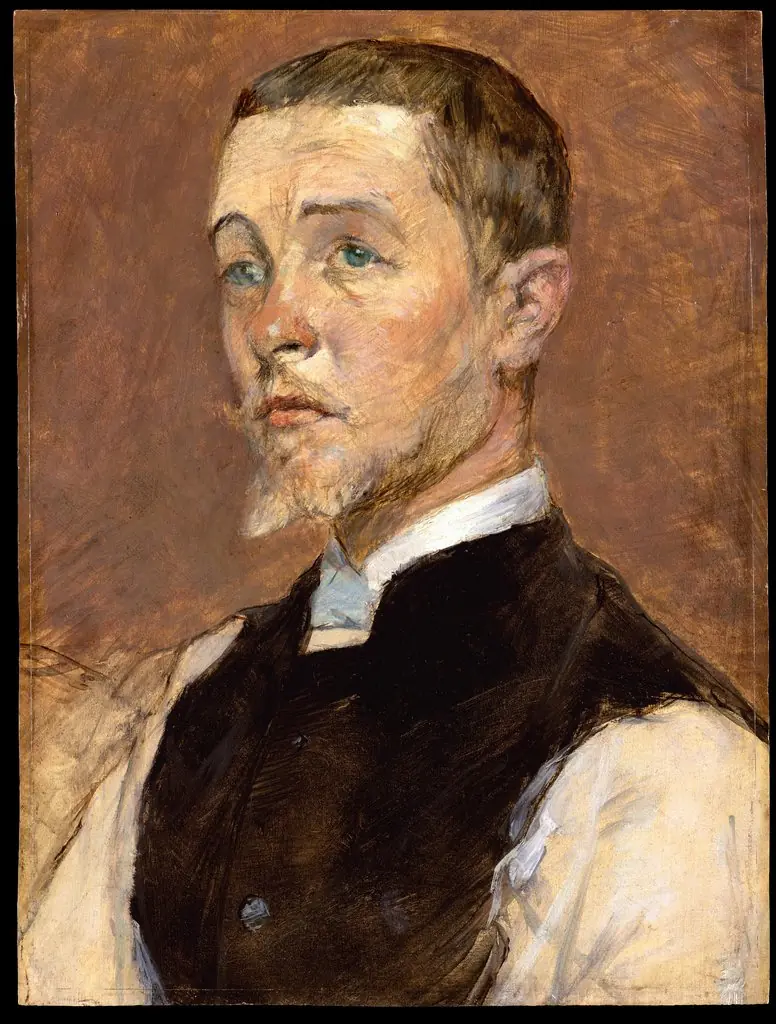
Comte Henri Marie Raymond de Toulouse-Lautrec-Montfa (24 November 1864 – 9 September 1901), known as Toulouse-Lautrec (French: ), was a French painter, printmaker, draughtsman, caricaturist, and illustrator.