Artwork
Why Not?...Once Is Not a Habit (Pourquoi pas?...Une fois n'est pas coutume)
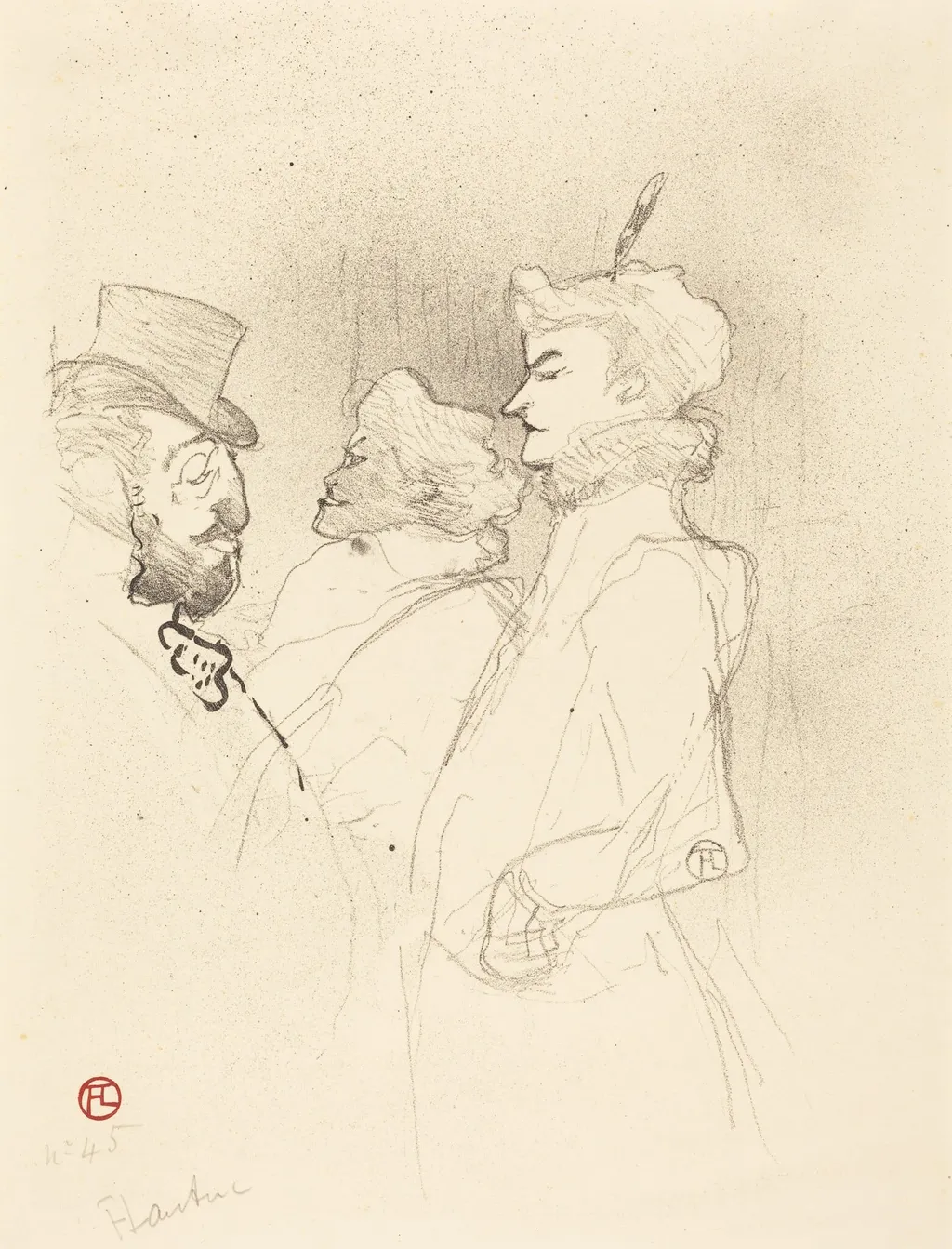
Why Not?...Once Is Not a Habit (Pourquoi pas?...Une fois n'est pas coutume) is an ink print by the Impressionist artist Henri de Toulouse-Lautrec. It dates from 1893 and is held in the collection of the National Gallery of Art. Why Not?
About this work
The artist used a technique called lithography, which lets them sketch directly onto a smooth stone before printing.
This sketch shows two people leaning close together. The man on the left wears a tall hat and holds a cigarette. The woman’s face is turned slightly away, her hair loose. The lines are quick and loose, like they were drawn fast.
The artist used a technique called lithography, which lets them sketch directly onto a smooth stone before printing. This sketch was made in 1893, when artists were exploring everyday life in a new way.
Next, look up lithography to see how it works.
Overview
Why Not?...Once Is Not a Habit is a 1893 lithograph by Henri de Toulouse-Lautrec, executed in black ink on velin paper, characterized by quick, loose lines capturing an intimate moment between two figures.
Subject & Meaning
The print depicts a close, potentially intimate encounter between a man (identified by a tall hat and cigarette) and a woman (with averted face and loose hair), suggesting a scene from Parisian nightlife or a private moment, reflective of Toulouse-Lautrec's fascination with social and theatrical scenes of his time.
Technique & Style
The work showcases Toulouse-Lautrec's use of lithography, a technique allowing direct drawing onto a stone for printing. The loose, rapid lines are indicative of his expressive and spontaneous style, suited to capturing fleeting moments of modern life.
History & Provenance
Created in 1893, this lithograph is part of Toulouse-Lautrec's late 19th-century output as a versatile artist (painter, printmaker, illustrator). Born into aristocracy with physical challenges from adolescence, he focused on Paris's vibrant, often marginalized, social scenes.
Context
This work emerges from a period when artists were increasingly interested in depicting everyday life in a more direct and modern manner. Toulouse-Lautrec's choice of subject and technique reflects this trend, as well as his personal affinity for the theatrical and nocturnal aspects of Paris.
Artist & collection
Artist
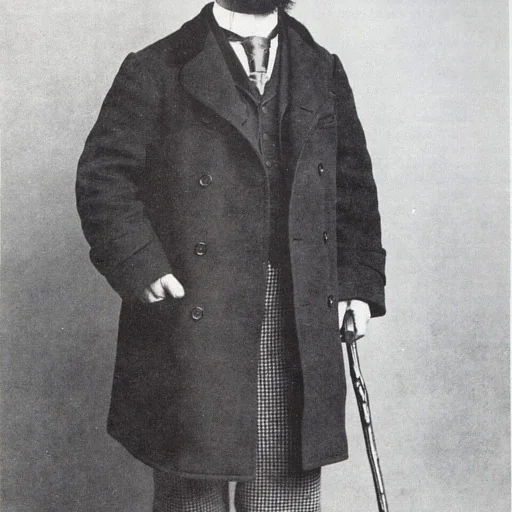
Comte Henri Marie Raymond de Toulouse-Lautrec-Montfa (24 November 1864 – 9 September 1901), known as Toulouse-Lautrec (French: ), was a French painter, printmaker, draughtsman, caricaturist, and illustrator.

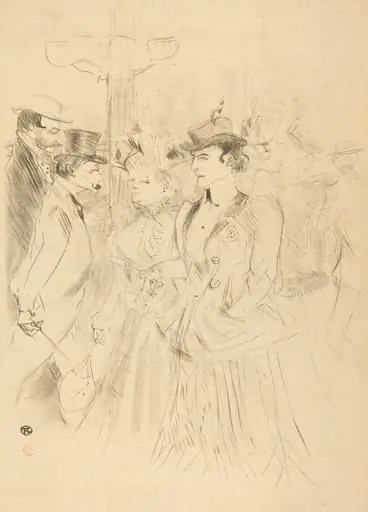 Promenade (Promenoir)
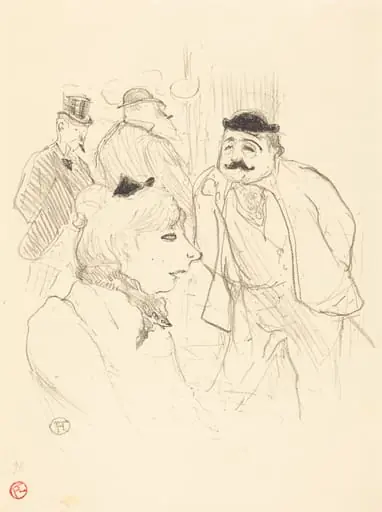 La Tige (Moulin-Rouge)
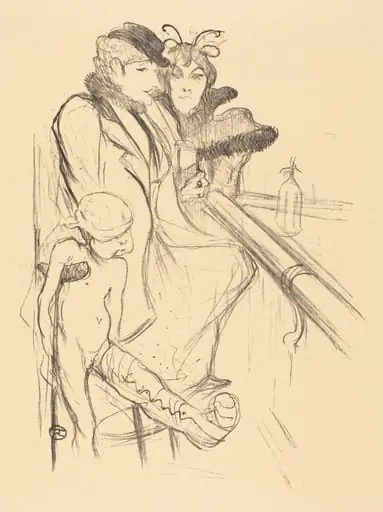 Wounded Eros (Eros vanné)
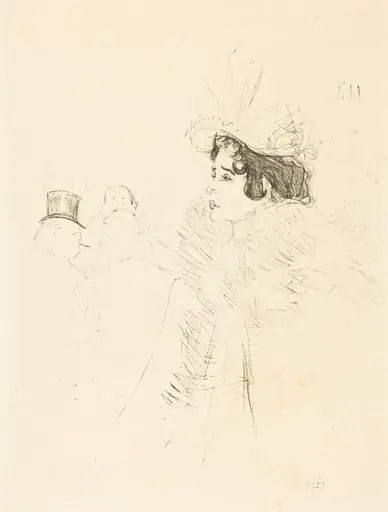 Miss May Belfort in the Irish and American Bar, rue Royale (Miss Belfort Belfort au Irish and American Bar, Rue Royale)
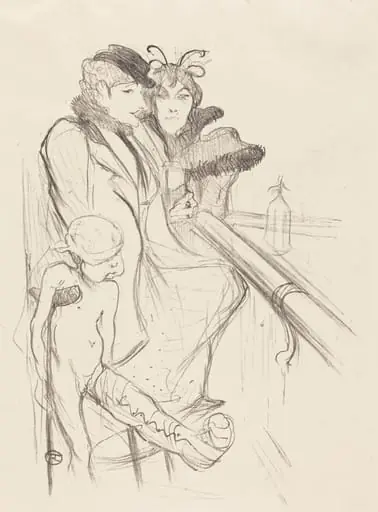 Wounded Eros (Eros vanné)
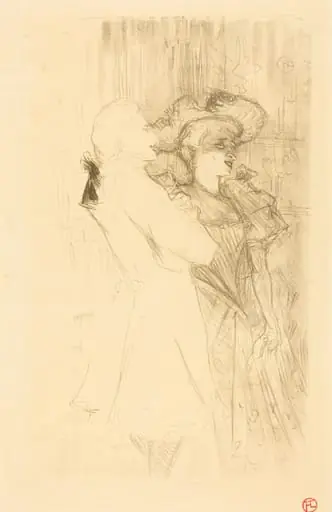 Lender and Auguez in "La chanson de fortunio" (Lender et Auguez dans "La chanson de fortunio")
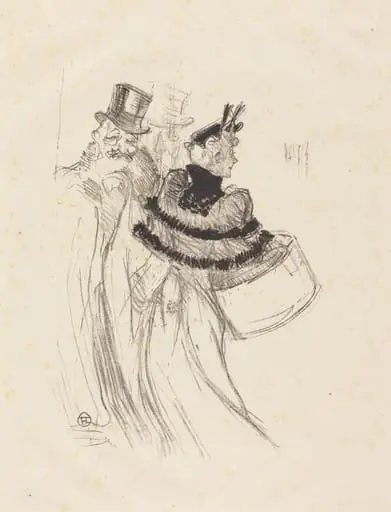 The Old Gentlemen (Les vieux messieurs)
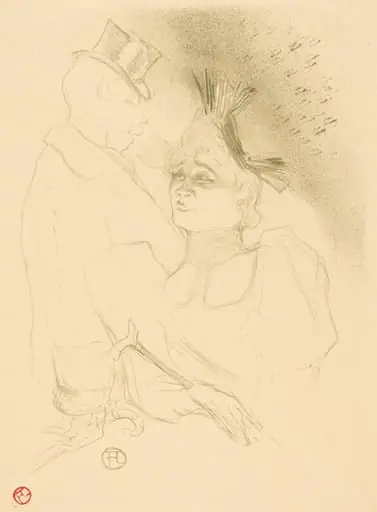 Mlle. Lender and Baron (Mlle. Lender et Baron)
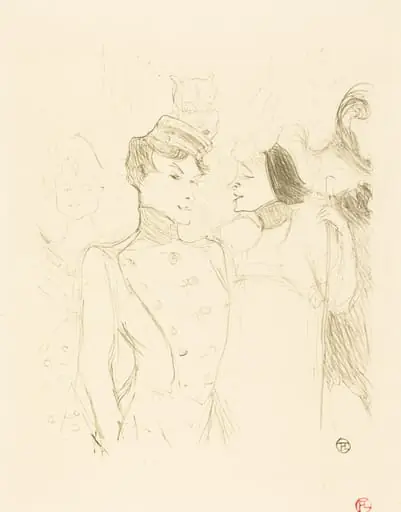 Lender and Lavalliere (Lender et Lavallière)
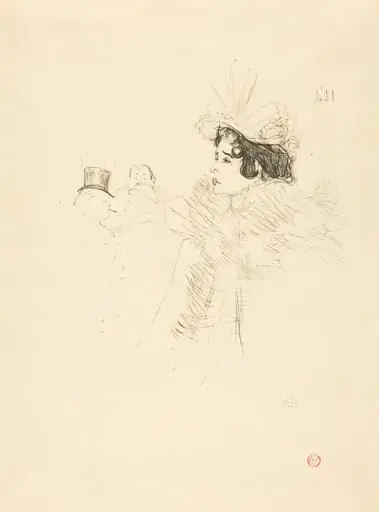 Miss May Belfort in the Irish and American Bar, rue Royale (Miss Belfort Belfort au Irish and American Bar, Rue Royale)