Artwork
A Rocky Shore at Coombmartin, Devon (Combe Martin Bay)
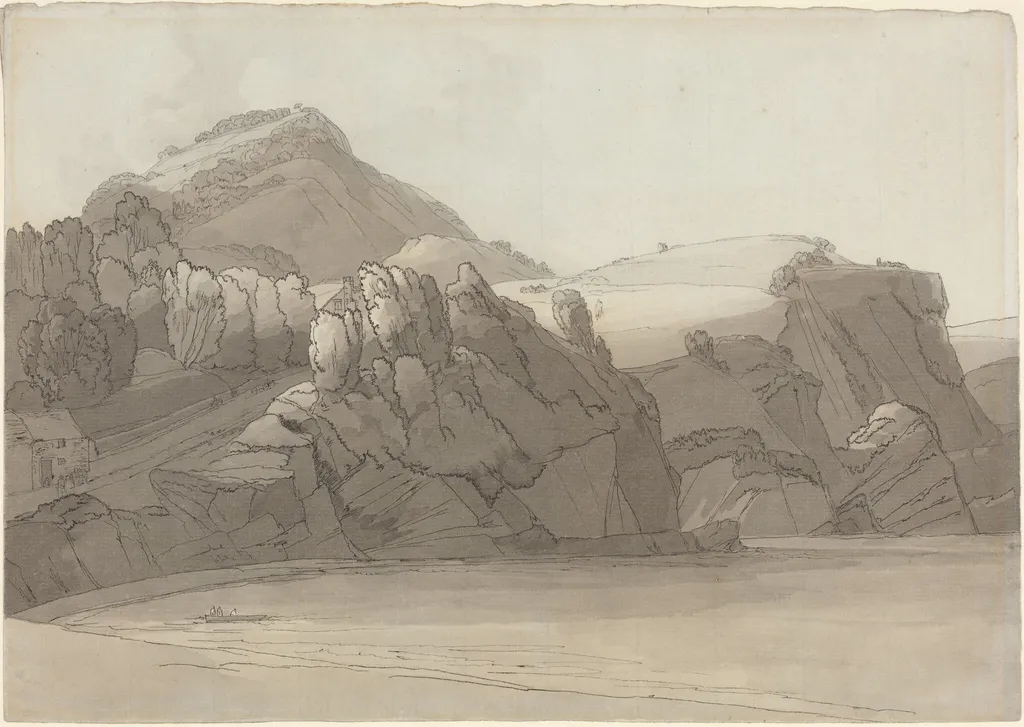
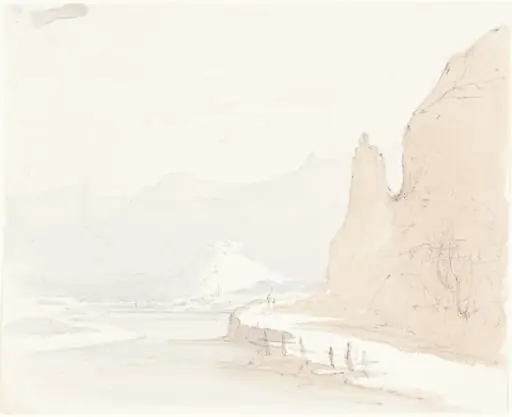
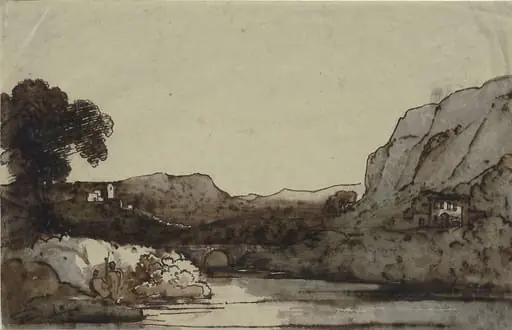
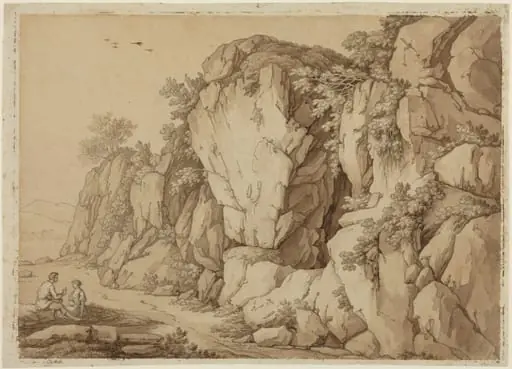
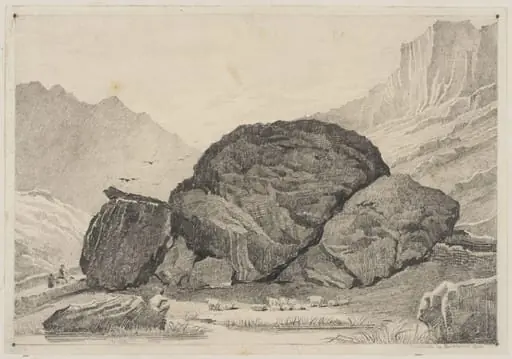
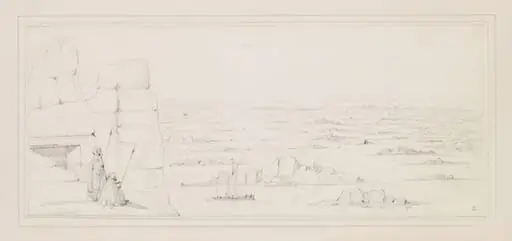
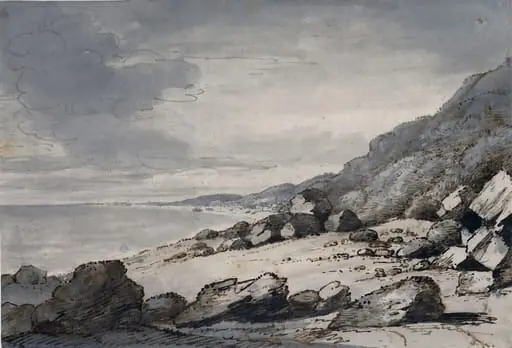
A Rocky Shore at Coombmartin, Devon (Combe Martin Bay) is an ink drawing by the Baroque artist Francis Towne. It dates from 1783 and is held in the collection of the National Gallery of Art.
About this work
Overview
Executed in pen and gray-brown ink with wash on laid paper, it belongs to a series of topographical sketches Towne made during travels across southern England.
Created in 1783, this drawing by Francis Towne captures a stretch of the Devon coastline near Combe Martin Bay. Executed in pen and gray-brown ink with wash on laid paper, it belongs to a series of topographical sketches Towne made during travels across southern England. Unlike his more polished watercolors, this piece retains the immediacy of an on-site observation, emphasizing natural form over idealized composition.
Subject & Meaning
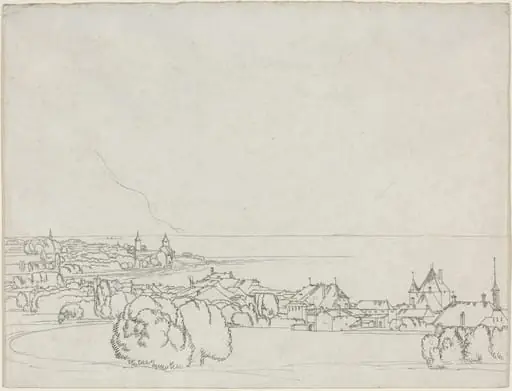
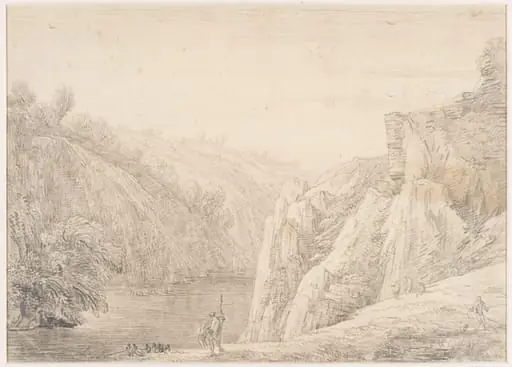
The scene portrays a wild, unaltered stretch of coast: steep cliffs, jagged boulders, and sparse vegetation clinging to rocky slopes. Calm water below contrasts with the rugged terrain, suggesting the quiet persistence of nature. There is no human presence, reinforcing a sense of isolation and geological time. The composition invites contemplation of the land’s enduring character rather than its utility or beauty.
Technique & Style
Towne employed swift, varied pen strokes and diluted ink washes to suggest texture and depth. Cross-hatching defines the fractured surfaces of rocks, while lighter washes indicate atmospheric haze and distant sky. The sketch-like quality—loose lines, minimal detail—conveys a sense of direct observation. His method prioritizes tonal variation over precise outline, lending the scene an organic, unpolished rhythm.
History & Provenance
The drawing was made during Towne’s travels in southwest England, part of a broader effort to document landscapes before widespread industrial change. It remained in private hands for much of the 19th century and was largely overlooked until mid-20th-century reassessments of British watercolorists. Its survival in good condition reflects its status as a working study rather than a finished exhibition piece.
Context
In the 1780s, British artists increasingly turned to direct landscape observation, moving away from classical ideals. Towne’s work aligns with this shift, influenced by the growing interest in naturalism and regional scenery. Though he traveled to Italy, his English coastal studies like this one reflect a quieter, more intimate engagement with place—distinct from the grandeur sought by contemporaries like Turner.
Legacy
Though little recognized in his lifetime, Towne’s drawings are now valued for their quiet precision and sensitivity to light and geology. This piece exemplifies his contribution to the evolution of British landscape drawing, bridging topographical accuracy and poetic observation. It remains a reference for understanding how 18th-century artists recorded the natural world with restraint and attention to detail.
Artist & collection

Artist
Francis Towne (1739 – 7 July 1816) was a British watercolour painter of landscapes that range from the English Lake District to Naples and Rome.