Artwork
Loch Katrine
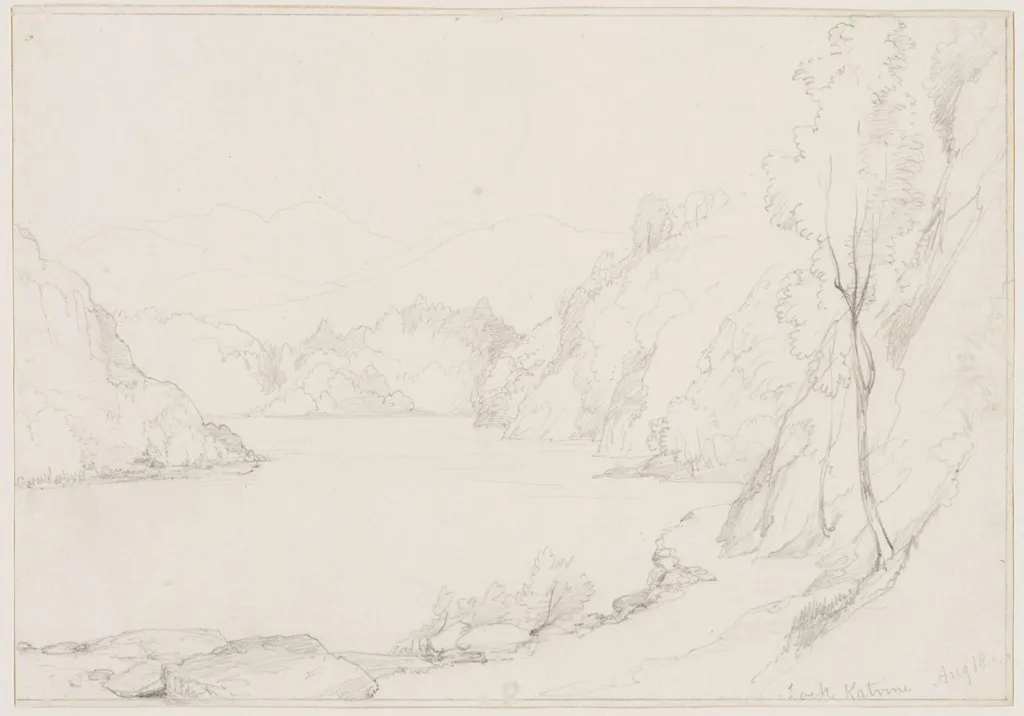
Loch Katrine is a drawing by Edward William Cooke. It dates from 1850 and is held in the collection of the Victoria and Albert Museum.
About this work
Overview
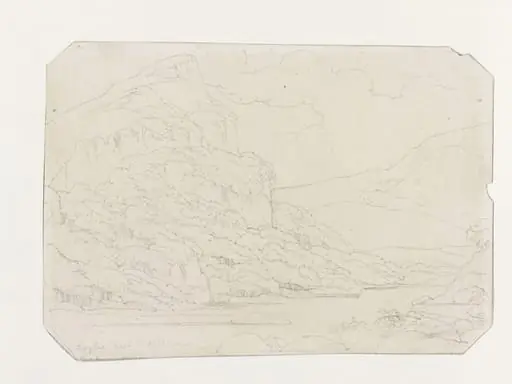
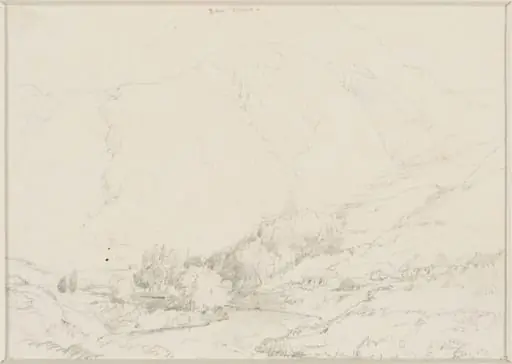
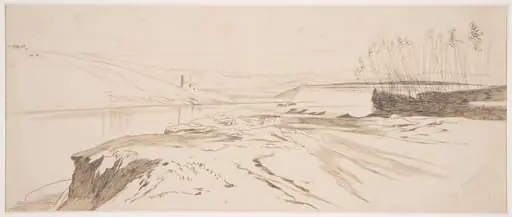
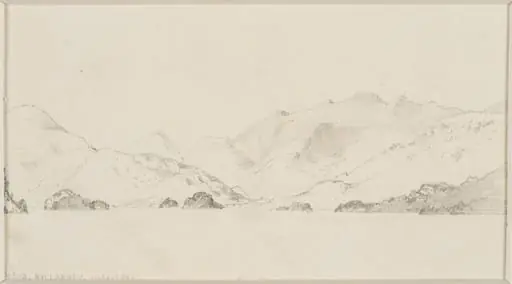
This pencil drawing depicts Loch Katrine, a Scottish lake, executed on August 18, 1850, by Edward Cooke. The work captures a serene, mist-laden landscape, with a winding river framed by undulating hills. Delicate, restrained pencil marks define the scene, suggesting natural elements without excessive detail, evoking the transient atmosphere of the location.
Subject & Meaning
The drawing presents Loch Katrine, a lake in the Scottish Highlands, as a tranquil, almost ethereal setting. Cooke’s focus on subdued light and soft contours conveys a sense of quietude, emphasizing the natural beauty of the landscape. The absence of human figures or overt narrative directs attention to the land’s inherent mood rather than specific events or symbolism.
Technique & Style
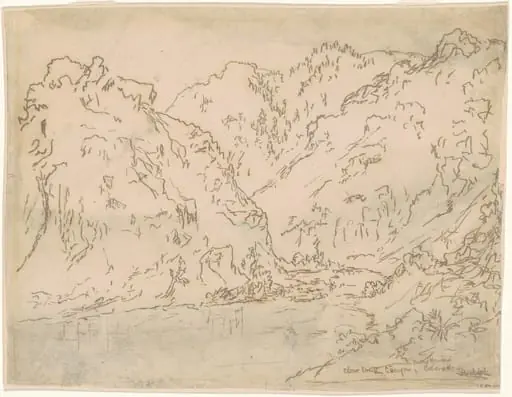
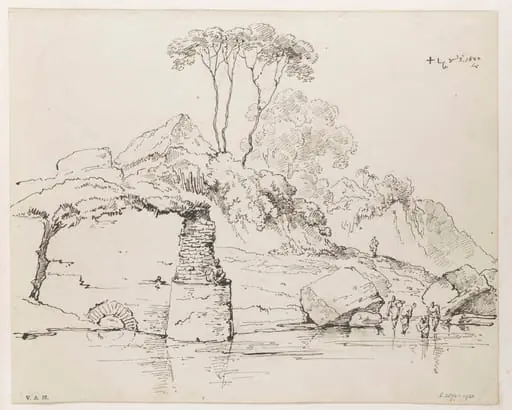
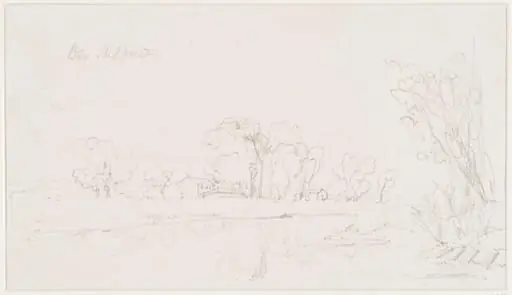
Cooke employed light, fluid pencil strokes to render the scene, using minimal lines to imply texture and depth. The approach suggests a rapid, observational study rather than a highly finished composition. Subtle variations in pressure create distinctions between foliage, rock, and sky, while the paper’s faint discoloration contributes to the work’s understated, organic quality.
History & Provenance
Executed in 1850, the drawing bears Cooke’s inscription identifying the subject as Loch Katrine. Little is recorded about its early ownership, though its survival as a standalone work indicates it may have been retained as a personal study or informal record. The date places it within Cooke’s broader engagement with landscape subjects during the mid-19th century.
Context
During the 1850s, artists increasingly turned to plein-air sketching to capture fleeting atmospheric effects. Cooke’s drawing aligns with this practice, reflecting a growing interest in direct observation of nature. Loch Katrine, a site of literary and scenic significance, would have appealed to artists seeking to document landscapes tied to Romantic ideals of beauty and solitude.
Artist & collection