Artwork
John Kennedy
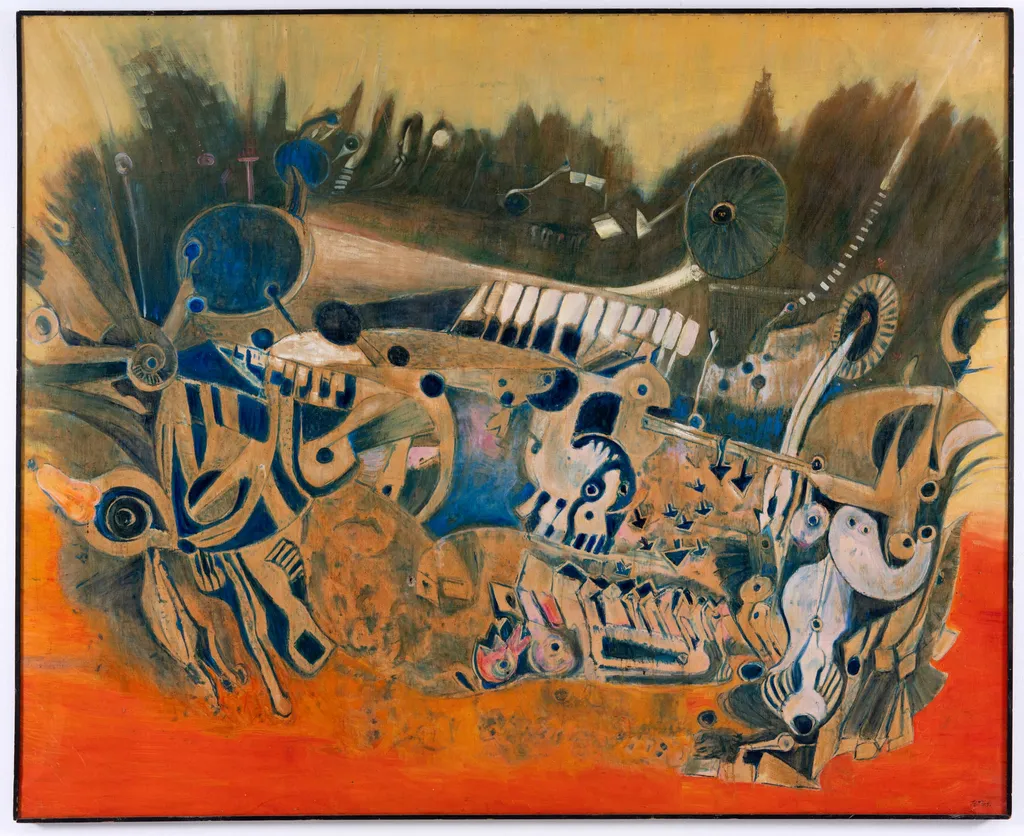
John Kennedy is a photography by Stergios Tsioumas. It dates from 1982 and is held in the collection of the Metropolitan Organisation of Museums of Visual Arts of Thessaloniki – MOMus.
About this work
It’s a quiet break in a famous image, turning a moment into something new.
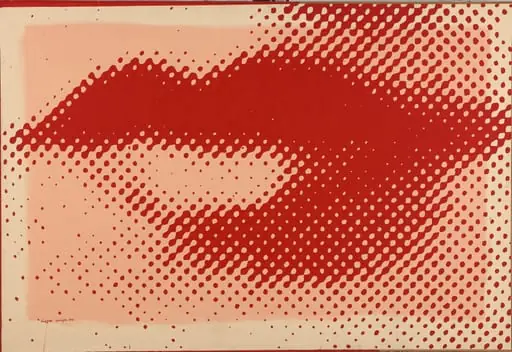
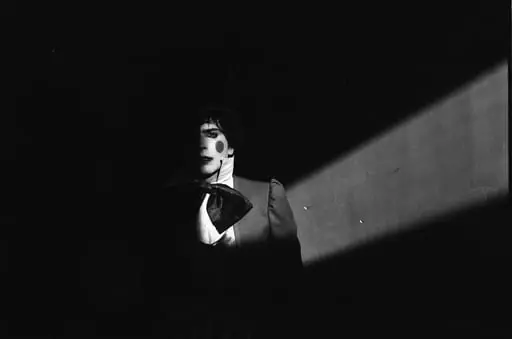
This black-and-white photo shows John F. Kennedy’s face split by a single red dot. It’s a quiet break in a famous image, turning a moment into something new. The dot sits right on his forehead, breaking the smooth gray tones.
The artist used pop art’s bold tricks on a real photo. He cut, pasted, and colored just one spot to make you pause. It’s not about Kennedy himself. It’s about how small changes can shift how we see everything.
Look up this artist next: Tsioumas, Stergios (1954)
Overview
Stergios Tsioumas created a black-and-white photographic portrait of John F. Kennedy, altered by a single red dot placed on the forehead. The work emerges from his engagement with post-war visual culture, particularly pop art’s reworking of mass-media imagery. The intervention is minimal yet deliberate, transforming a familiar public figure into an object of quiet disruption. The dot functions not as decoration but as a structural rupture, altering perception through subtraction and addition alike.
Subject & Meaning
Though the subject is John F. Kennedy, the work is not a tribute or political statement. Instead, it uses his widely recognized image as a vessel to explore how visual familiarity shapes meaning. The red dot interrupts the viewer’s automatic recognition, forcing attention to the mechanics of seeing. The alteration suggests that identity, memory, and iconography are fragile constructs—easily disturbed by the smallest visual change.
Technique & Style
Tsioumas employed a direct, physical intervention on a photographic print: cutting, pasting, and applying a single spot of red pigment. The technique echoes pop art’s use of commercial processes but strips them to their essentials. The monochrome base contrasts sharply with the saturated dot, heightening its visual weight. The precision of the placement—centered, unadorned—reflects an obsession with the relationship between part and whole, where absence or addition equally destabilizes the image.
History & Provenance
Created in the mid-1970s, the work stems from Tsioumas’s photographic practice and his critical engagement with media imagery during a period of intense visual saturation in post-war Greece. It reflects his personal method of observation and repetition, where images were studied until their structure became visible. The work remains part of his early series exploring the limits of photographic representation, though its specific exhibition history remains limited to regional contexts.
Context
Emerging in the wake of global pop art movements, Tsioumas’s work responds to the proliferation of televised and printed political imagery. While American pop artists appropriated celebrity and advertising, Tsioumas focused on the psychological weight of familiar faces in public consciousness. His approach was quieter, more introspective, rooted in the materiality of the photograph rather than mass reproduction. The work aligns with broader European inquiries into image saturation and perception in the late 20th century.
Legacy
Tsioumas’s 'John Kennedy' remains a quiet but significant example of how minimal interventions can challenge the authority of photographic truth. It influenced later Greek artists working with found imagery and conceptual photography, emphasizing the power of restraint. The work endures not as a political artifact but as a meditation on the fragility of visual meaning—where a single dot can unravel a century’s worth of collective recognition.
Artist & collection
Artist
Stergios Tsioumas carried a camera like a notebook, snapping street scenes and portraits in black and white while everyone else chased color.
Museum
Metropolitan Organisation of Museums of Visual Arts of Thessaloniki – MOMus
Continue through works from the same source collection.