Artwork
Untitled
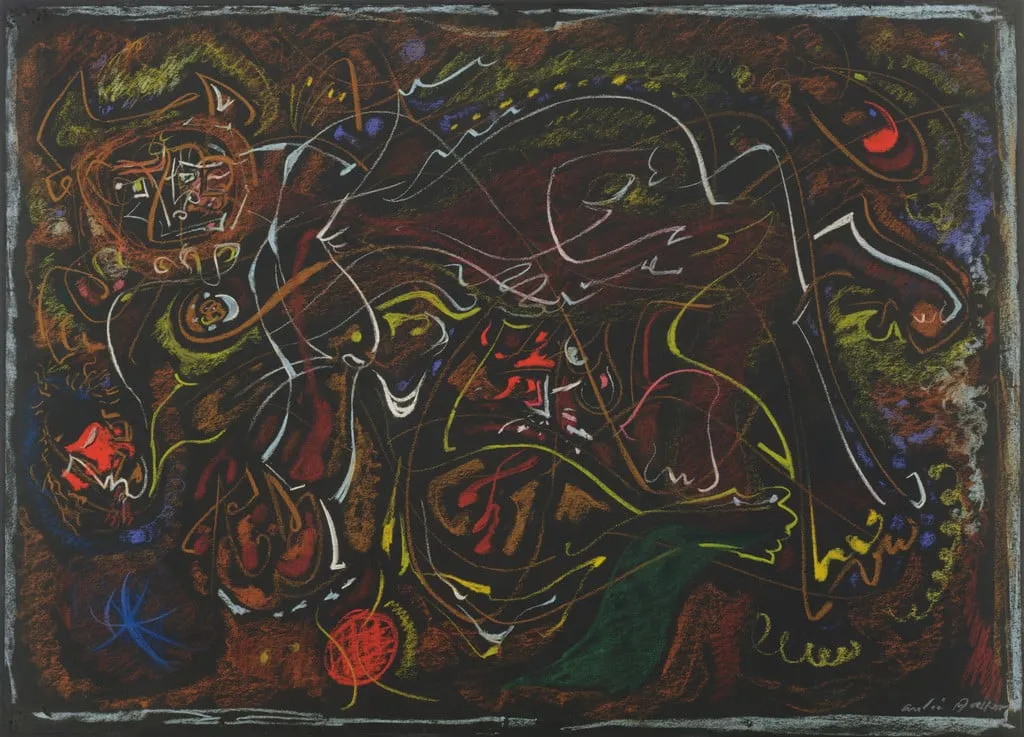
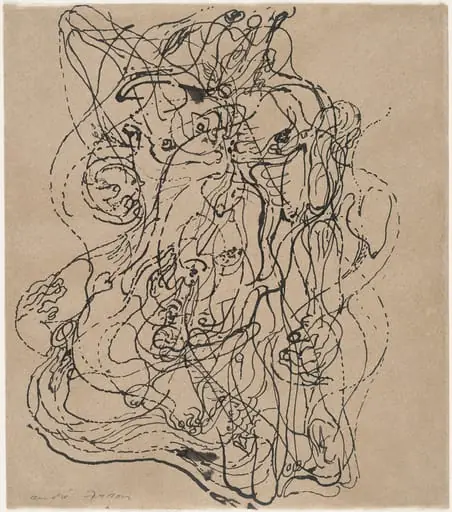
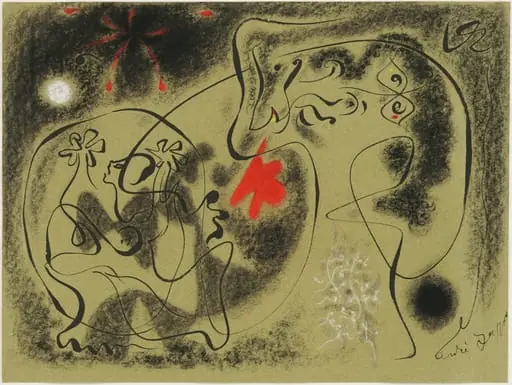
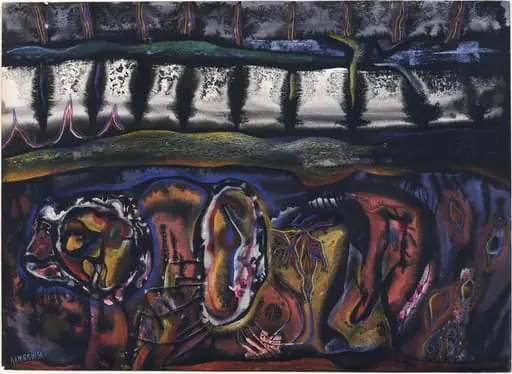
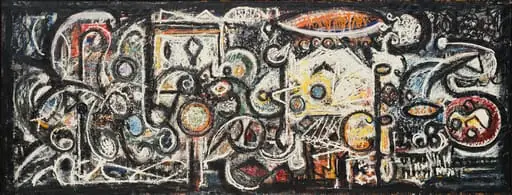
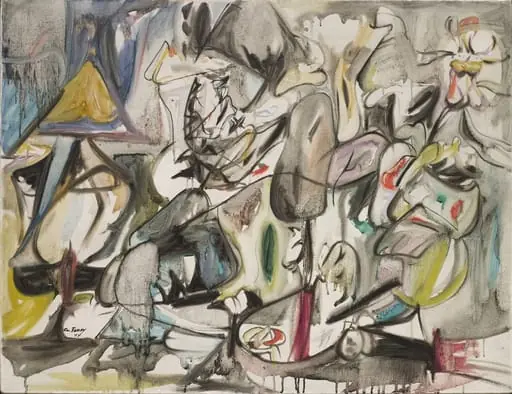
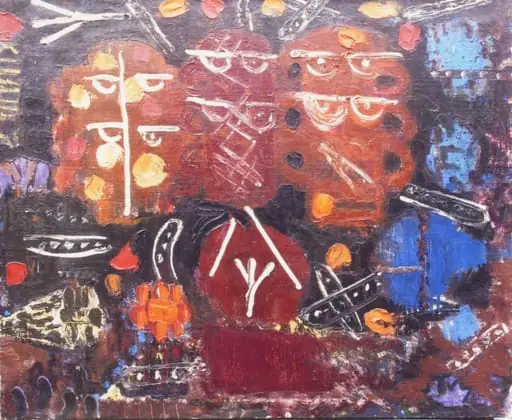
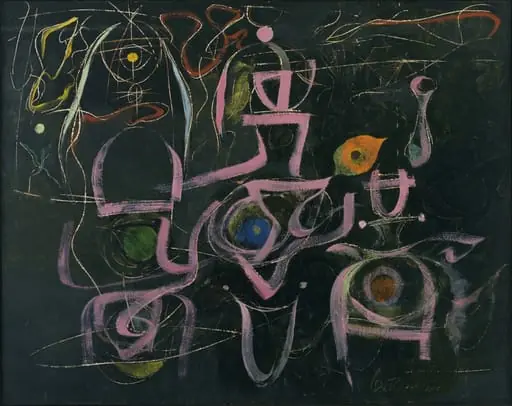
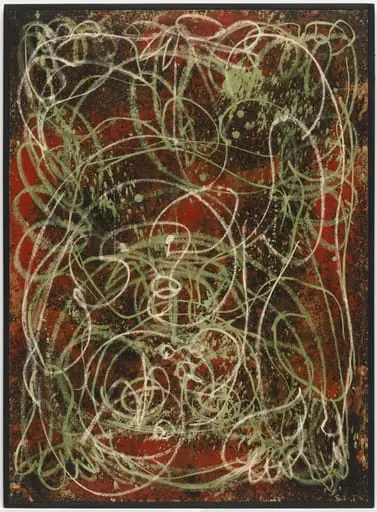
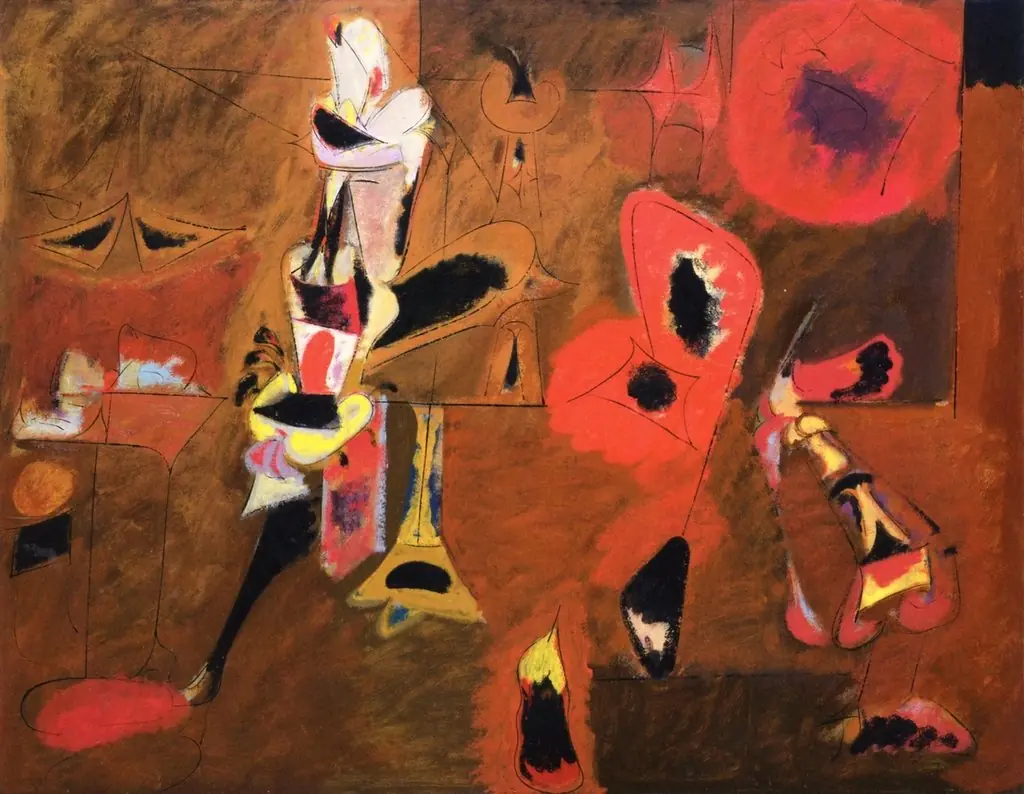
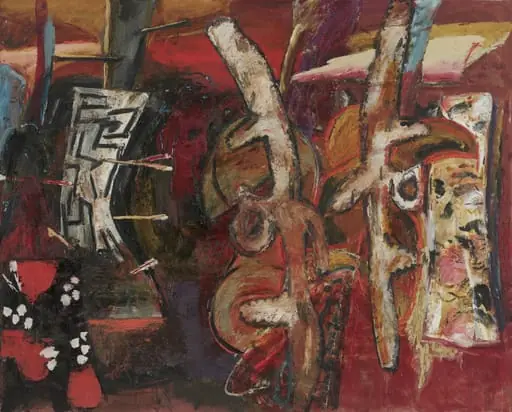
Untitled is a pastel drawing by André Masson. It dates from 1945 and is held in the collection of the Museum of Modern Art.
About this work
Overview
The work belongs to a series produced during his exile in the United States, where he deepened his engagement with spontaneous gesture.
Created in 1945, this drawing by André Masson employs pastel on black paper to generate a dynamic field of unstructured marks. The work belongs to a series produced during his exile in the United States, where he deepened his engagement with spontaneous gesture. Its raw energy and unmediated application reflect a commitment to non-representational expression, distancing itself from traditional composition while retaining emotional urgency.
Subject & Meaning
The drawing resists figurative interpretation, offering no recognizable forms or narratives. Instead, it conveys inner states through the rhythm and density of its lines. Masson’s focus on instinctive mark-making aligns with Surrealist automatism, aiming to bypass rational control. The absence of subject matter directs attention to the act of creation itself, positioning the work as a record of psychological and physical motion.
Technique & Style
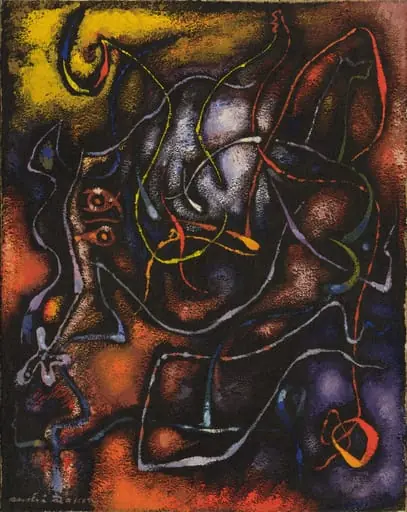
Masson used soft pastel sticks directly on black paper, exploiting the contrast between the dark ground and vibrant pigments. Colors—white, red, yellow, blue, and green—are applied in layered, swirling strokes, creating a sense of turbulence. The medium’s immediacy allowed for rapid, unedited gestures, reinforcing the work’s sense of spontaneity. The paper’s texture enhances the tactile quality of the marks, grounding the composition in physical presence.
History & Provenance
Made during Masson’s years in the U.S. following his flight from Nazi-occupied Europe, the piece emerged from a period of intense artistic reorientation. While in exile, he interacted with emerging American artists and contributed to the intellectual climate that would foster Abstract Expressionism. This work is part of a broader body of drawings from the mid-1940s that document his transition from Surrealist practices toward more abstract modes.
Context
In the mid-1940s, European Surrealists in New York influenced a generation of American painters seeking alternatives to figurative representation. Masson’s automatic drawings provided a model for artists like Pollock and Kline, who valued gesture over narrative. This work reflects a broader postwar shift toward art as an expression of inner experience, shaped by trauma, displacement, and the search for new visual languages.
Legacy
Masson’s use of pastel on dark paper in this period demonstrated how traditional materials could be repurposed for radical expression. His emphasis on unstructured mark-making prefigured key concerns of Abstract Expressionism, particularly the primacy of process and emotional immediacy. Though less widely known than his contemporaries, his drawings from this era remain significant for their role in bridging European avant-garde practices with American postwar abstraction.
Artist & collection
Artist
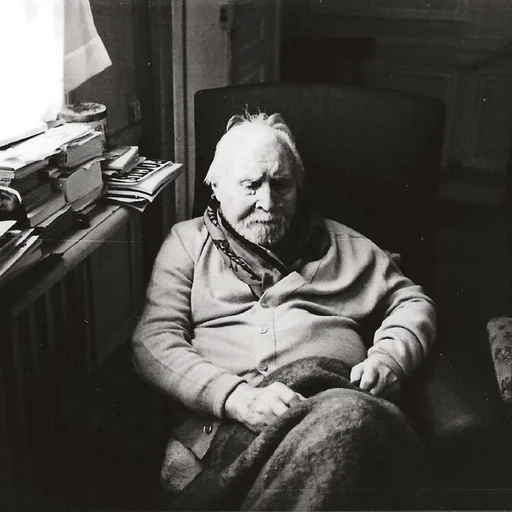
André-Aimé-René Masson (French: ; 4 January 1896 – 28 October 1987) was a French artist.