Artwork
椿椿山筆 紅白桃花図(付・画稿)|Red and White Peach Blossoms
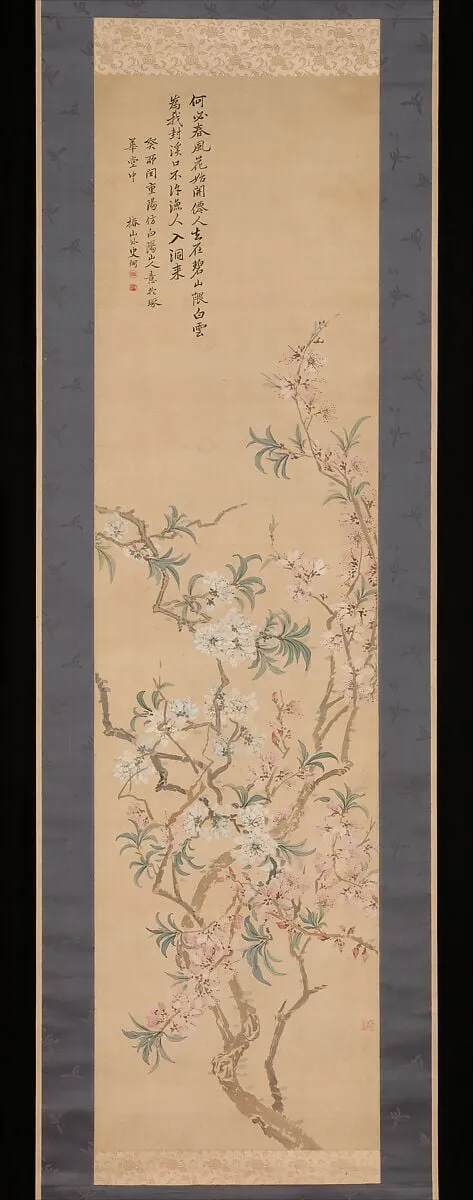
椿椿山筆 紅白桃花図(付・画稿)|Red and White Peach Blossoms is a paint painting by the Nihonga artist Tsubaki Chinzan. It dates from 1843 and is held in the collection of the Metropolitan Museum of Art.
About this work
He used simple brushstrokes to make the petals look light and fresh, almost like they’re still on the tree.
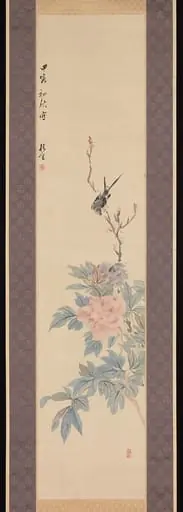
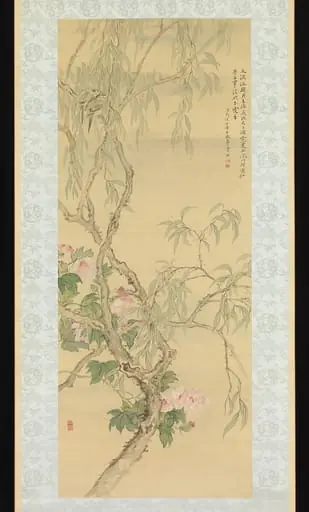
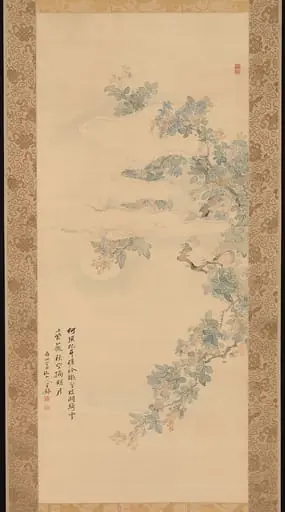
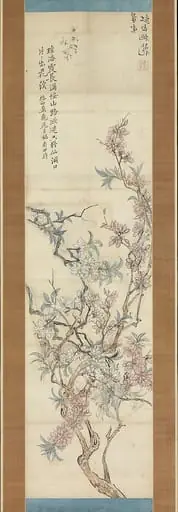
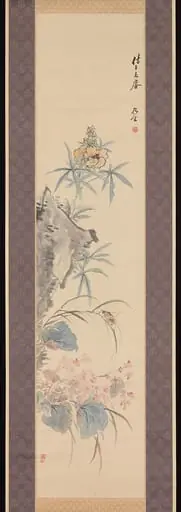
You see a tall paper scroll with two peach branches—one pink, one white—against a soft gray background.
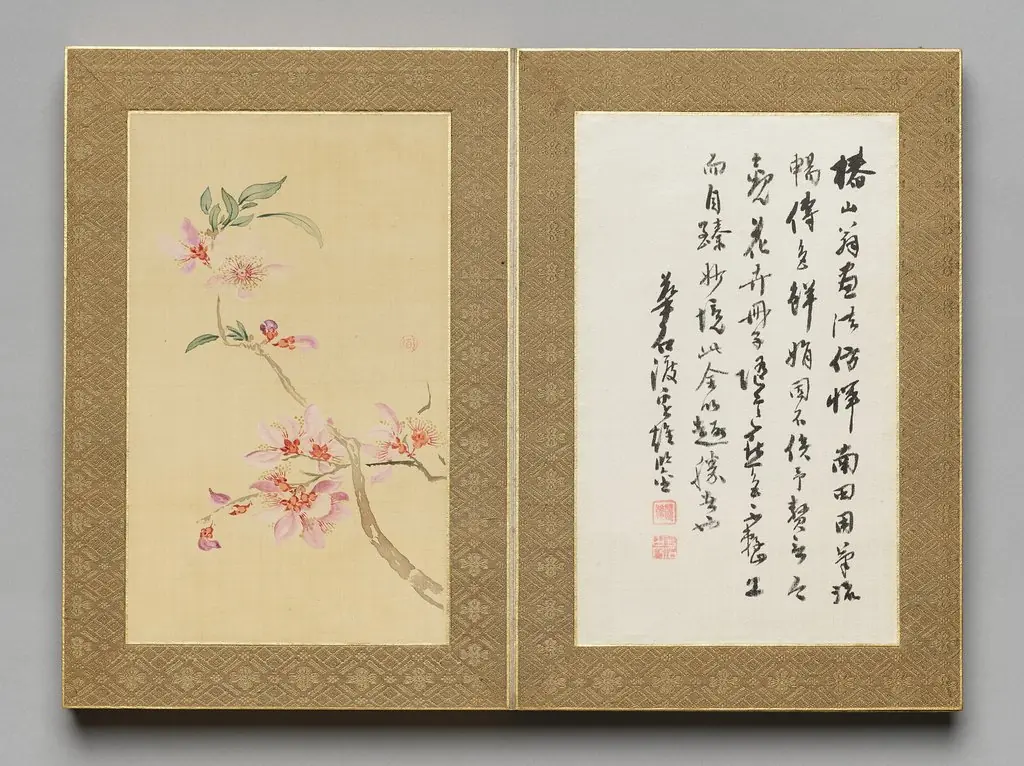
The artist painted this in 1843, when Japan was closed to most outsiders. He used simple brushstrokes to make the petals look light and fresh, almost like they’re still on the tree. The small sketch at the bottom shows how he planned the whole thing before touching the final scroll.
If you like these quiet flower paintings, look up *subject: flowers*.
Overview
Red and White Peach Blossoms is a hanging scroll painted by Tsubaki Chinzan in 1843. Executed in color on paper, the work presents two peach branches—one rendered in pink, the other in white—set against a muted gray ground. The composition is compact, with a small preparatory sketch attached at the bottom, indicating the artist’s planning process before the final execution.
Subject & Meaning
The scroll focuses on the delicate blossoms of the peach tree, a motif traditionally associated with spring renewal and fleeting beauty in Japanese visual culture. By juxtaposing pink and white flowers, the artist highlights subtle variations in hue and texture, inviting contemplation of the transitory nature of the season.
Technique & Style
Chinzan employs restrained brushwork, using light, fluid strokes to suggest the softness of the petals while maintaining a sense of immediacy. The limited palette and the subdued gray background serve to isolate the blossoms, allowing their colors to emerge with clarity. The accompanying sketch demonstrates a careful compositional study, typical of Edo‑period ink and color practices.
History & Provenance
Created during the late Edo period, when Japan’s sakoku policy limited foreign contact, the piece reflects the domestic aesthetic preferences of the time. The work remains attributed to Tsubaki Chinzan, a noted painter of the era, and is catalogued among his surviving flower studies, though specific ownership records prior to modern collection are not documented.
Artist & collection

Artist
Tsubaki Chinzan, originally Tasuku was a Japanese painter in the nanga style. His other art names include Hekiin Sambō, Kyūan (休庵), Shikyūan (四休庵) and Takukadō (琢華堂).