Artwork
Solway Moss
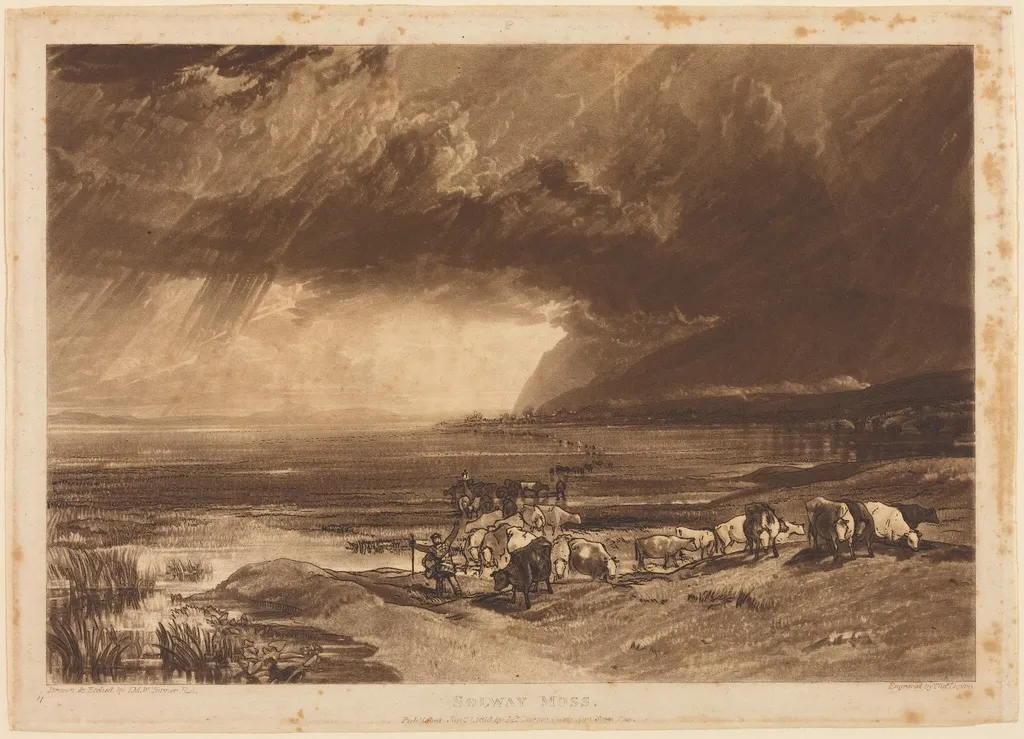
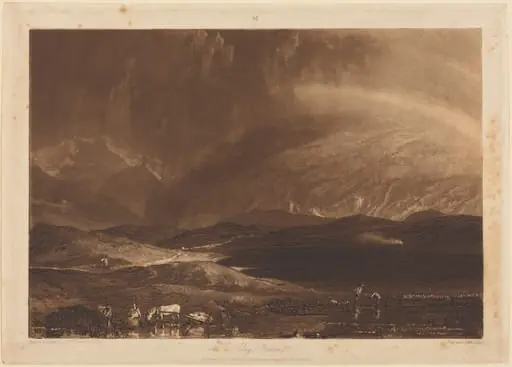
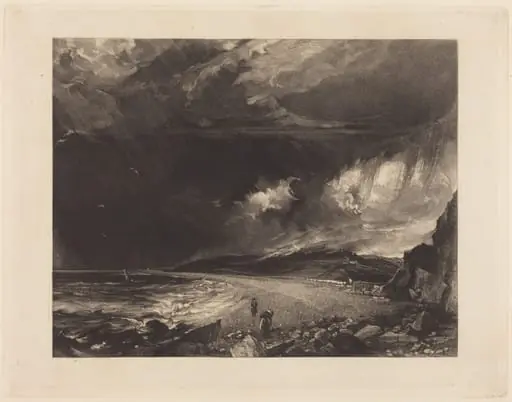
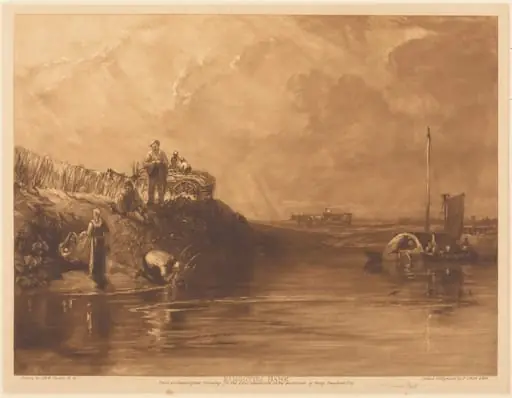
Solway Moss is an ink print by the Romanticist artist Joseph Mallord William Turner. It dates from 1816 and is held in the collection of the National Gallery of Art.
About this work
Overview
Created in 1816, Solway Moss is a print by Joseph Mallord William Turner combining etching and mezzotint techniques. It depicts a windswept rural landscape under an oppressive sky, where the interplay of light and shadow conveys atmospheric tension. The work belongs to Turner’s early exploration of nature’s emotional power, prioritizing mood over topographical accuracy.
Subject & Meaning
The scene portrays a group of riders and horses traversing a muddy track beside grazing cattle, set against a vast, brooding sky. While the title references a real location on the Anglo-Scottish border, the emphasis lies not in place but in the weight of the weather. The figures appear small and vulnerable, underscoring nature’s dominance over human activity.
Technique & Style
Turner employed mezzotint for its capacity to render deep, velvety blacks and subtle gradations, complemented by etched lines that define form and movement. The sky’s turbulence is achieved through dense, layered ink textures, while the ground’s dampness is suggested by smudged tones and irregular contours. This method allowed him to evoke atmosphere with remarkable immediacy.
History & Provenance
Produced shortly after Turner’s return from a tour of northern England and Scotland, the print reflects his direct engagement with the region’s moorland landscapes. It was likely made for private circulation or as a study, not for mass publication. No definitive early ownership records survive, but it was included in later collections of Turner’s graphic work.
Context
In the early 1810s, Turner was refining his approach to landscape as an expression of emotional and natural forces, moving beyond topographical convention. Solway Moss aligns with contemporary Romantic sensibilities that valued sublime weather and untamed terrain. It also reflects his growing interest in printmaking as a medium for experimental tonal effects.
Legacy
Though less known than his oil paintings, Solway Moss exemplifies Turner’s innovative use of print techniques to capture transient atmospheric conditions. It influenced later printmakers seeking to convey mood through texture and tone rather than detail. The work remains a key example of how printmaking could serve expressive ends beyond reproduction.
Artist & collection
Artist
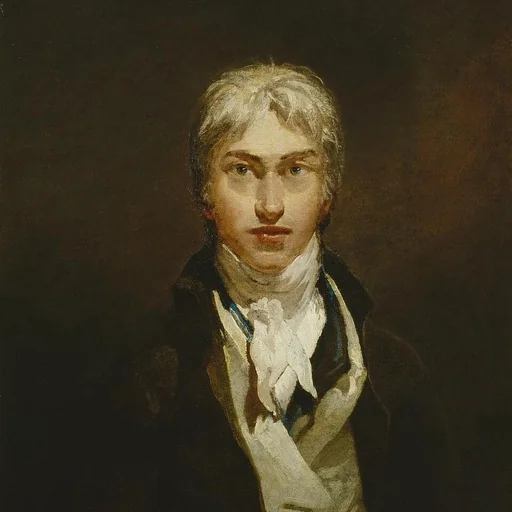
Joseph Mallord William Turner was born in 1775 at Maiden Lane, Covent Garden, where his father kept a barber and wig-making shop.