Artwork
Kingston Bank, No.2
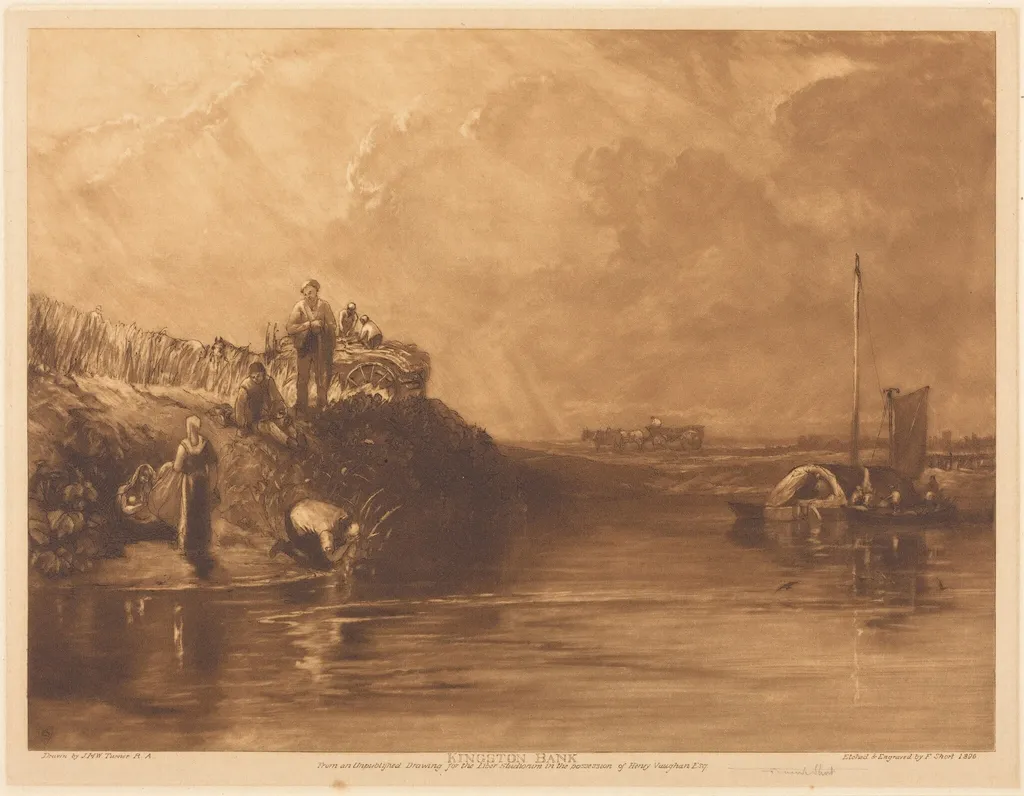
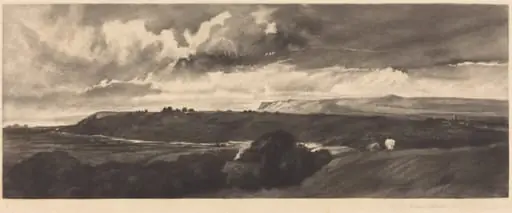
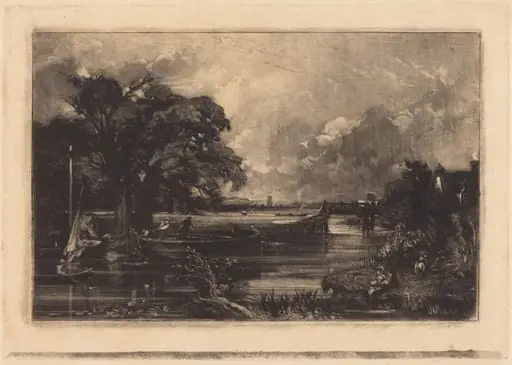
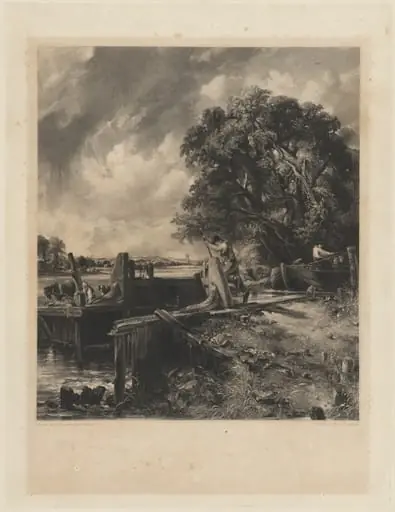
Kingston Bank, No.2 is an ink print by the Impressionist artist Frank Short. It dates from 1896 and is held in the collection of the National Gallery of Art. Created in 1896, *Kingston Bank, No.
About this work
Overview
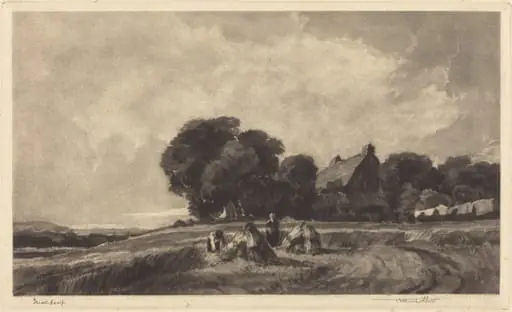
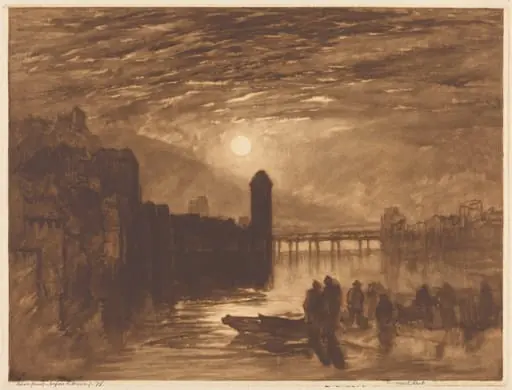
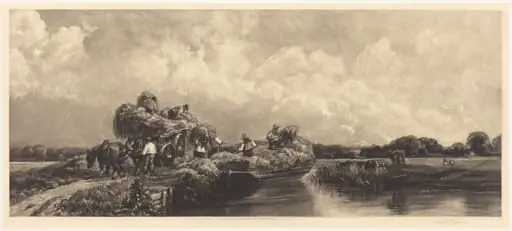
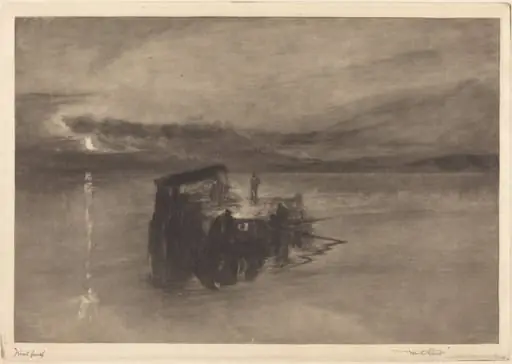
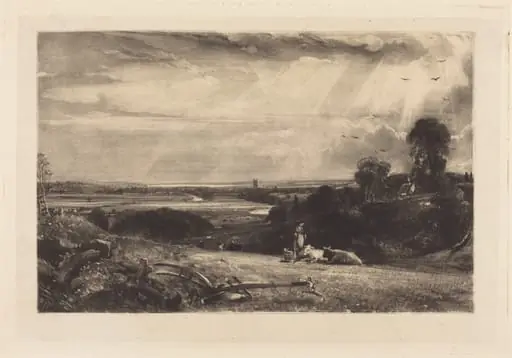
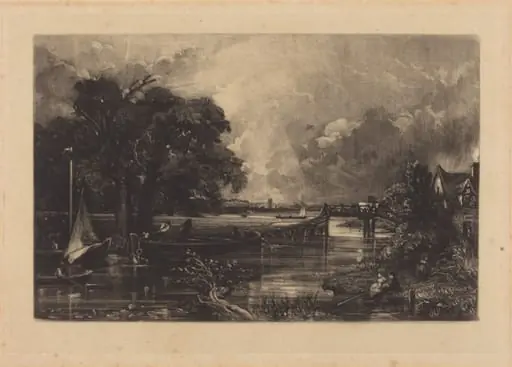
Created in 1896, *Kingston Bank, No. 2* is a black‑and‑white intaglio print that combines mezzotint with etching. The work exemplifies the artist’s command of tonal variation, rendering a tranquil riverside scene with a subtle gradation of light and shadow.
Subject & Meaning
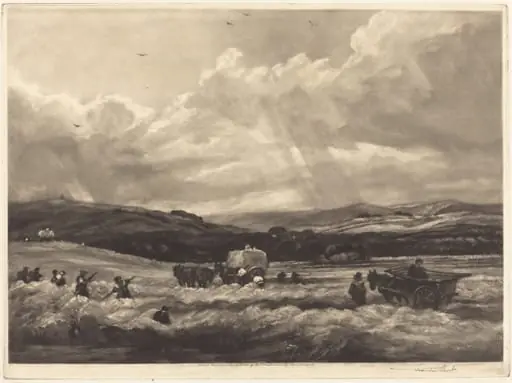
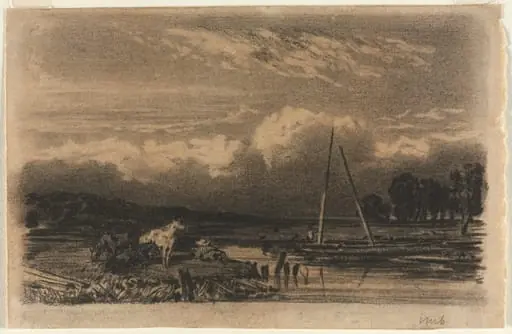
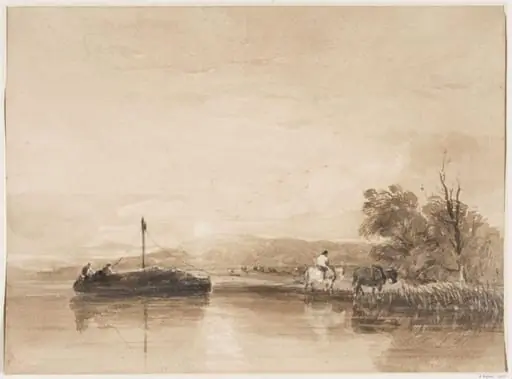
The composition depicts a peaceful riverbank where a woman stands beside a hay‑laden cart, another woman wades in shallow water holding a cow’s reins, and a small boat drifts nearby. Figures at a modest dock attend to their tasks, suggesting a moment of everyday rural activity observed in quiet detail.
Technique & Style
Short employed the deep, velvety blacks of mezzotint to model the sky and water, while fine etched lines define the figures and architectural elements. The interplay of rich tonal fields with precise line work creates a sense of depth, particularly in the clouded sky and reflective surface of the river.
History & Provenance
The print was produced by Sir Francis Job Short, a leading British printmaker who revitalized mezzotint and aquatint practices in the late nineteenth century. Short’s influence extended beyond his own work; he wrote extensively on printmaking and served as President of the Royal Society of Painter‑Etchers & Engravers from 1910 to 1938.
Context
*Kingston Bank, No. 2* belongs to a period when British artists increasingly turned to print media to document ordinary life. The work reflects the era’s interest in rural subjects and the technical possibilities of intaglio processes to convey atmosphere and narrative without color.
Artist & collection
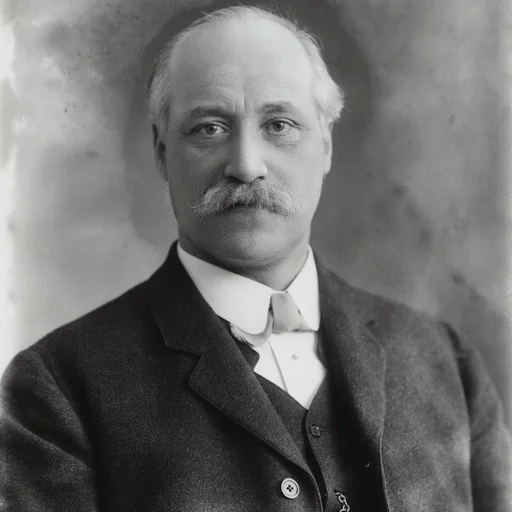
Artist
Sir Francis Job Short PPRE (19 June 1857 – 22 April 1945) was a British printmaker and teacher of printmaking.