Artwork
The Fifth Plague of Egypt
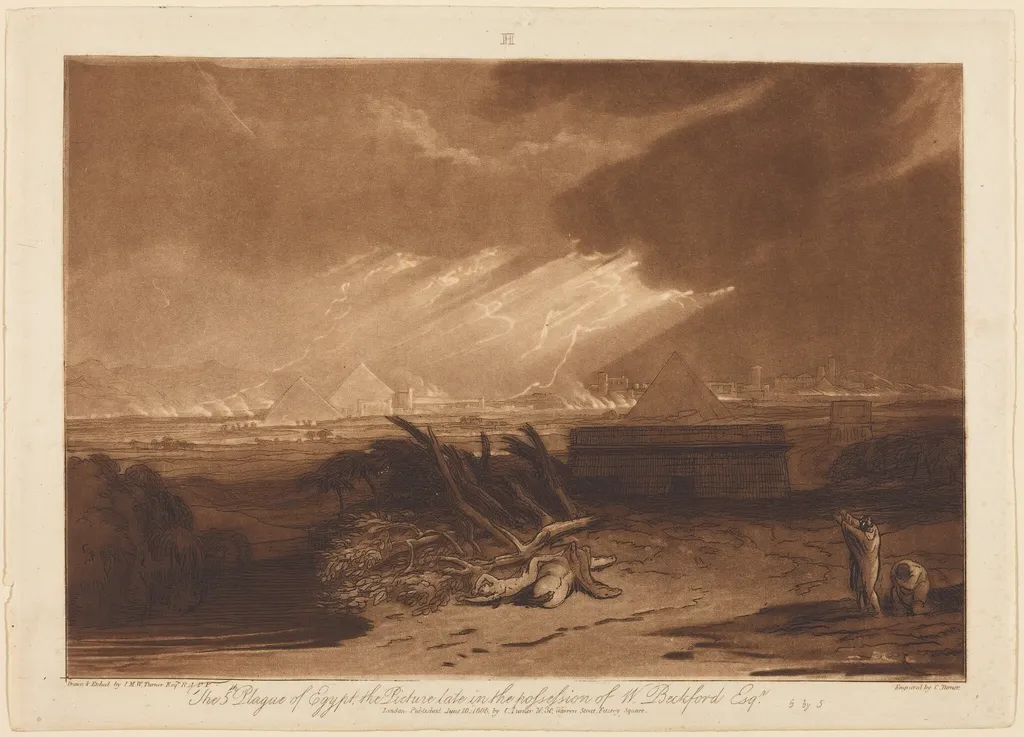
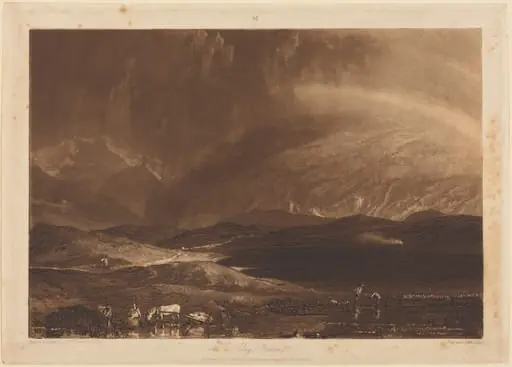
The Fifth Plague of Egypt is an ink print by the Romanticist artist Joseph Mallord William Turner. It dates from 1808 and is held in the collection of the National Gallery of Art.
About this work
Overview
The Fifth Plague of Egypt is a print created by J.M.W. Turner in 1808, combining etching and mezzotint techniques to depict a dramatic, stormy scene along the Nile River.
Subject & Meaning
The print illustrates a biblical event, likely the Fifth Plague of Egypt, which afflicted livestock, as suggested by the dead animals and people in the foreground. A lone kneeling figure conveys grief amidst the devastation.
Technique & Style
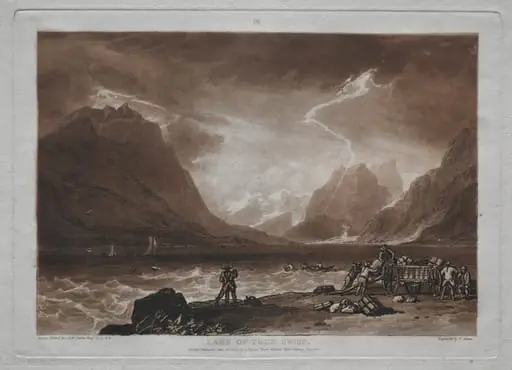
Turner utilized etching and mezzotint to achieve deep, expressive shading, capturing the heavy atmosphere of the storm. The contrast between light and dark emphasizes the chaos and drama of the scene.
History & Provenance
Created in 1808, specific details about the print's provenance and historical context beyond its creation date are not provided.
Context
The work reflects Turner's interest in biblical themes and his ability to evoke powerful natural phenomena. The looming pyramids and ships in the harbor add a sense of place and scale to the biblical narrative.
Legacy
While specific legacy details are not provided, the piece demonstrates Turner's innovative use of etching and mezzotint, contributing to his reputation for capturing dynamic landscapes and dramatic light.
Artist & collection
Artist
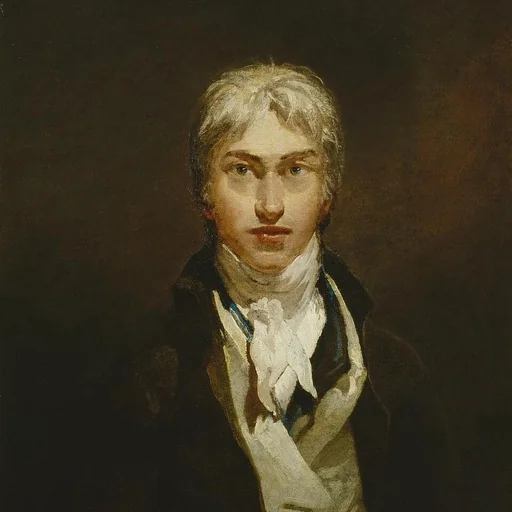
Joseph Mallord William Turner was born in 1775 at Maiden Lane, Covent Garden, where his father kept a barber and wig-making shop.