Artwork
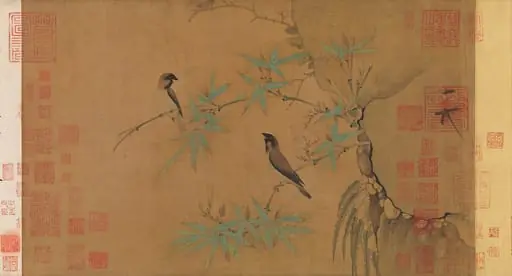
宋? 佚名 傳宋徽宗 白頭海棠圖 卷|Chinese Bulbuls on Flowering Cherry-Apple
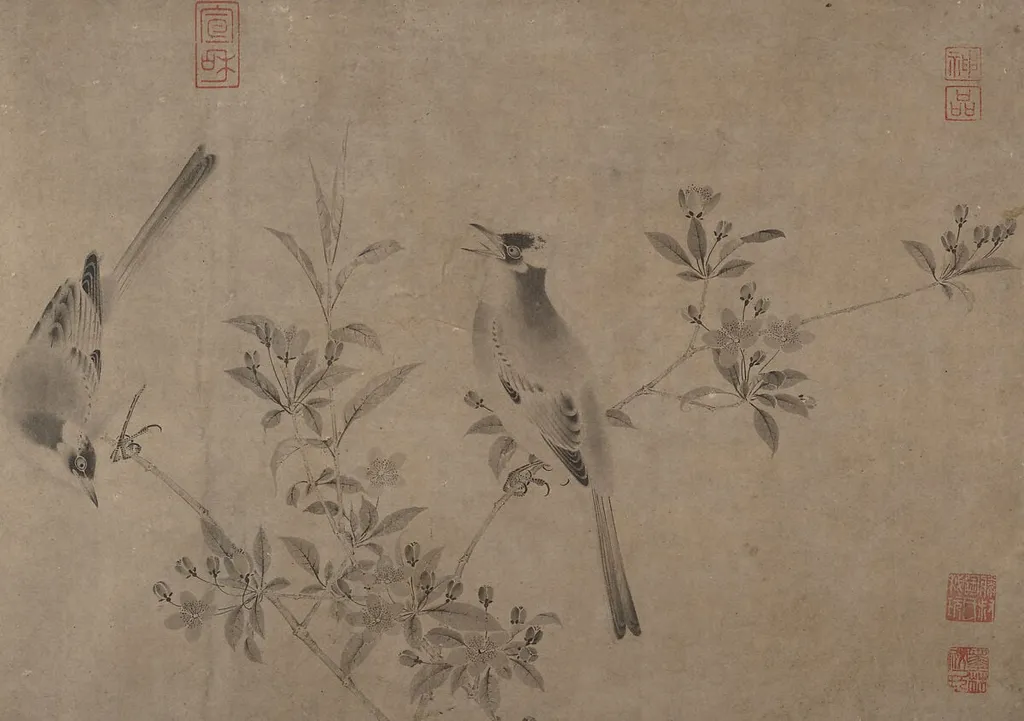
宋? 佚名 傳宋徽宗 白頭海棠圖 卷|Chinese Bulbuls on Flowering Cherry-Apple is an ink painting. It dates from 1302 and is held in the collection of the Metropolitan Museum of Art. This anonymous Song‑period handscroll, rendered in ink on paper, depicts a pair of Chinese bulbuls perched among blossoming branches.
About this work
Overview
This anonymous Song‑period handscroll, rendered in ink on paper, depicts a pair of Chinese bulbuls perched among blossoming branches. The composition is arranged along a continuous scroll, allowing the viewer to follow the delicate interaction between the birds and the flowering foliage.
Subject & Meaning
The work centers on natural elements—birds and flowers—reflecting a traditional Chinese aesthetic that celebrates the harmony of fauna and flora. The bulbuls, often associated with spring and renewal, are shown amid blooming white camellia‑like blossoms, suggesting a seasonal theme.
Technique & Style
Executed with fine ink lines, the artist renders each petal and feather with meticulous attention, yet maintains a restrained, almost calligraphic simplicity. This balance of detailed observation and minimal brushwork is characteristic of medieval Chinese ink painting, where suggestion often outweighs overt coloration.
History & Provenance
Attributed to an unknown hand from the Song dynasty, the scroll bears a title linking it to Emperor Huizong’s court, a period noted for refined artistic production. Its survival as a handscroll indicates it was likely kept as a portable object for private contemplation.
Context
During the Song era, bird‑and‑flower motifs were popular among literati, serving both decorative and symbolic purposes. The emphasis on natural subjects aligns with contemporary scholarly interests in poetry, calligraphy, and the observation of nature.
Legacy
The piece exemplifies the Song court’s aesthetic values and continues to inform modern understandings of Chinese ink painting. Its detailed yet understated approach influences contemporary curatorial presentations of medieval Chinese art.
Artist & collection