Artwork
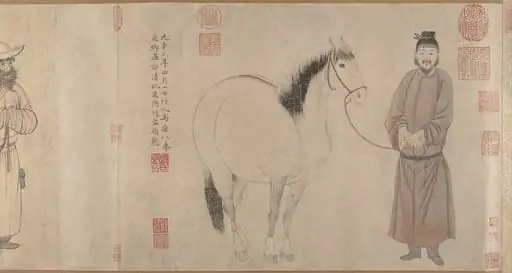
明 佚名 舊傳韓幹 圉人呈馬圖 卷|Horse and groom
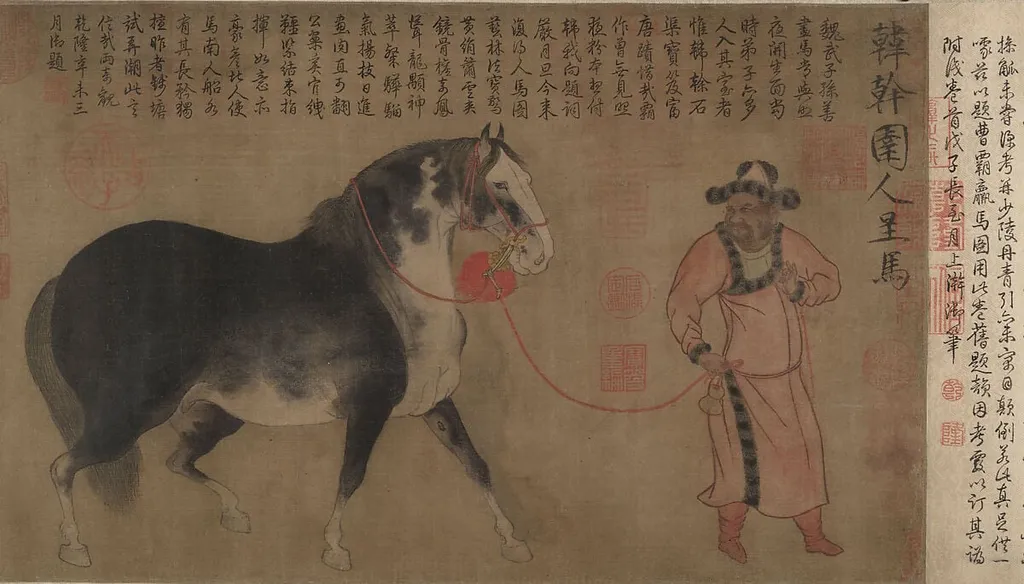
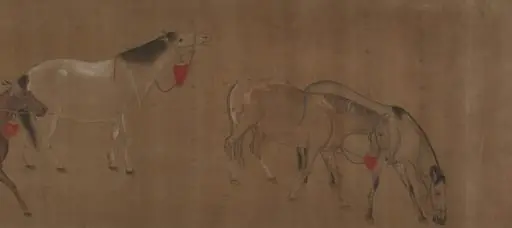
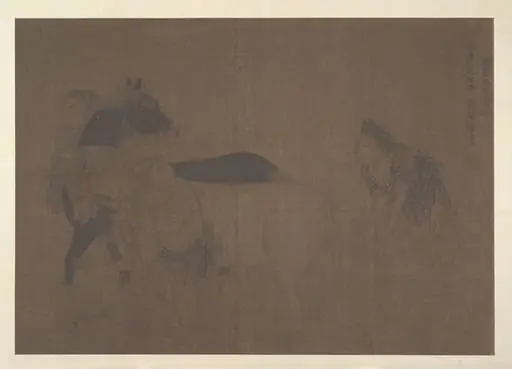
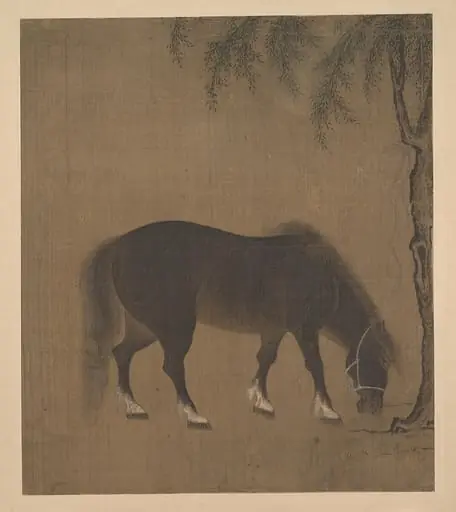
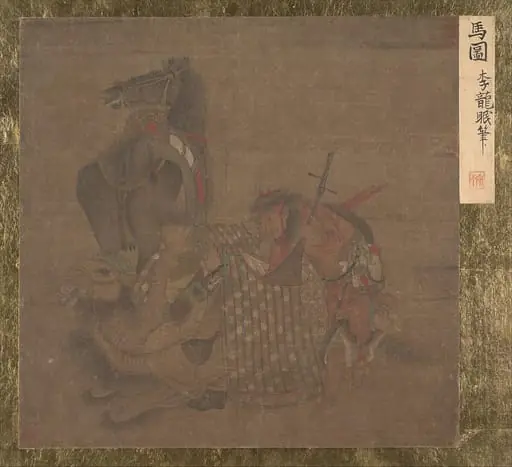
明 佚名 舊傳韓幹 圉人呈馬圖 卷|Horse and groom is an ink painting. It dates from 1550 and is held in the collection of the Metropolitan Museum of Art. The work is a hand‑scroll painted on silk with ink and color, depicting a groom leading a white horse.
About this work
Overview
The work is a hand‑scroll painted on silk with ink and color, depicting a groom leading a white horse. The figure is dressed in plain robes, while the animal stands upright, ears alert and tail poised. The composition is rendered in a tidy brushstroke that reveals signs of age, including fine creases in the silk and evidence of an old repair.
Subject & Meaning
The scene presents a straightforward, everyday moment of equestrian care, emphasizing the relationship between the attendant and the horse. The groom’s modest attire and the horse’s calm bearing suggest a focus on the dignity of routine labor rather than heroic narrative, reflecting a contemplative approach to animal portraiture common in certain Chinese traditions.
Technique & Style
Executed with ink and mineral pigments on silk, the painting employs precise, controlled lines that convey the forms of the figures with clarity. The brushwork is clean yet shows the passage of time, as the silk bears subtle wrinkles and a repaired tear, indicating the scroll’s long custodial history and the durability of the medium.
History & Provenance
Although the artist’s name is unknown, the piece is linked to an older tradition associated with the 9th‑century painter Han Gan. The scroll originated in China and later entered a collection in Mexico before being acquired by the Metropolitan Museum of Art, where it is now part of the museum’s Asian art holdings.
Context
Hand‑scrolls of this type were commonly used for private viewing, allowing the audience to unroll the work sequentially. The depiction of a horse and its handler aligns with a broader Chinese interest in equine subjects, which served both practical and symbolic functions in court and scholarly circles.
Artist & collection