Artwork
清 佚名 乾隆頭等侍衛占音保像 軸|Portrait of the Imperial Bodyguard Zhanyinbao
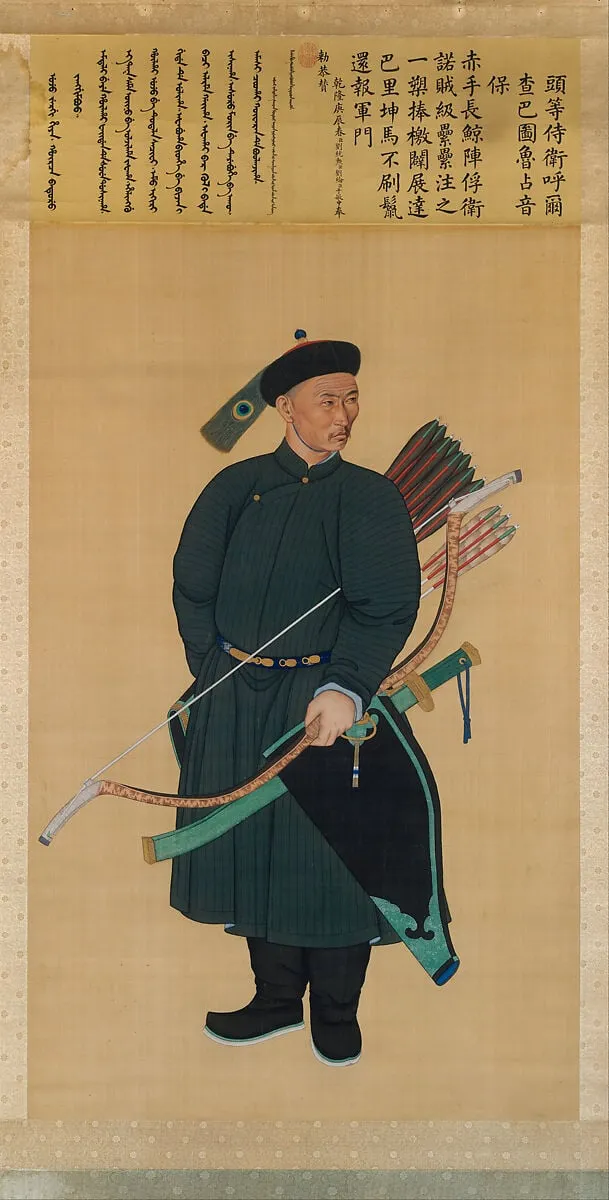
清 佚名 乾隆頭等侍衛占音保像 軸|Portrait of the Imperial Bodyguard Zhanyinbao is an ink painting. It dates from 1760 and is held in the collection of the Metropolitan Museum of Art. Created in 1760 during the Qianlong reign, this hanging scroll presents a formal portrait of Zhanyinbao, a First-Class Imperial Bodyguard.
About this work
This painting shows a man in a red military uniform. He holds a bow and arrow. His black hat has a gold band. The background is plain silk.
It’s a formal portrait from 1760. Silk was expensive, so only high-ranking officials got this treatment. The artist used fine brushwork for his face and costume.
See it at The Metropolitan Museum of Art.
Overview
The use of silk as a support material indicates the work's importance, as such resources were reserved for high-ranking officials and members of the court.
Created in 1760 during the Qianlong reign, this hanging scroll presents a formal portrait of Zhanyinbao, a First-Class Imperial Bodyguard. Executed in ink and color on silk, the work exemplifies the high standards of court portraiture under the Qing dynasty. The composition centers on the sitter in a three-quarter view against a plain, unadorned background, a convention that directs full attention to the subject's status and attire. Zhanyinbao is depicted wearing a distinctive red military uniform, signifying his elite rank within the imperial guard. He holds a bow and arrow, traditional symbols of martial prowess and the Manchu heritage of the ruling house. His head is covered by a black hat featuring a gold band, further emphasizing his official standing. The artist, whose identity remains unknown, employed fine, precise brushwork to render the facial features with a lifelike quality while maintaining the dignified stillness required for imperial records. The use of silk as a support material indicates the work's importance, as such resources were reserved for high-ranking officials and members of the court. This portrait serves as a historical document of the Qianlong era's military hierarchy and the visual culture of the imperial bodyguard corps.
Subject & Meaning
The painting presents Zhanyinbao in his official capacity as a First-Class Imperial Bodyguard to the Qianlong Emperor. Dressed in a distinctive red military uniform, a black hat adorned with a gold band, and holding a bow and arrow, he embodies the martial prowess and authority associated with his position. Such formal depictions were intended to record the likeness and status of important court figures, reflecting their role within the imperial hierarchy.
Technique & Style
Rendered on costly silk, this portrait demonstrates the refined artistic practices prevalent during the Qing period. The anonymous painter employed delicate brushwork to capture the intricate details of Zhanyinbao's facial features and the elaborate design of his uniform. The use of ink and vibrant colors on the luxurious silk surface contributes to the artwork's formal quality, while the plain background ensures the viewer's focus remains entirely on the subject.
Context
The choice of silk as the painting's support material underscores the elevated status of the sitter. During the Qing dynasty, silk was a valuable commodity, and its use for portraits was typically reserved for individuals of significant rank within the imperial court or government. This practice highlights the importance of Zhanyinbao's position and the honor bestowed upon him through the creation of such a formal and enduring likeness.
Artist & collection
