Artwork
明 佚名 (舊傳)吳炳 枇杷 扇|Bird on a Loquat Tree
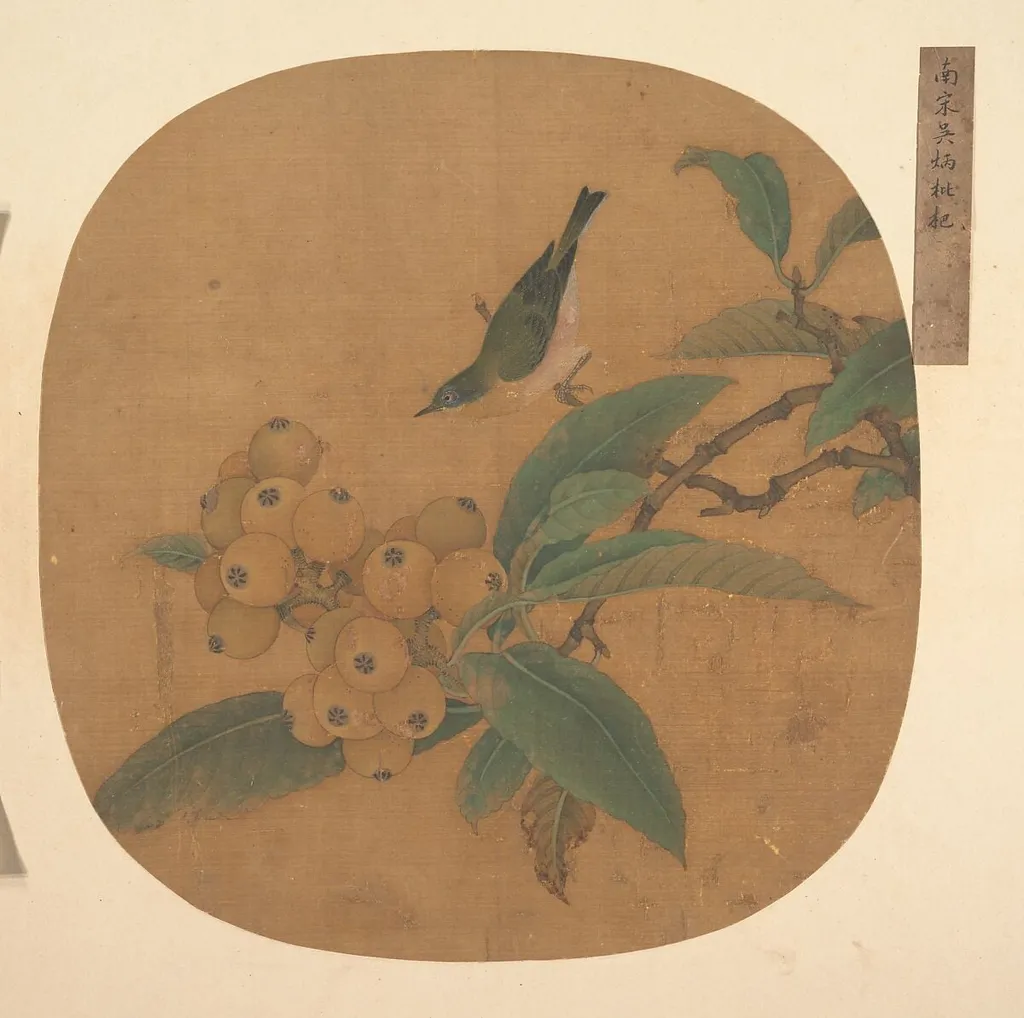
明 佚名 (舊傳)吳炳 枇杷 扇|Bird on a Loquat Tree is an ink painting by the Ming dynasty painting artist After Wu Bing. It dates from 1506 and is held in the collection of the Metropolitan Museum of Art.
About this work
Overview
This painting, titled Bird on a Loquat Tree, is an ink and color work on silk, originally created as a fan during China's Ming Dynasty around 1506.
This painting, titled Bird on a Loquat Tree, is an ink and color work on silk, originally created as a fan during China's Ming Dynasty around 1506. While formerly attributed to Wu Bing, it is now considered the work of an anonymous artist. The composition features a small bird perched on a branch laden with ripe loquat fruit, rendered with meticulous detail. It exemplifies the tradition of nature studies in Chinese art.
Subject & Meaning
The artwork presents a solitary bird resting among the vibrant foliage and yellow fruit of a loquat tree. The bird's tilted head suggests a moment of quiet observation or listening within the natural world. Loquats, a fruit native to China, often symbolize prosperity and good fortune. This intimate portrayal of flora and fauna invites viewers to appreciate the subtle beauty and tranquility found in nature's cycles.
Technique & Style
Executed with ink and color on silk, this piece showcases the refined brushwork characteristic of Chinese painting. The artist employed delicate strokes to render the intricate textures of the bird's feathers and the veins of the leaves, creating a sense of lifelike precision. The glowing yellow of the loquats contrasts with the darker greens, highlighting the fruit. Its original format as a fan suggests it was intended for close, personal contemplation.
Context
Originally conceived as a functional fan, this painting was designed for intimate appreciation rather than large-scale display. Such works were often exchanged as thoughtful gifts, reflecting personal taste and cultural refinement. The act of holding and examining the fan allowed for a direct engagement with the artist's detailed execution. This format was popular in medieval China for its portability and the private viewing experience it offered.
Artist & collection


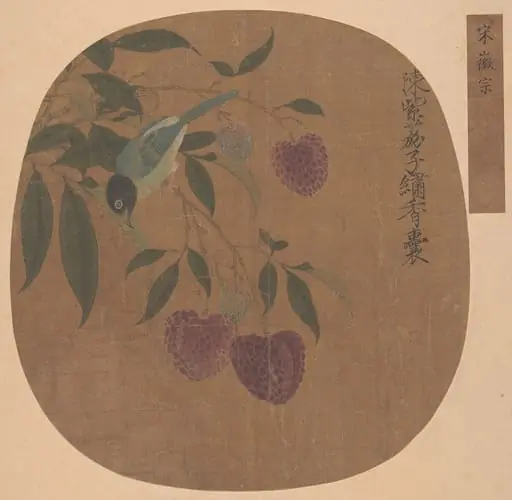
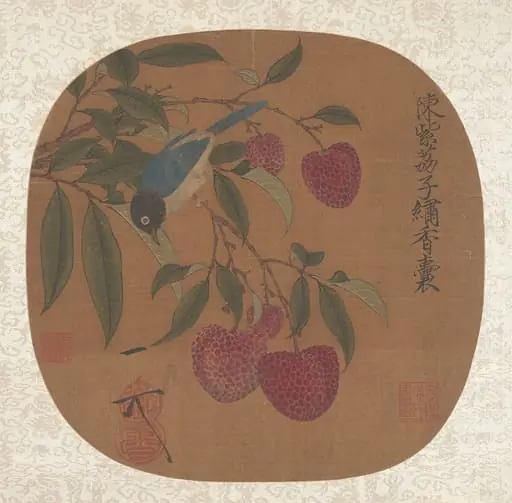
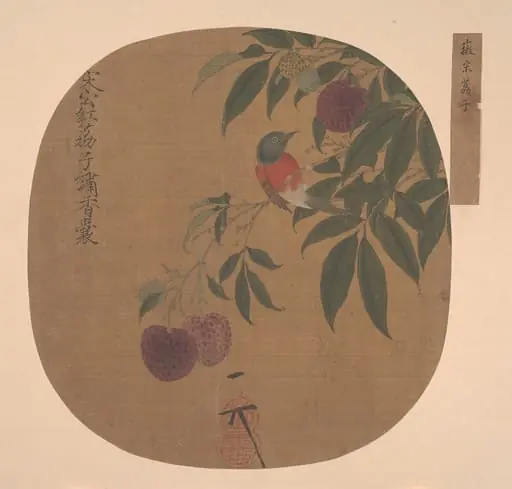 明 佚名(舊傳宋徽宗) 荔枝圖 冊頁|Bird on a Lychee Branch
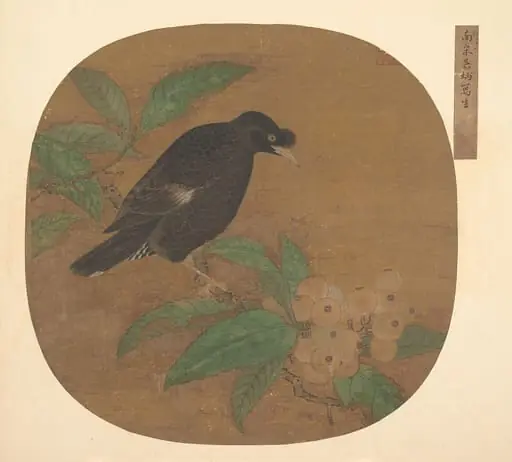 南宋?佚名 舊傳吳炳 枇杷八哥圖 團扇頁|Minah Bird on a Loquat Branch
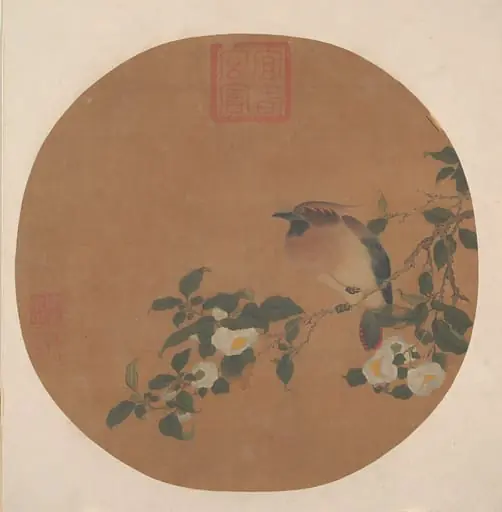
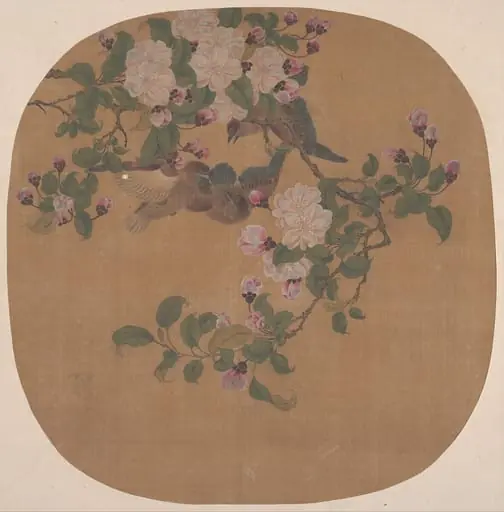 清 佚名 山禽海棠 扇|Flowers with Birds
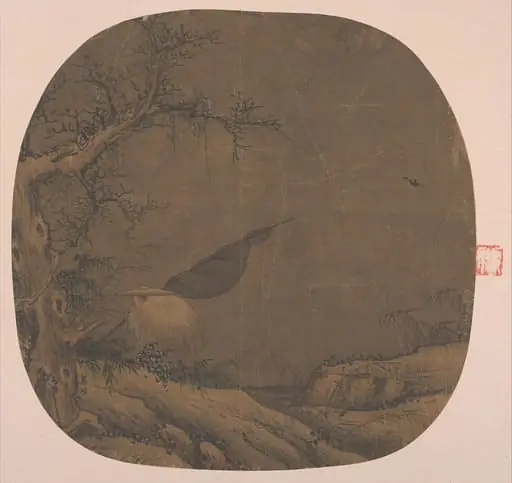
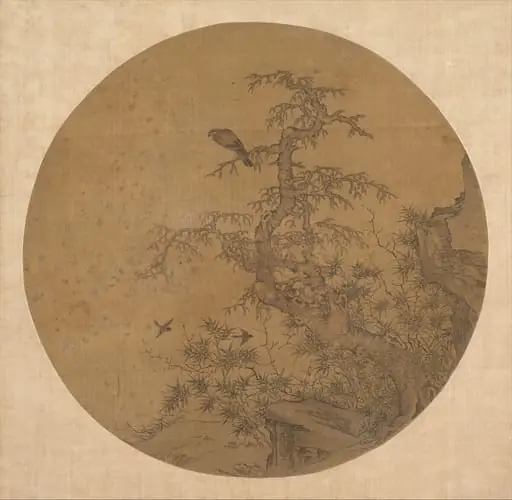 元/明 佚名 古木竹禽圖 團扇|Old Tree, Bamboo, and Birds
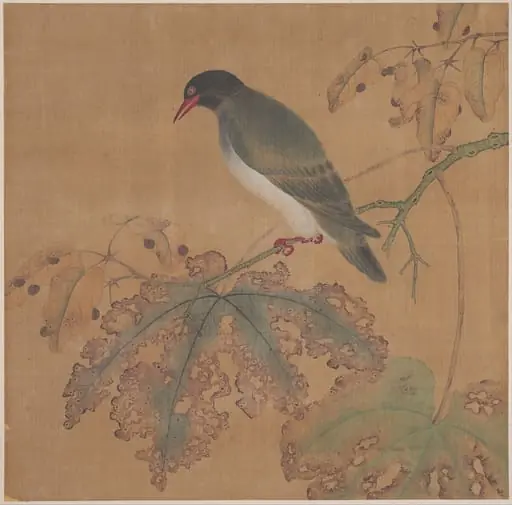 清 佚名 秋葉山禽 冊頁|Bird on Branch
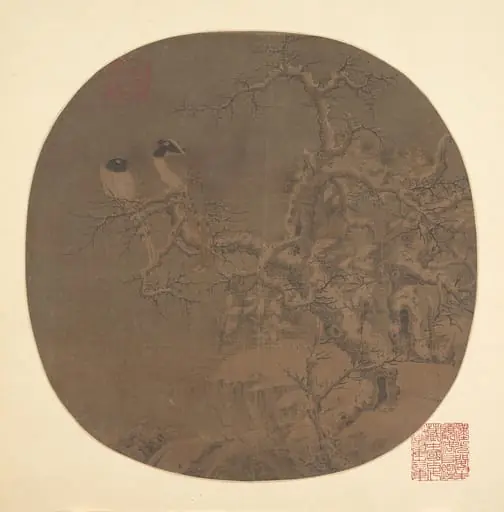 南宋 傳李迪 幽禽寒林圖 冊頁|Two Birds on a Wintry Tree
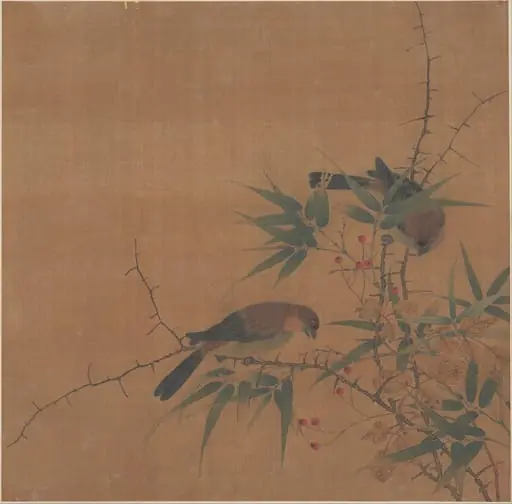 清 佚名 竹禽圖 冊頁|Bamboo Branch with Berries and Birds
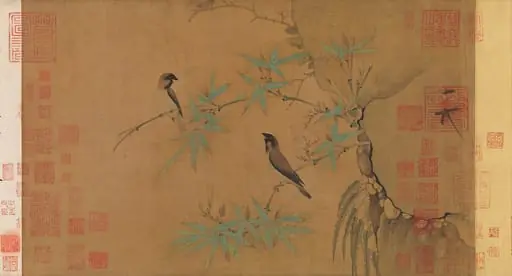 北宋 徽宗 竹禽圖 卷|Finches and bamboo