Artwork
Medallion of Woman's Head: Flora
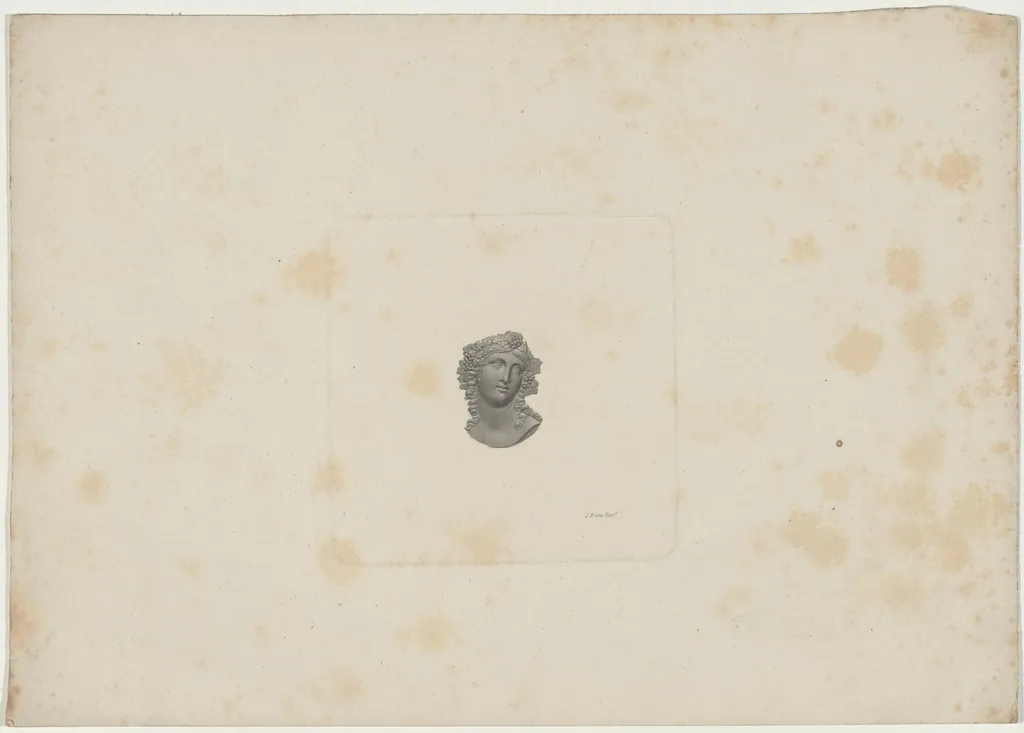
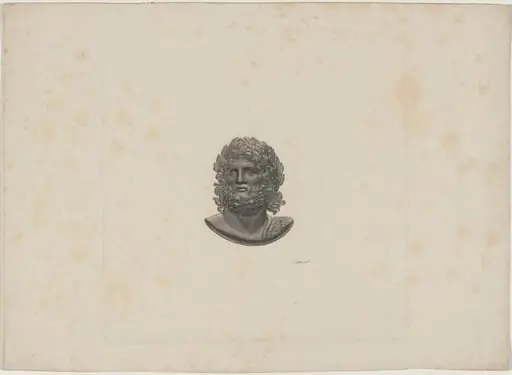
Medallion of Woman's Head: Flora is a print by the Romanticist artist Unknown 19th Century. It dates from 1850 and is held in the collection of the National Gallery of Art. This small print reproduces a classical-style medallion depicting a female figure, likely intended as a decorative or scholarly reference.
About this work
Overview
This small print reproduces a classical-style medallion depicting a female figure, likely intended as a decorative or scholarly reference.
This small print reproduces a classical-style medallion depicting a female figure, likely intended as a decorative or scholarly reference. Rendered in soft tones with minimal detail, it mimics the appearance of an ancient coin or engraved gem. The paper shows signs of age, with faint discolorations and a muted palette that enhance its antiquated character. Its format suggests it was meant for private collection or study rather than public display.
Subject & Meaning
The figure is identified as Flora, the Roman goddess of flowers and spring, indicated by the wreath of leaves crowning her head. Her curled hair and gentle expression evoke classical ideals of beauty and renewal. The absence of elaborate context focuses attention on her serene face, reinforcing a symbolic association with nature’s quiet cycles rather than narrative drama.
Technique & Style
The image is a facsimile, likely produced through a reproductive print method such as etching or lithography, aiming to replicate an earlier sculptural or numismatic model. Lines are delicate and softly modeled, avoiding sharp definition. The subdued tonality and worn paper surface contribute to an atmospheric, almost ethereal quality, aligning with early 19th-century tastes for nostalgic antiquity.
History & Provenance
As a facsimile, the print derives from an older source, possibly a Roman-era portrait or Renaissance revival piece. Its production likely occurred during the late 18th or early 19th century, when interest in classical antiquity fueled the circulation of such reproductions among collectors and artists. The faded condition suggests prolonged handling or exposure, indicating use in private or academic settings.
Context
This print emerged during a period when classical motifs were widely revived in European art and design. Such medallions served as visual references for artists, designers, and antiquarians seeking to reconnect with perceived ancient virtues. Its simplicity and focus on a solitary female form reflect broader cultural tendencies to idealize antiquity through minimal, symbolic representation.
Legacy
Though modest in scale and material, this print exemplifies the enduring influence of classical iconography in post-Renaissance visual culture. It represents a bridge between ancient models and modern reproductive practices, preserving forms that continued to inform artistic education and decorative arts well into the 19th century.
Artist & collection

Artist

 Head of a Man Crowned with Laurel: Homer
 La bailli
 Sketch of a Man with Upraised Arm and Sketch of a Helmet (verso)
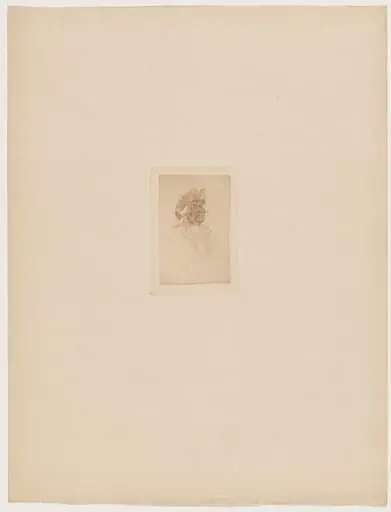 Cy-devant (Vieux jeu)
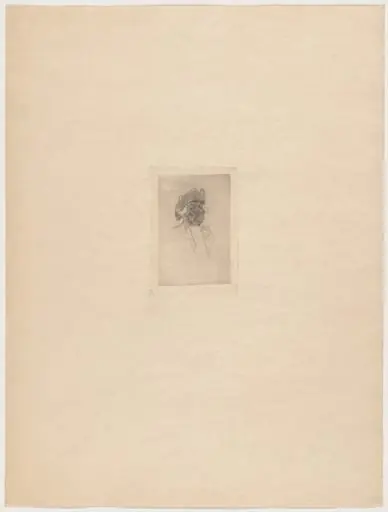 Cy-devant (Ex-Noble)
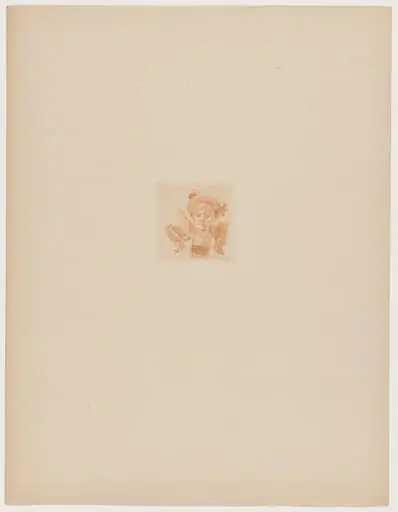 Tesson humain (Human Fragment)
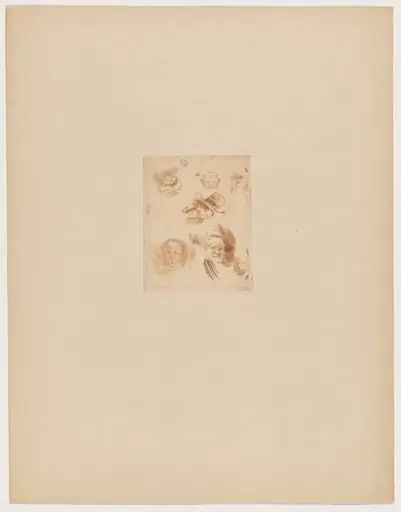 Quelques croquis
 Portul Tulcea
 Printer's Device for the Plantin Press
 En Hollande (La petite liseuse)
 Copy of a print of a man's head
 Départ pour le sabbat (Departure for the Sabbath)