Artwork
Head of a Man Crowned with Laurel: Homer
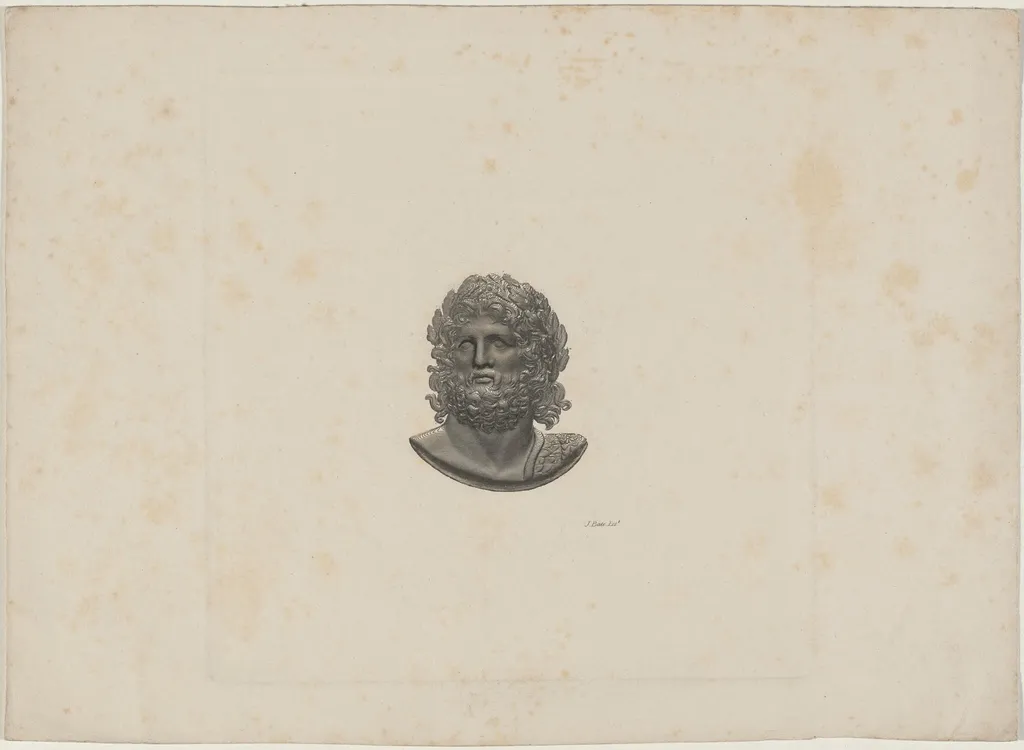
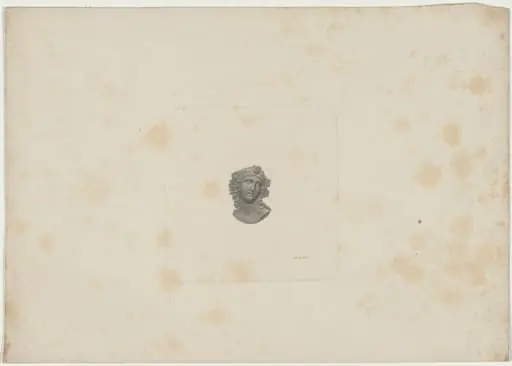
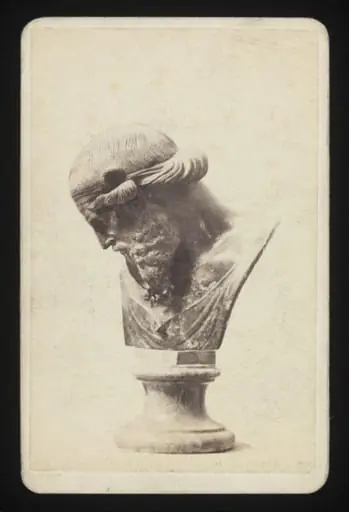
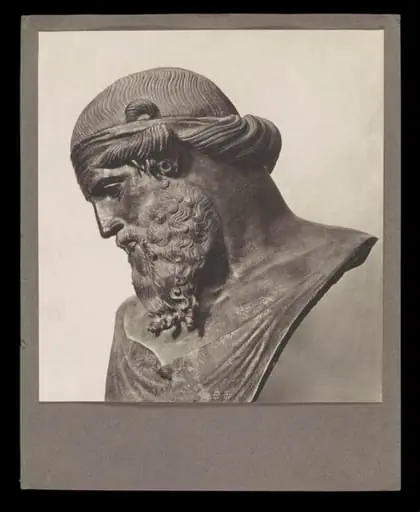
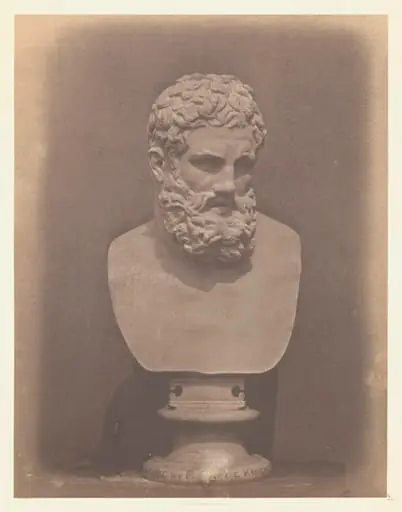
Head of a Man Crowned with Laurel: Homer is a print by the Romanticist artist Unknown 19th Century. It dates from 1850 and is held in the collection of the National Gallery of Art. This small, faded print is a facsimile of an ancient sculpted head, likely modeled after a Hellenistic or Roman portrait.
About this work
Overview
Rendered in monochrome, it captures a male figure crowned with laurel leaves, their stems interwoven with curly hair and beard.
This small, faded print is a facsimile of an ancient sculpted head, likely modeled after a Hellenistic or Roman portrait. Rendered in monochrome, it captures a male figure crowned with laurel leaves, their stems interwoven with curly hair and beard. The paper shows signs of age—yellowing edges and brown discolorations—suggesting it was produced in the 19th century as part of a broader practice of reproducing classical antiquities for scholarly or decorative use.
Subject & Meaning
The subject is a bearded man wearing a laurel crown, a symbol traditionally associated with poetic achievement, victory, or divine favor in classical antiquity. The calm, serious expression and deep shadows beneath the eyes suggest introspection rather than triumph. The absence of context or narrative elements focuses attention on the individual’s dignity, aligning with 19th-century ideals of intellectual and artistic reverence for the ancient world.
Technique & Style
The print employs fine, delicate lines to render texture in hair, beard, and leaves, with subtle tonal gradations to suggest volume and shadow. The background is left plain, emphasizing the sculptural form. The medium suggests a lithographic or engraved reproduction, common in 19th-century art publications. The faded state and aging of the paper reflect its age and the limitations of early print technologies used to replicate classical sculpture.
History & Provenance
Produced in the 1800s, this facsimile likely originated from a collection of classical reproductions circulated among artists, scholars, and collectors. Such prints were often made from casts or drawings of ancient statues held in European collections. The faint signature in the corner may belong to the original artist of the sculpture or the 19th-century engraver, though neither is legible, typical of anonymous or commercially produced reproductions of the period.
Context
In the 19th century, interest in classical antiquity surged alongside Romanticism’s fascination with history and emotion. Artists and intellectuals turned to ancient models as sources of moral and aesthetic authority. This print reflects that trend—not as an original work of art, but as a conduit for engaging with the past, bridging the ideals of antiquity with contemporary cultural values centered on contemplation and intellectual heritage.
Legacy
Though not an original sculpture, this print preserves a visual record of a classical prototype now possibly lost or altered. It exemplifies how 19th-century reproduction practices helped democratize access to ancient art, influencing education and artistic training. Its worn condition underscores its use over time, serving as a quiet testament to the enduring appeal of classical forms in Western visual culture.
Artist & collection

Artist