Artwork
Title Page to De Republicae Anglorum by Thomas Chaloner
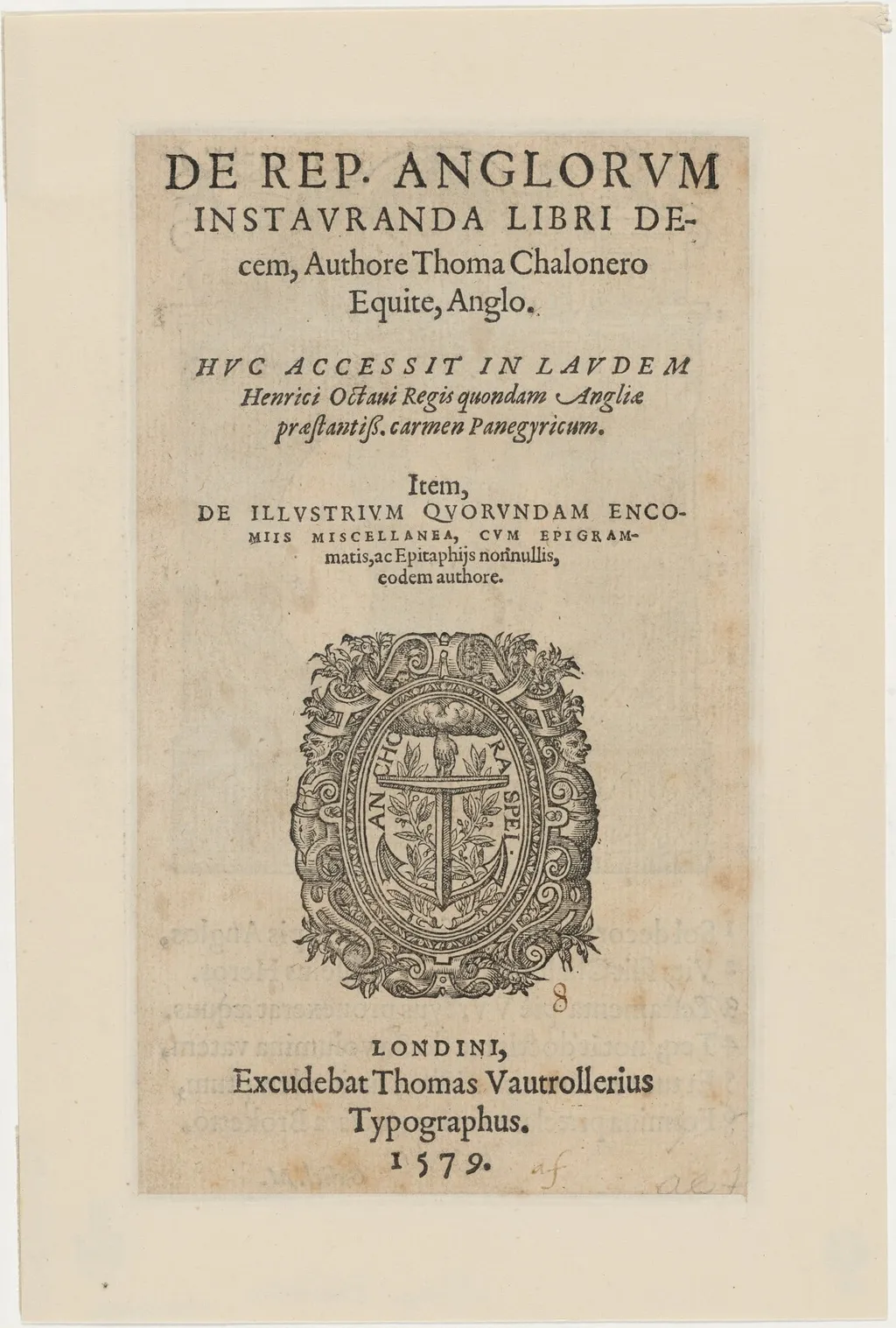
Title Page to De Republicae Anglorum by Thomas Chaloner is an ink print by the Renaissance artist Unknown 19th Century. It dates from 1579 and is held in the collection of the National Gallery of Art. This engraved title page serves as the frontispiece to Thomas Chaloner’s Latin treatise on the English polity.
About this work
Overview
Executed in monochrome, it combines formal typography with a heraldic emblem to establish authority and scholarly tone.
This engraved title page serves as the frontispiece to Thomas Chaloner’s Latin treatise on the English polity. Executed in monochrome, it combines formal typography with a heraldic emblem to establish authority and scholarly tone. The absence of color and reliance on fine linear detail reflect the conventions of early modern printed scholarship, where engraving was the standard method for reproducing intricate designs alongside text.
Subject & Meaning
The central coat of arms symbolizes the English state, featuring a crown and leaf motifs that suggest sovereignty and natural order. Its placement beneath the title reinforces the text’s focus on governance and national identity. The Latin inscription, rendered in bold, stylized lettering, signals the work’s academic and political intent, aligning the visual emblem with the intellectual project of analyzing England’s constitutional structure.
Technique & Style
The image was produced through metal engraving, a process involving incised lines carved into a copper plate. The fine, controlled strokes define the shield, crown, and foliage with precision, demonstrating the engraver’s skill in rendering detail without shading or tone. This technique was favored for its clarity and durability in book printing, allowing repeated impressions while preserving intricate elements of heraldic design.
History & Provenance
Created in the late 16th century, this title page accompanied Chaloner’s treatise on the English constitution, likely printed in London. As a scholarly work in Latin, it was intended for an educated, international audience. The engraving’s style aligns with contemporary academic publications of the period, suggesting it was produced by a professional printer or engraver working within the city’s growing book trade.
Context
In Elizabethan England, printed works on governance were part of a broader intellectual movement to define national identity through classical and legal frameworks. Latin remained the language of scholarship, and heraldic imagery was routinely employed to convey legitimacy. This title page reflects the fusion of political theory, print culture, and symbolic representation characteristic of late Renaissance academic publishing.
Legacy
As a representative example of early modern scholarly printing, this title page illustrates how visual and textual elements were combined to convey authority in printed texts. Though not widely reproduced or celebrated in popular culture, it remains a valuable artifact for understanding the material culture of political thought in 16th-century England and the role of engraving in disseminating intellectual works.
Artist & collection

Artist


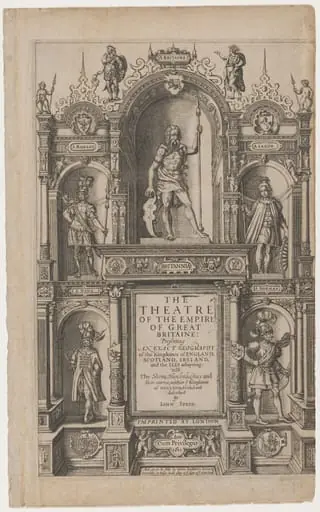 Title Page to "The Theatre of the Empire of Great Britaine" by John Speed
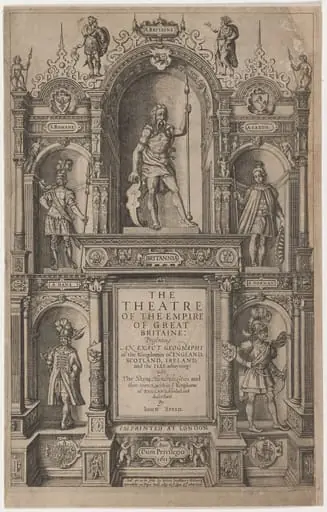 Title Page to "The Theatre of the Empire of Great Britaine" by John Speed
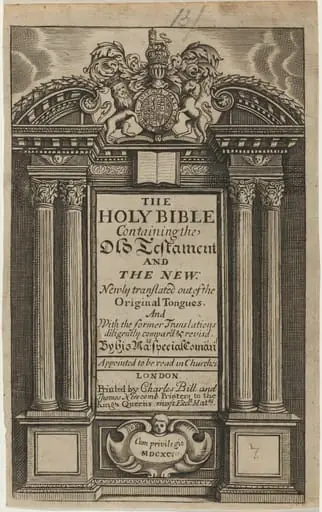 Title Page to the Bible
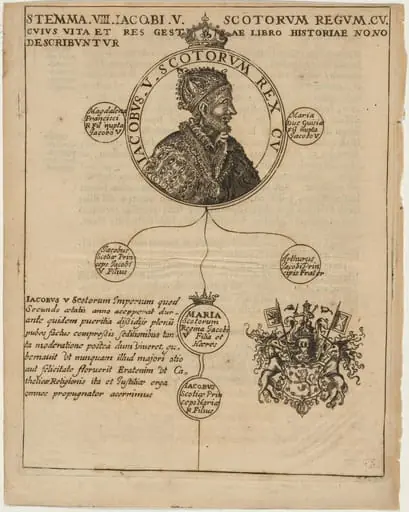 James V of Scotland with Geneology
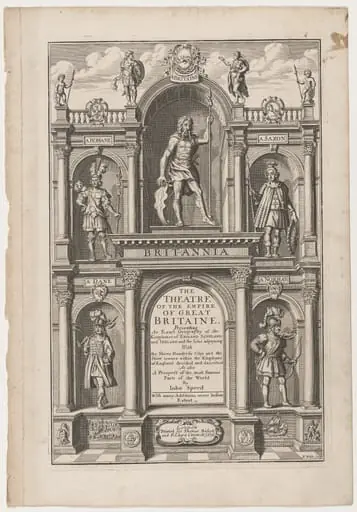 Title Page to "The Theatre of the Empire of Great Britaine" by John Speed
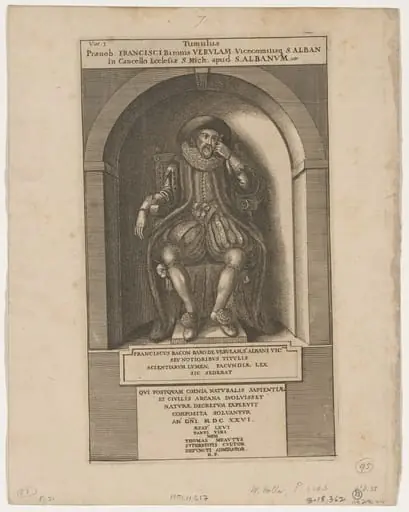 Francis Bacon in a Niche
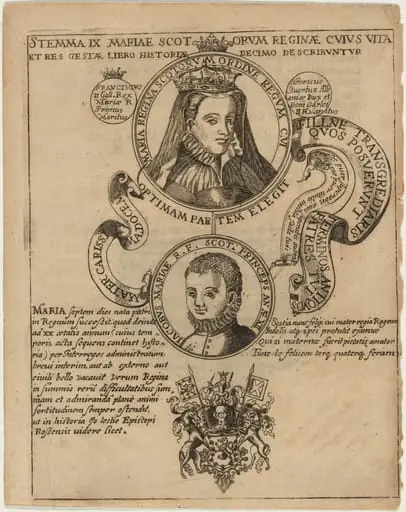 Mary Queen of Scots with James VI of Scotlandand I of England