Artwork
William I, Prince of Orange
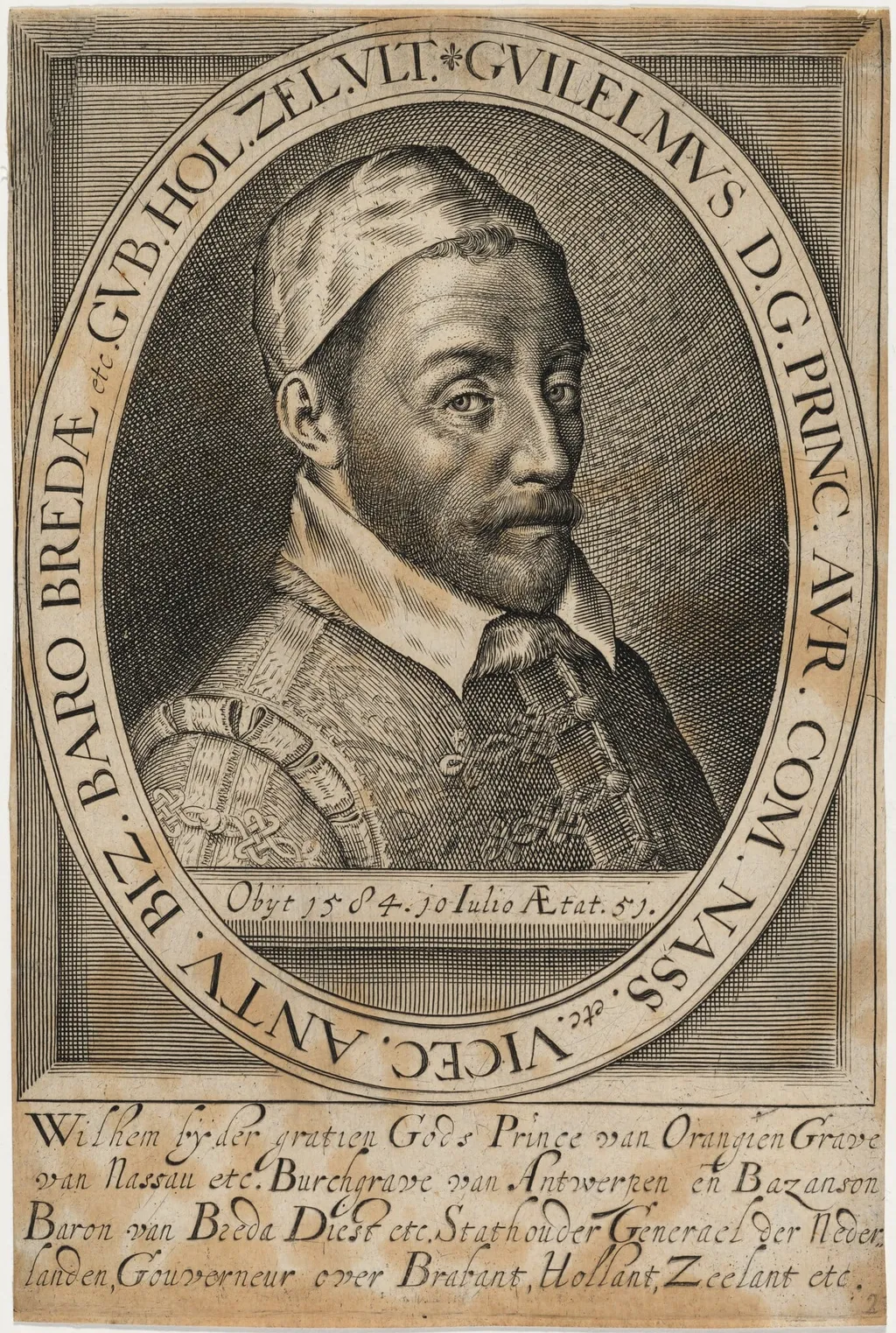
William I, Prince of Orange is an ink print by the Romanticist artist Unknown 19th Century. It dates from 1850 and is held in the collection of the National Gallery of Art.
About this work
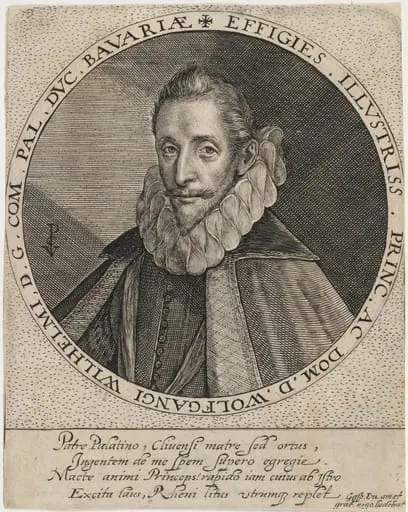
Around him, fancy text wraps in a border, and a small crest sits below his shoulder.
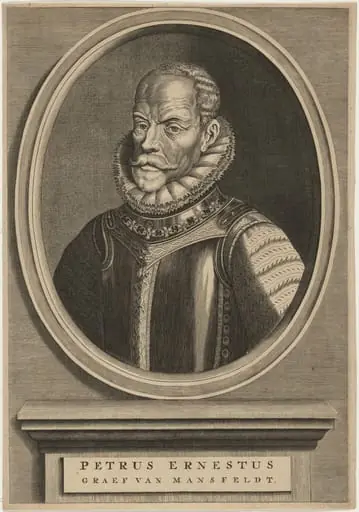
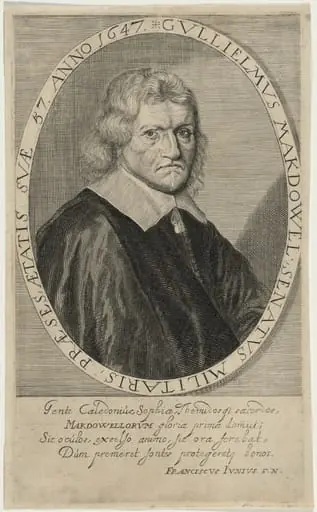
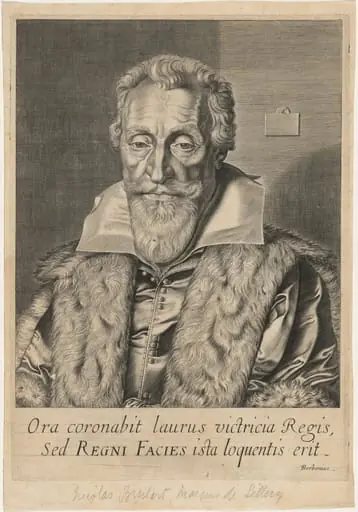
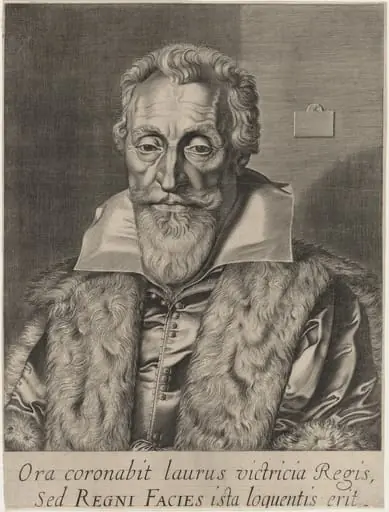
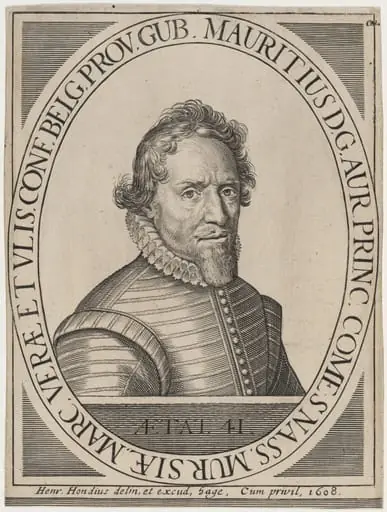
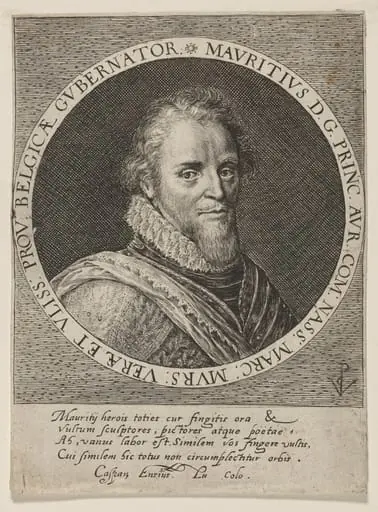
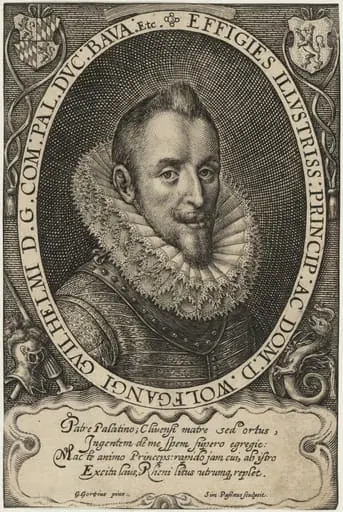
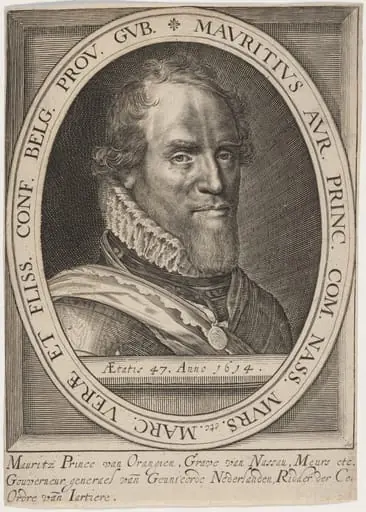
This is a black-and-white portrait of a man with a serious expression. He’s framed inside a circle, wearing a dark coat and a fur collar. Around him, fancy text wraps in a border, and a small crest sits below his shoulder. The lines are precise, with shading made by tiny crisscrossed marks.
The text around him is in Latin and Dutch, listing titles like "Prince of Orange." The date at the bottom reads *obyt 1584*, meaning he died that year. His face looks worn, but the details are sharp.
Want to see how this kind of image was made? Look up engraving.
Overview
The print is a black‑and‑white engraved portrait of William I, Prince of Orange, who died in 1584. Rendered within a circular frame, the figure is shown in a dark coat with a fur collar, his expression solemn. The composition is surrounded by a decorative border containing Latin and Dutch inscriptions that enumerate his titles.
Subject & Meaning
The portrait presents the prince in a dignified pose, emphasizing his status through the inclusion of his full titulature. The serious facial expression and the formal attire convey authority and the gravitas associated with his role as a leader of the Dutch revolt against Spanish rule.
Technique & Style
Executed as an engraving, the image relies on fine, intersecting lines to create tonal variation and texture, particularly in the shading of the face and clothing. The precision of the hatching demonstrates the artist’s skill in rendering detail within the constraints of a print medium.
History & Provenance
The print bears the date of William’s death, *obyt 1584*, indicating it was likely produced shortly after his passing, possibly as a commemorative image. The bilingual legend reflects the multilingual context of the Low Countries during the late sixteenth century.
Context
William I was a central figure in the early stages of the Dutch struggle for independence, and his portrait would have served both as a visual record and as a means of reinforcing his political legitimacy among supporters across the region.
Artist & collection

Artist