Artwork
Charles Emmanuel I, Prince of Piedmont
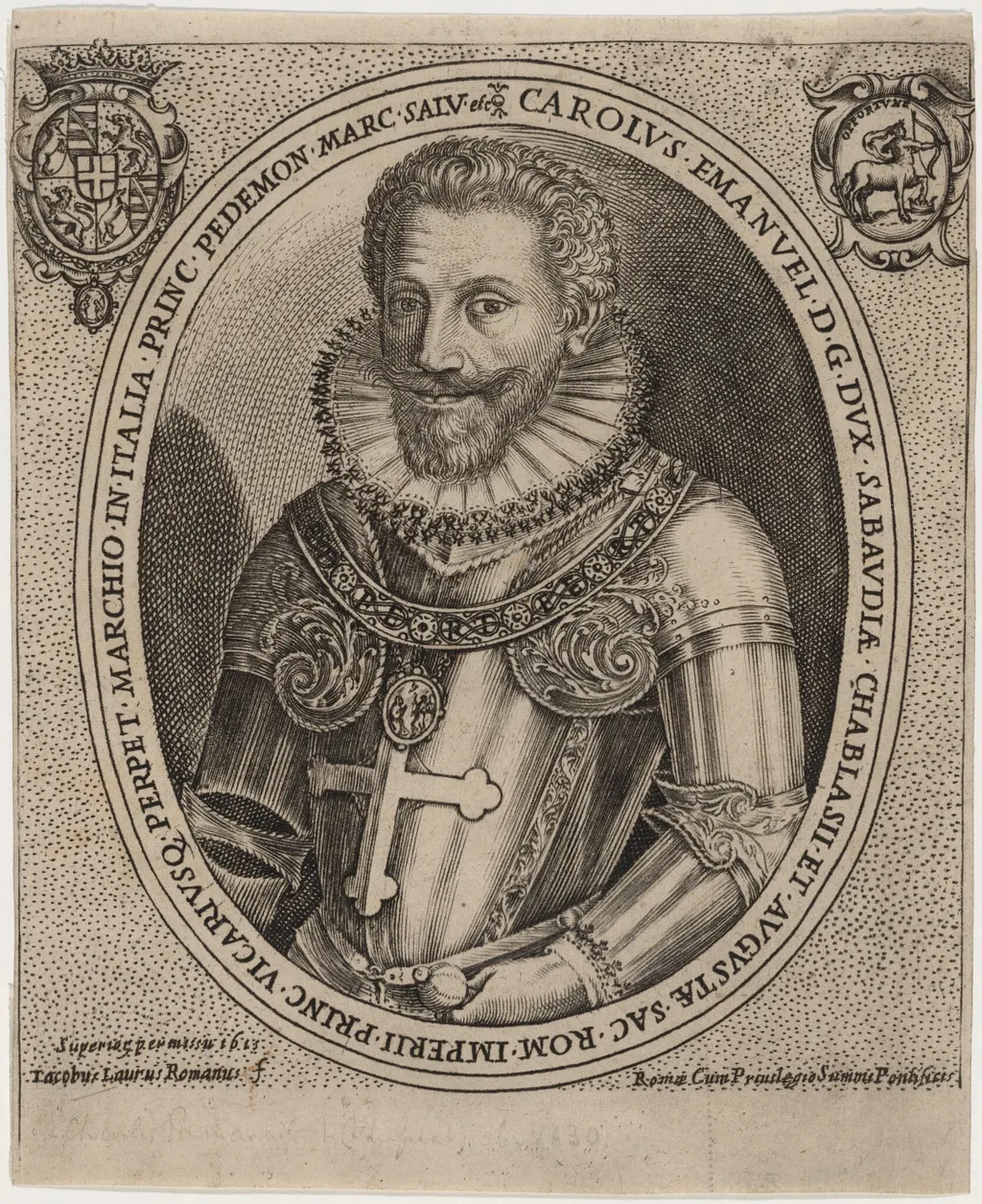
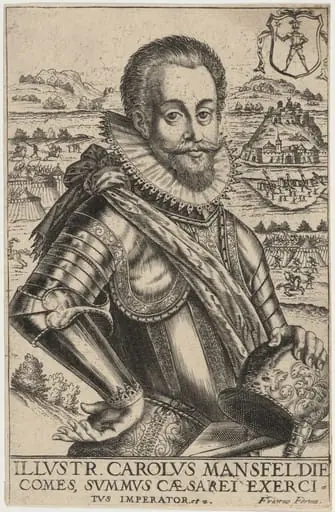
Charles Emmanuel I, Prince of Piedmont is an ink print by the Baroque artist Jacobus Laurus Romanus. It dates from 1613 and is held in the collection of the National Gallery of Art.
About this work
Overview
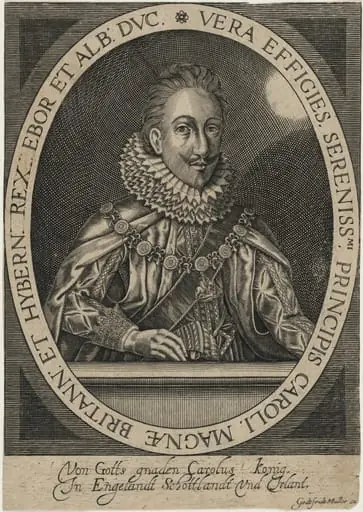
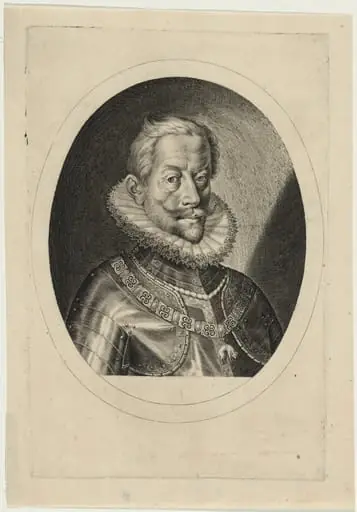
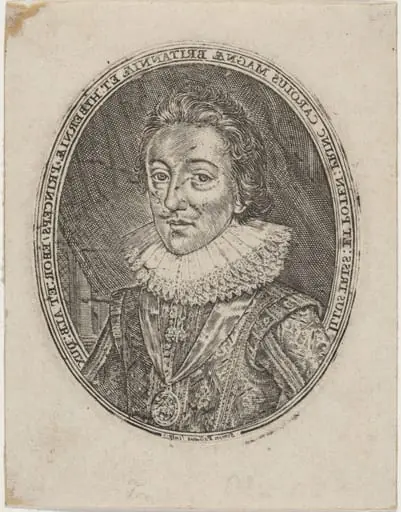
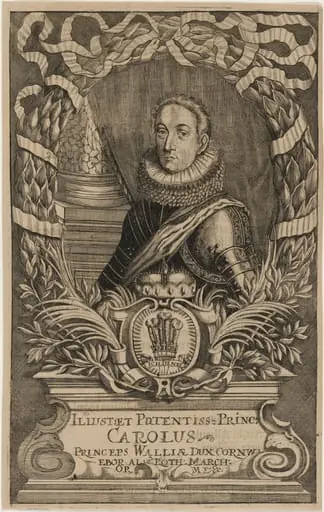
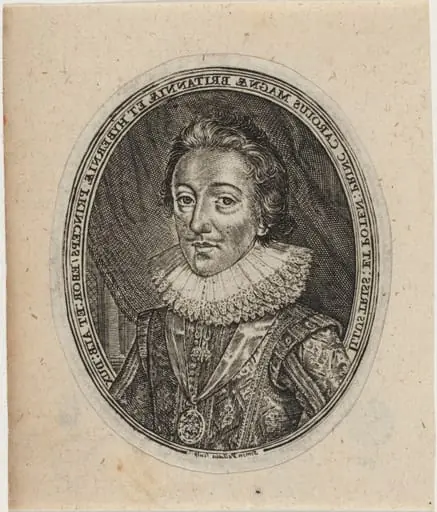
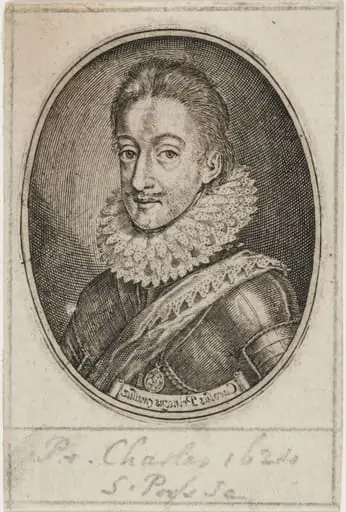
The print is a black‑and‑white engraving executed in 1613 by the artist Jacobus Laurus Romanus. It portrays Charles Emmanuel I, Prince of Piedmont, rendered in elaborate costume with a ruffled collar, a heavy chain, and a patterned cloak. The composition is framed by Latin inscriptions and two small heraldic crests that identify the sitter.
Subject & Meaning
The portrait presents the Savoyard ruler in a dignified stance, holding a key‑shaped implement in his right hand and a curved staff in his left, symbols traditionally associated with authority and governance. The lavish attire and jewelry underscore his princely status, while the surrounding text likely conveys titles or dedications, reinforcing his political legitimacy.
Technique & Style
Romanus employed fine cross‑hatching and parallel lines to model the figure’s facial features and drapery, creating a nuanced play of light and shadow that gives the image a three‑dimensional quality. The engraving’s intricate line work demonstrates the high level of craftsmanship typical of early seventeenth‑century printmaking, where tonal depth was achieved solely through inked lines.
History & Provenance
Created in 1613, the print was likely intended for circulation among courtly circles to disseminate the prince’s likeness. While specific ownership records are scarce, such portraits were commonly collected by noble households and later entered museum collections as examples of political portraiture from the early modern period.
Context
The work belongs to a broader tradition of engraved portraits that served both decorative and propagandistic purposes in the early modern Italian states. By presenting the ruler in opulent dress and with emblematic regalia, the image aligns with contemporary visual strategies used to assert dynastic continuity and sovereign authority.
Artist & collection