Artwork
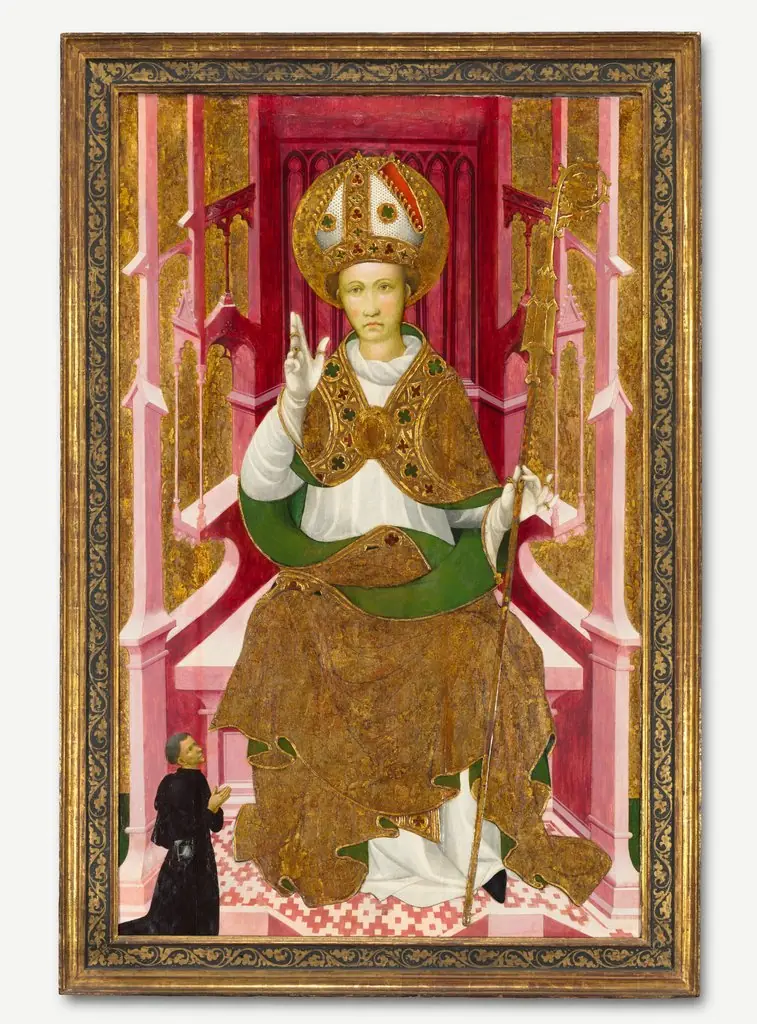
A Bishop Saint with a Donor (Saint Louis of Toulouse?)
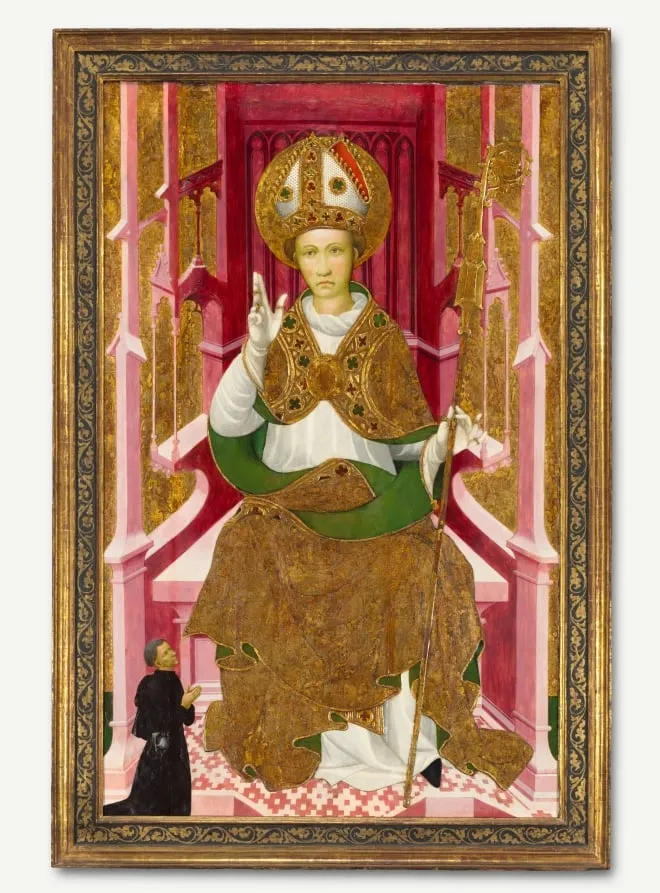
A Bishop Saint with a Donor (Saint Louis of Toulouse?) is an unspecified painting by the Byzantine icon painting artist Unknown. It dates from 1404 and is held in the collection of the Cleveland Museum of Art.
About this work
The bishop is likely Saint Louis of Toulouse, a royal saint who gave up his throne to become a priest.
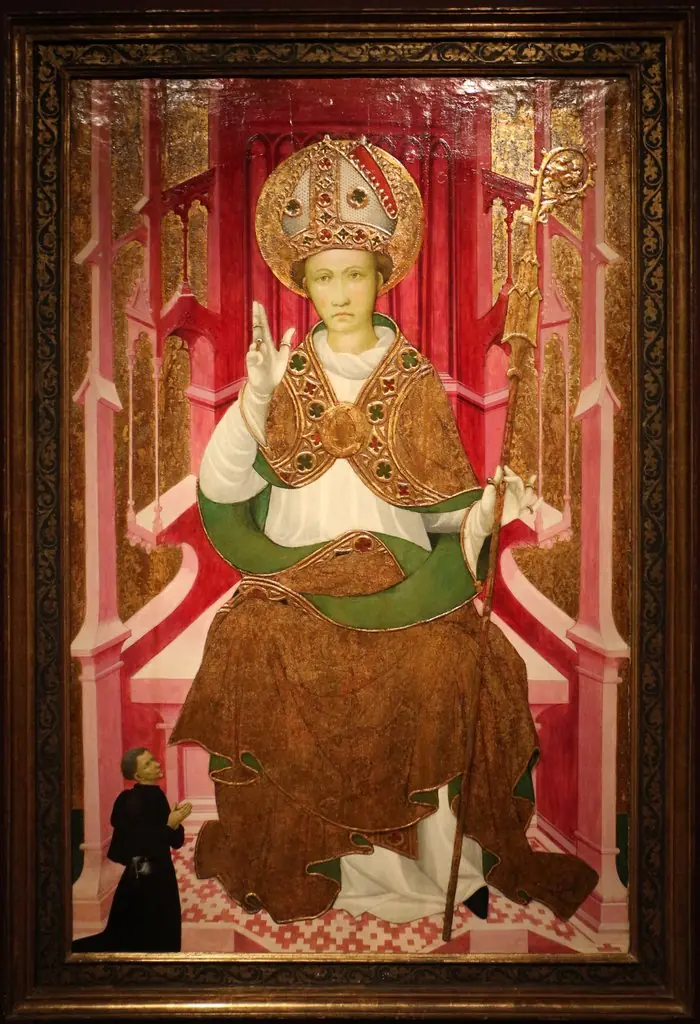
A young bishop in gold and red robes stands over a man in black. The bishop holds a tall staff and wears a pointed hat. The man below looks up, hands folded in prayer.
This painting was made in Catalonia, Spain, in the early 1400s. The bishop is likely Saint Louis of Toulouse, a royal saint who gave up his throne to become a priest. The man in black paid for the painting—wealthy people often did this to show devotion.
To see more art like this, look up spain, catalonia, early 15th century.
Overview
This early‑15th‑century panel, executed in the Catalan artistic tradition of northeastern Spain, depicts a youthful bishop‑saint in richly embroidered gold and red vestments, standing above a supplicant donor clothed in black. The composition emphasizes the saint’s ecclesiastical authority through the presence of a mitre and crozier, while the donor is shown in a posture of prayer.
Subject & Meaning
The figure is commonly identified as Saint Louis of Toulouse, a 13‑year‑old prince who renounced his royal inheritance to become bishop of Toulouse in 1297. His brief episcopate, ending with his death at twenty‑three, led to his canonisation in 1317. The painting’s juxtaposition of the saint with a lay patron underscores the devotional purpose of securing intercession and displaying personal piety.
Technique & Style
Rendered in the characteristic Catalan style of the period, the work employs vivid coloration and detailed textile rendering to convey the sumptuousness of the bishop’s robes. Linear modeling and a restrained use of gold leaf highlight the hierarchical contrast between the sanctified figure and the humble donor.
History & Provenance
Although the artist remains unidentified, the panel’s provenance is linked to the spread of Saint Louis’s cult after his relics were transferred to Valencia in 1423. The donor’s identity is unknown, but the black attire suggests a wealthy lay patron rather than a cleric, reflecting common practices of private commission for devotional images in medieval Spain.
Context
The veneration of Saint Louis of Toulouse gained particular momentum in the Iberian Peninsula during the 15th century, aligning with contemporary ideals of royal humility and charitable service. Catalan workshops responded to this demand by producing portable images that could be displayed in private chapels or domestic settings.
Legacy
The painting exemplifies the intersection of regional artistic conventions and the wider European cult of royal saints. Its survival offers insight into patronage patterns and the visual strategies used to convey sanctity and personal devotion in early‑modern Catalonia.
Artist & collection

 Domestic Scene
 Giacomo and Cardinal Marco, investing Andrea, Abbot of San Zeno, with his Benefice
 The Nymph of Fontainebleau
 Portrait of a Woman
 Madonna and Child with Saints in the Enclosed Garden
 Venus and Minerva
 Family Group of Four on Sofa
 Wall painting from Room H of the Villa of P. Fannius Synistor at Boscoreale