Artwork
A Brahmin messenger and his wife
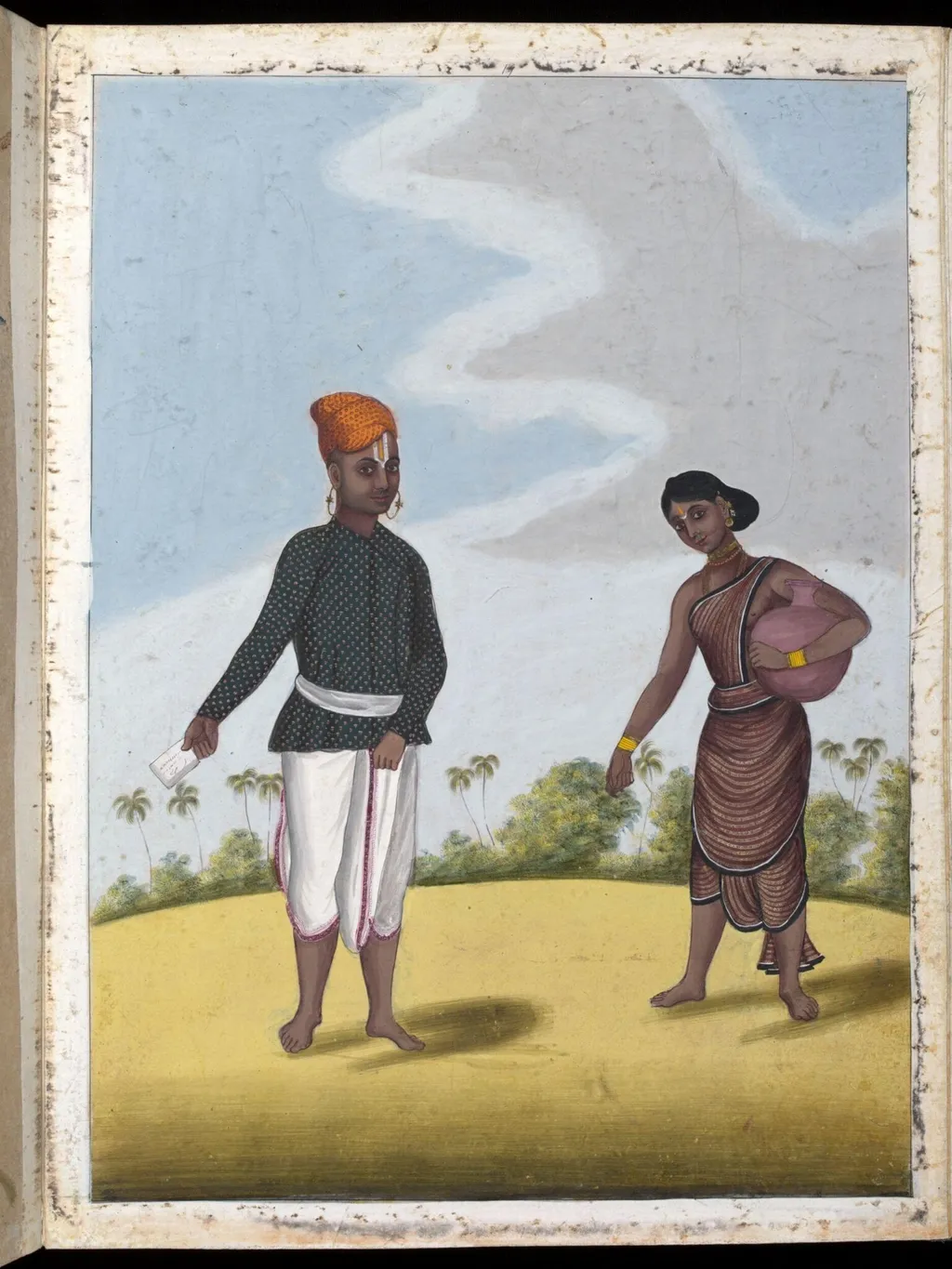
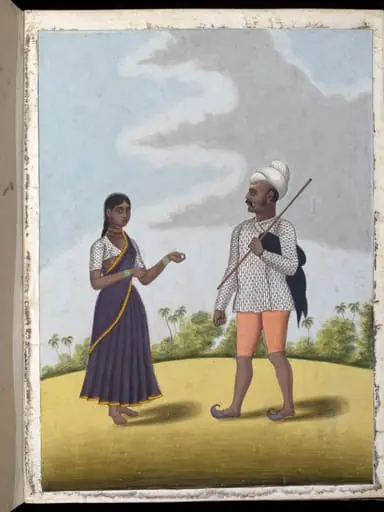
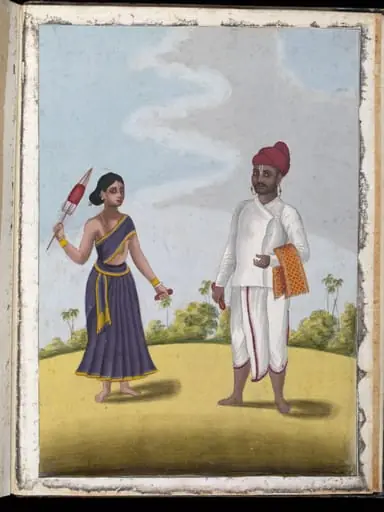
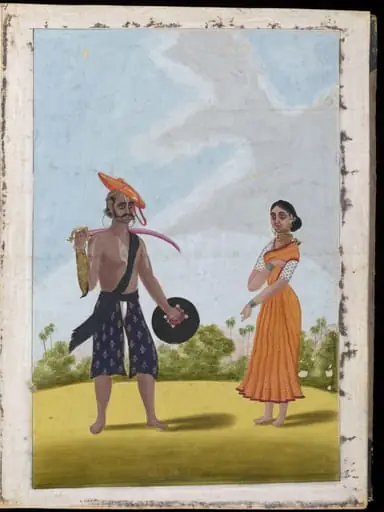
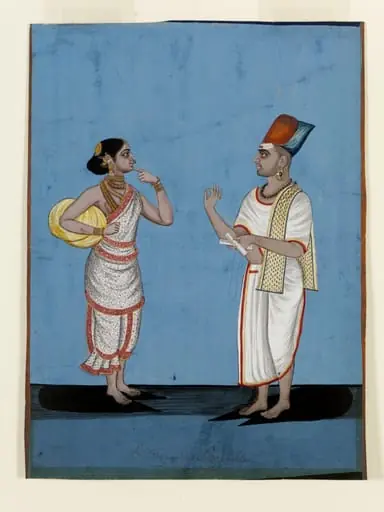
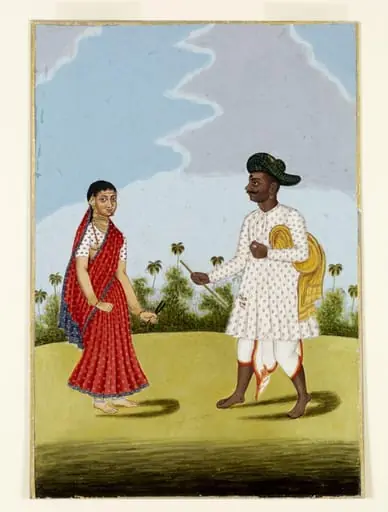
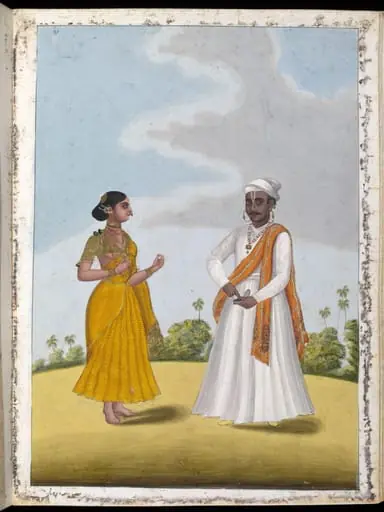
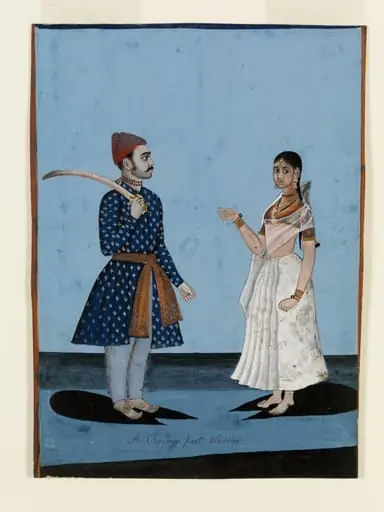
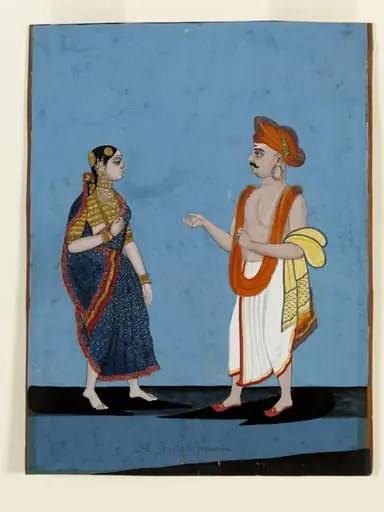
A Brahmin messenger and his wife is a paint painting by the Romanticist artist Unknown. It dates from 1805 and is held in the collection of the Victoria and Albert Museum. Created in 1805, this watercolor painting is part of a series of 36 works documenting regional occupations and attire across South India.
About this work
Overview
It portrays a Brahmin messenger and his wife in a quiet outdoor setting, their clothing and posture reflecting social roles within a structured caste system.
Created in 1805, this watercolor painting is part of a series of 36 works documenting regional occupations and attire across South India. It portrays a Brahmin messenger and his wife in a quiet outdoor setting, their clothing and posture reflecting social roles within a structured caste system. The album, likely commissioned by British officials, aimed to catalog local life with observational precision rather than idealization.
Subject & Meaning
The man, identified as a Brahmin messenger, holds a written document, suggesting his role in transmitting official or religious correspondence. His wife stands beside him, her relaxed stance and modest attire indicating domestic presence within a public role. Together, they represent a unit of social function—his duty, her support—without overt symbolism, grounding the image in daily reality rather than ritual or hierarchy.
Technique & Style
Executed in watercolor on paper, the painting uses soft washes and fine linework to define form and texture. Colors are muted yet distinct: the man’s orange turban and dotted jacket contrast subtly with the woman’s striped skirt and bare skin. Background elements like palm trees are rendered lightly, avoiding distraction. The composition is balanced, with figures centered against a pale ground, emphasizing their presence without theatricality.
History & Provenance
The painting originated in the early 19th century in southern India, possibly from a court or colonial administrative center. It entered the Victoria and Albert Museum’s collection as part of a larger album assembled during British colonial rule. The series was likely produced by local artists under European patronage, intended as ethnographic documentation for British audiences unfamiliar with Indian social structures.
Context
This work emerged during a period when British administrators sought to classify Indian society through visual records. The album’s format—pairing men and women of distinct castes—mirrored colonial efforts to map social hierarchies. Yet the paintings often retain subtle local sensibilities, avoiding caricature. Their calm, unembellished style suggests artists prioritized observation over exoticism, even under foreign commission.
Legacy
The series remains a valuable record of early 19th-century Indian dress, posture, and occupational roles. Unlike later colonial imagery that emphasized spectacle, these works offer restrained, intimate glimpses of everyday life. Today, they are studied for their anthropological detail and as examples of cross-cultural artistic exchange, where local techniques met colonial demands for documentation.
Artist & collection

 Domestic Scene
 Giacomo and Cardinal Marco, investing Andrea, Abbot of San Zeno, with his Benefice
 The Nymph of Fontainebleau
 Portrait of a Woman
 Madonna and Child with Saints in the Enclosed Garden
 Venus and Minerva
 Family Group of Four on Sofa
 Wall painting from Room H of the Villa of P. Fannius Synistor at Boscoreale