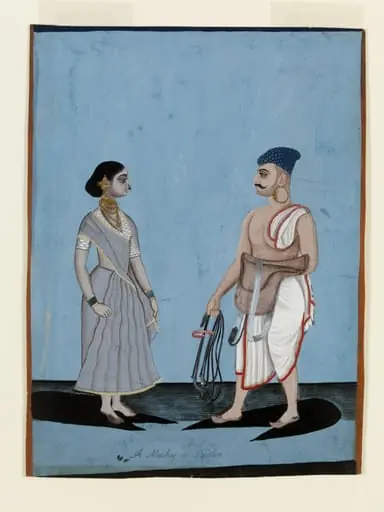
Artwork
A soldier and his wife
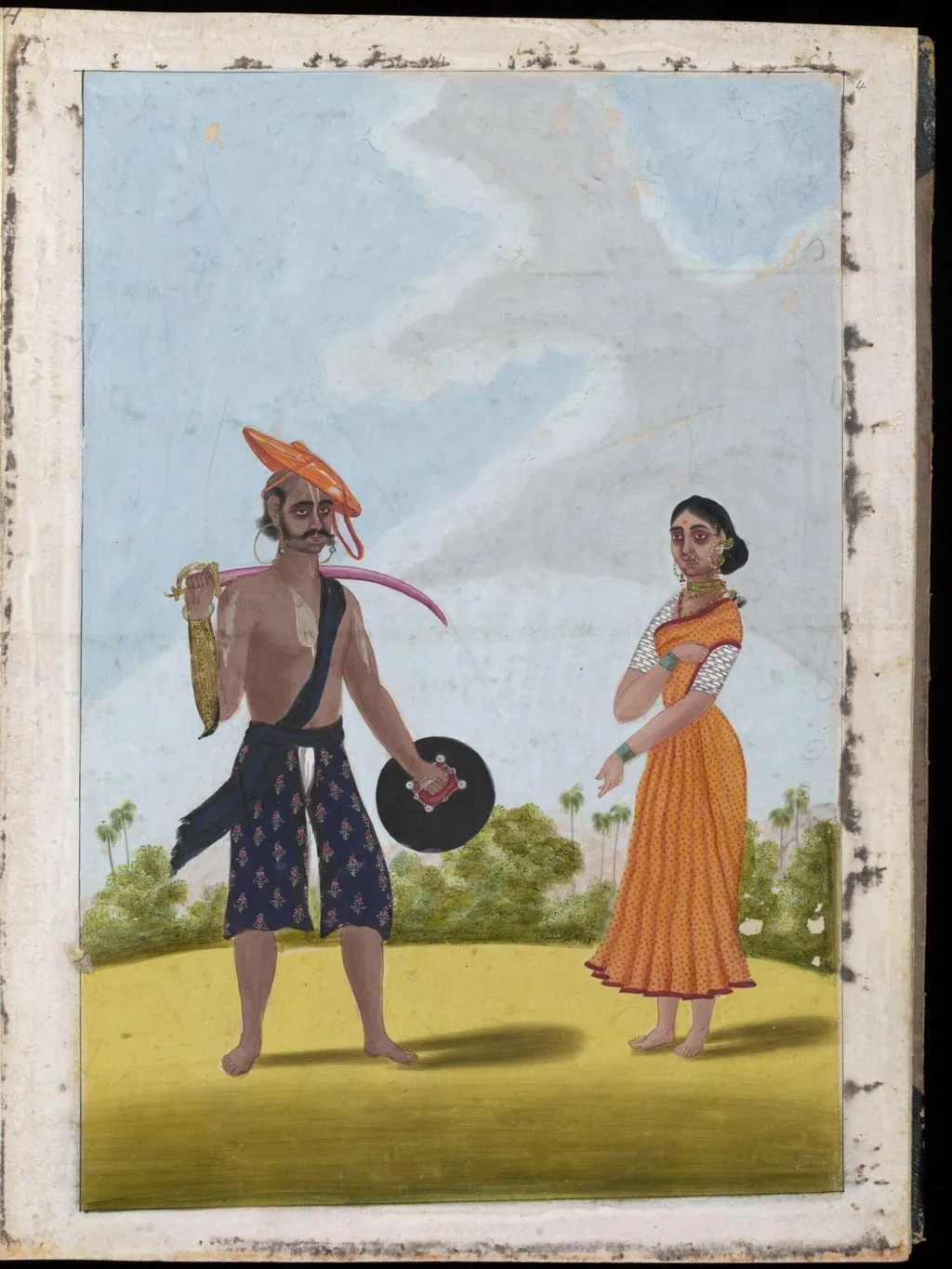
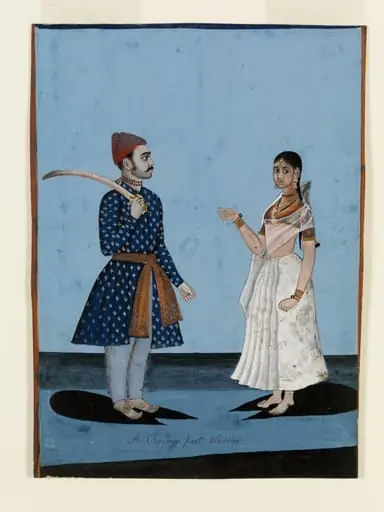
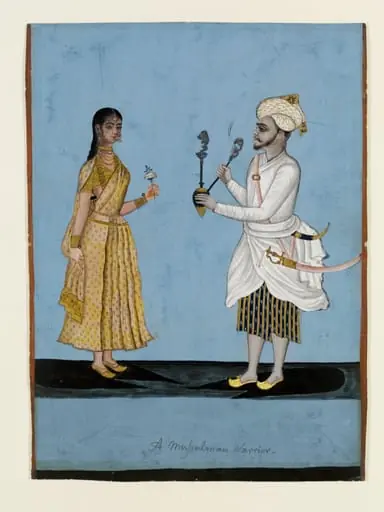
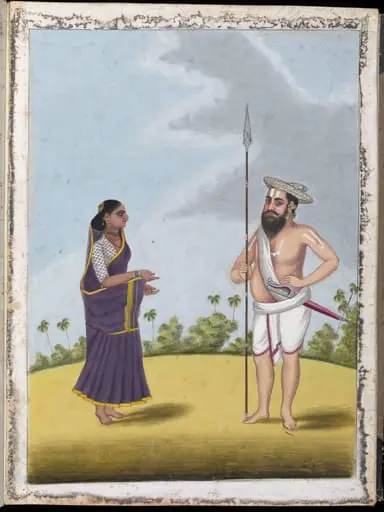
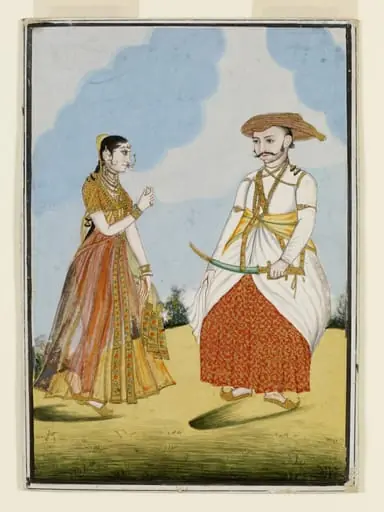
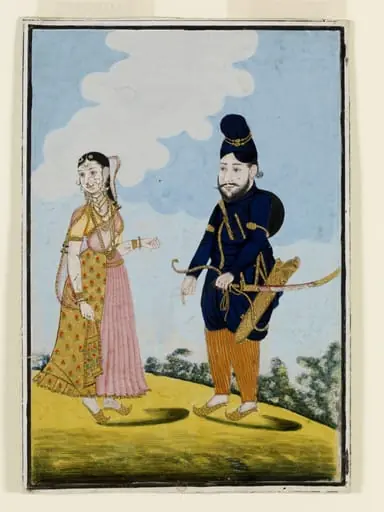
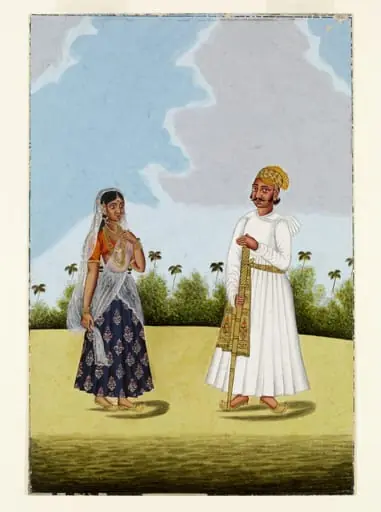
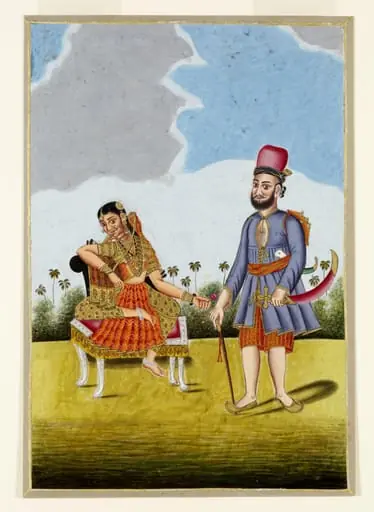
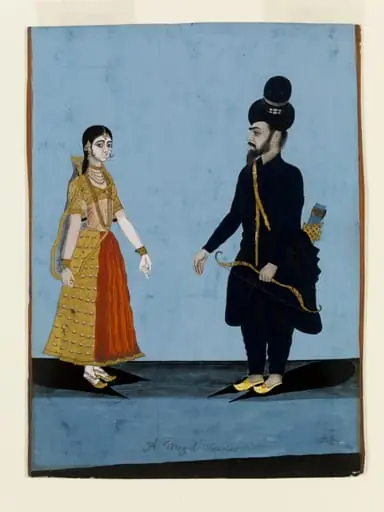
A soldier and his wife is a paint painting by the Romanticist artist Unknown. It dates from 1805 and is held in the collection of the Victoria and Albert Museum. This painting is one of thirty-six in a series documenting diverse social roles in early modern South Asia.
About this work
Overview
It portrays a soldier and his wife as paired figures, emphasizing their status through dress and accoutrements rather than narrative action.
This painting is one of thirty-six in a series documenting diverse social roles in early modern South Asia. It portrays a soldier and his wife as paired figures, emphasizing their status through dress and accoutrements rather than narrative action. The composition is frontal and static, with both figures placed prominently against a simplified natural backdrop of trees and open sky, reflecting a convention of typological representation common in regional courtly painting traditions.
Subject & Meaning
The soldier, identified by his curved sword, shield, and distinctive headgear, represents a martial caste, while his wife’s ornate attire signals her role within his social sphere. Their joint depiction suggests a domestic and ceremonial unity, possibly tied to lineage or duty. The pink cloth wrapped around the sword may indicate ritual use or symbolic protection, distinguishing this figure from purely combat-oriented imagery and hinting at ceremonial functions within his role.
Technique & Style
The work employs flat planes of unmodulated color with minimal shading, characteristic of regional painting styles that prioritize symbolic clarity over illusionistic depth. Details like gold jewelry and patterned fabrics are rendered with precision, yet the background remains abstracted—pale sky, yellow earth, and sparse foliage. The lack of perspective and the bold, saturated hues contribute to a decorative, emblematic quality, aligning with manuscript and album painting practices of the period.
History & Provenance
The painting likely originated in a royal atelier in northern or central India during the 18th or early 19th century, produced as part of a commissioned series cataloging occupational groups. Such albums were often compiled for colonial officials or local rulers interested in ethnographic documentation. Its survival suggests it was preserved within a collector’s collection, possibly entering institutional holdings through 19th-century acquisitions or donations.
Context
This work belongs to a broader tradition of Indian manuscript illustration that systematically recorded caste, profession, and regional dress, often under European colonial influence. Similar series were created for British administrators seeking to categorize Indian society. While rooted in indigenous visual languages, these albums reflect a hybrid impulse—documenting local life through a framework shaped by Western ethnographic interests.
Legacy
The painting contributes to a historical archive of visual ethnography that continues to inform studies of social structure in pre-colonial and colonial India. Its stylistic consistency with other works in the series allows scholars to trace regional artistic conventions and the transmission of iconographic motifs. Today, such paintings are valued for their documentary precision and as artifacts of cross-cultural observation, held in institutions like the Victoria and Albert Museum.
Artist & collection

 Domestic Scene
 Giacomo and Cardinal Marco, investing Andrea, Abbot of San Zeno, with his Benefice
 The Nymph of Fontainebleau
 Portrait of a Woman
 Madonna and Child with Saints in the Enclosed Garden
 Venus and Minerva
 Family Group of Four on Sofa
 Wall painting from Room H of the Villa of P. Fannius Synistor at Boscoreale