Artwork
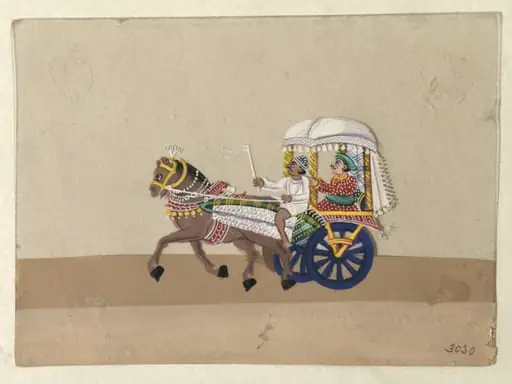
A bullock cart carrying a cheetah.
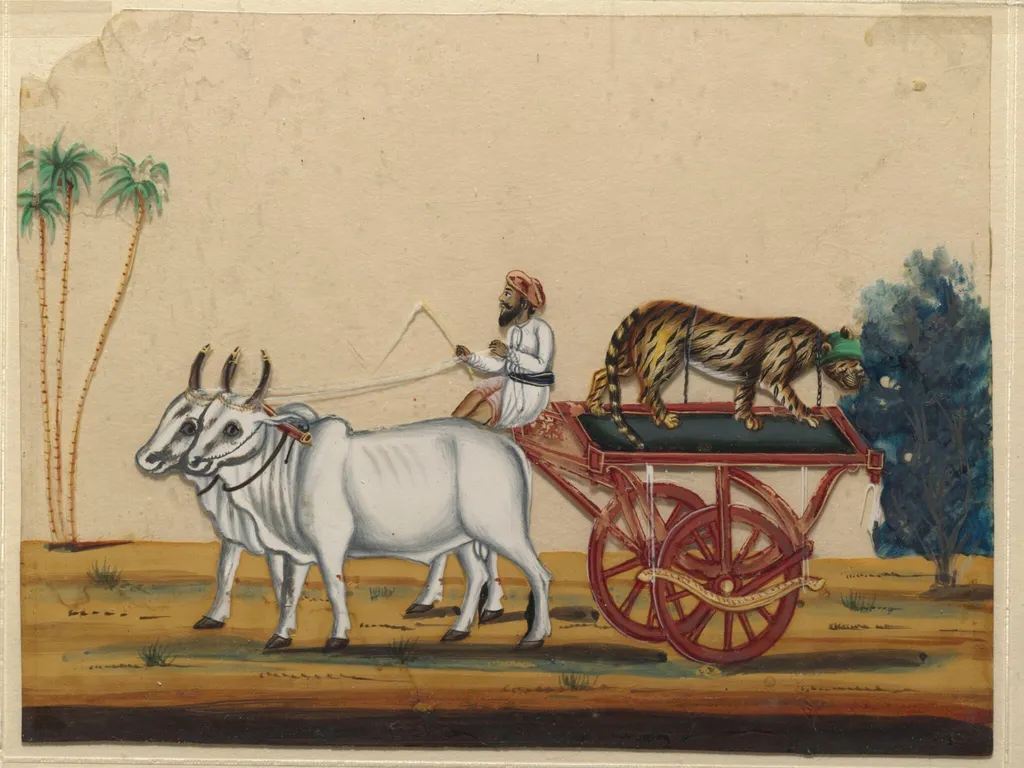
A bullock cart carrying a cheetah. is a paint painting by the Impressionist artist Unknown. It dates from 1860 and is held in the collection of the Victoria and Albert Museum. This painting depicts a bullock cart transporting a cheetah through a rural landscape.
About this work
Overview
Two white oxen pull a vividly red cart, upon which a man in white attire holds a stick, while the cheetah stands quietly behind him.
This painting depicts a bullock cart transporting a cheetah through a rural landscape. Two white oxen pull a vividly red cart, upon which a man in white attire holds a stick, while the cheetah stands quietly behind him. The scene is rendered with bold, flat colors and simplified forms, suggesting an emphasis on visual impression over precise realism. The setting includes palm trees, dry grass, and a distant blue hill, grounding the unusual subject in a recognizable environment.
Subject & Meaning
The presence of a cheetah on a cart reflects historical practices in South Asia, where these animals were occasionally transported for hunting or display. The calm demeanor of the cheetah implies domestication or training, while the man’s attire suggests local authority or caretaker status. The composition does not dramatize the event but presents it matter-of-factly, hinting at its familiarity within certain cultural contexts rather than treating it as spectacle.
Technique & Style
The painting employs bright, unmodulated colors and clear outlines, avoiding shading or intricate detail. Forms are reduced to essential shapes—circular heads, straight limbs, flat planes of color—which lend the scene a graphic quality. This approach aligns with regional folk or courtly traditions that prioritize symbolic clarity and visual rhythm over naturalistic representation, emphasizing the immediacy of the moment over technical precision.
History & Provenance
Though the exact origin and artist are unrecorded, the style and subject suggest a work from 18th- or 19th-century India, likely produced in a regional court or artisan workshop. Such paintings often documented local customs, royal pastimes, or exotic animals in circulation among elites. The Victoria and Albert Museum holds comparable works, indicating this piece belongs to a broader corpus of Indian paintings recording daily and ceremonial life.
Context
In pre-colonial India, cheetahs were kept by royalty for hunting deer and antelope, and their transport in carts was a practical necessity. These animals were symbols of status and power, and their depiction in art reflected their role in elite culture. The landscape—palm trees, dry terrain, distant hills—matches regions like Rajasthan or Gujarat, where such practices were common and visually documented by local artists.
Legacy
This painting contributes to a visual record of human-animal relationships in historical South Asia, preserving a practice now extinct. Its stylistic simplicity and unusual subject make it a valuable artifact for understanding how non-Western traditions captured the everyday alongside the extraordinary. Such works continue to inform modern scholarship on colonial-era wildlife management and regional artistic expression.
Artist & collection

 Domestic Scene
 Giacomo and Cardinal Marco, investing Andrea, Abbot of San Zeno, with his Benefice
 The Nymph of Fontainebleau
 Portrait of a Woman
 Madonna and Child with Saints in the Enclosed Garden
 Venus and Minerva
 Family Group of Four on Sofa
 Wall painting from Room H of the Villa of P. Fannius Synistor at Boscoreale
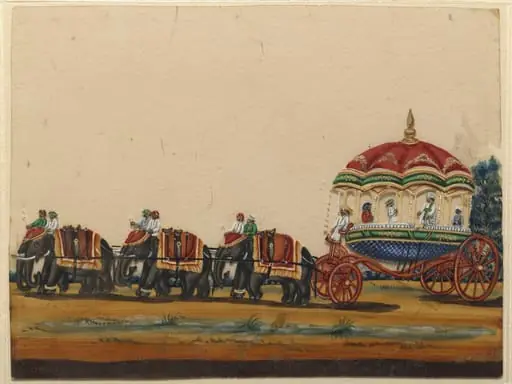 A carriage drawn by six elephants
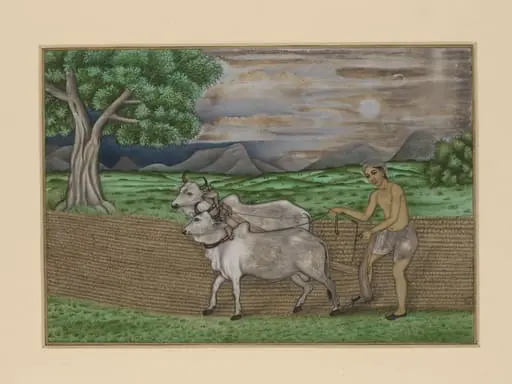 A villager ploughing with two bullocks; a hilly landscape in the background.
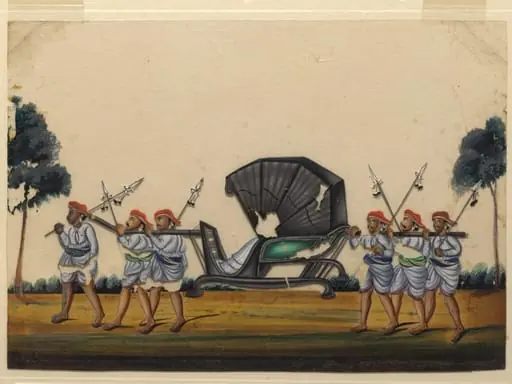 A chair-palanquin with six bearers
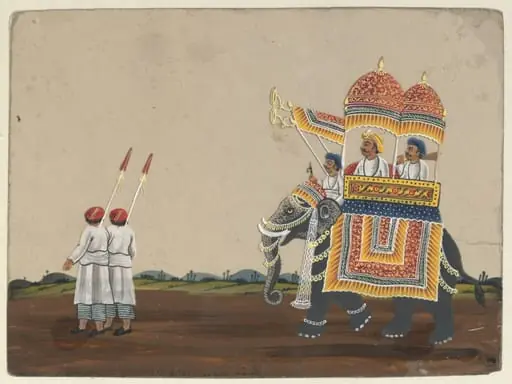 An elephant with a howdah
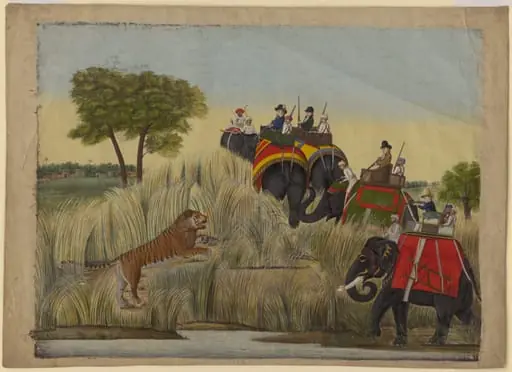 Four elephants with Europeans seated in the howdahs taking part in a tiger hunt.
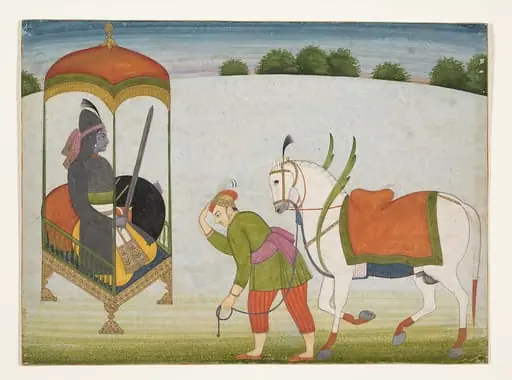 Untitled
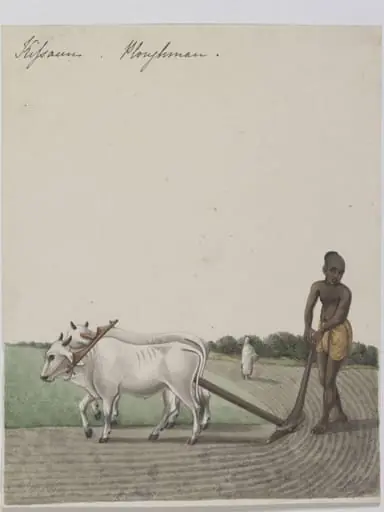 A cultivator
 One of Twelve drawings depicting methods of transport