Artwork
A chair-palanquin with six bearers
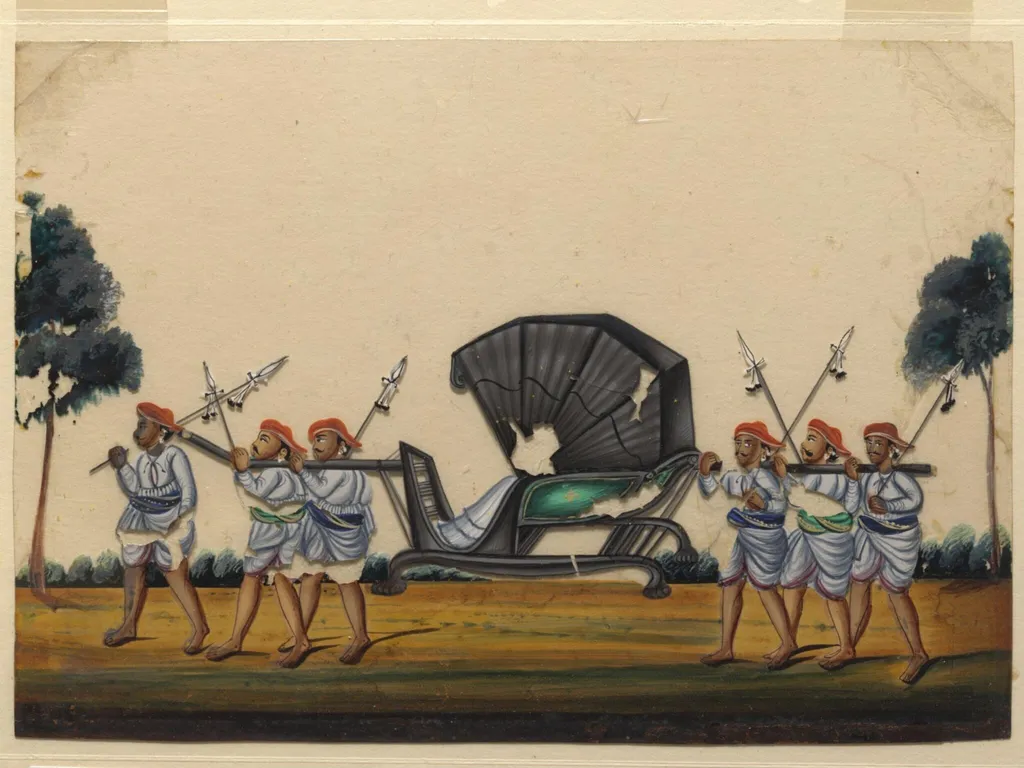
A chair-palanquin with six bearers is a paint painting by Unknown. It dates from 1850 and is held in the collection of the Victoria and Albert Museum. The work portrays a portable chair, or palanquin, supported on two poles and borne aloft by six male carriers.
About this work
Overview
The work portrays a portable chair, or palanquin, supported on two poles and borne aloft by six male carriers. The figures are arranged in a line, each gripping the poles, while the chair is topped with a dark canopy and cushioned with a green pad. The setting is an open landscape punctuated by a few trees, rendered with minimal background detail.
Subject & Meaning
The scene captures a ceremonial or processional moment, suggesting the transport of an important individual or object. The uniform attire of the bearers—white shirts, red caps, and brightly colored waistcloths—highlights their collective role, while the subtle variations in their facial features convey individuality within the group.
Technique & Style
The artist employs a clear, flattened perspective, emphasizing the linear arrangement of the carriers and the central chair. Color is used descriptively: the red caps contrast with the white shirts, and the green cushion provides a focal point beneath the black umbrella. Brushwork is precise, allowing each figure’s face to be distinguished despite the repetitive costume.
Context
Such depictions of palanquins were common in South Asian visual culture, where they symbolized status and ritual procession. The painting’s composition reflects a narrative tradition that records everyday ceremonial practices, offering insight into contemporary dress and transport methods.
Legacy
Works of this type contribute to the broader visual record of historical customs, informing both scholars and the public about the social functions of palanquins and the attire of bearers in the period depicted.
Artist & collection

 Domestic Scene
 Giacomo and Cardinal Marco, investing Andrea, Abbot of San Zeno, with his Benefice
 The Nymph of Fontainebleau
 Portrait of a Woman
 Madonna and Child with Saints in the Enclosed Garden
 Venus and Minerva
 Family Group of Four on Sofa
 Wall painting from Room H of the Villa of P. Fannius Synistor at Boscoreale
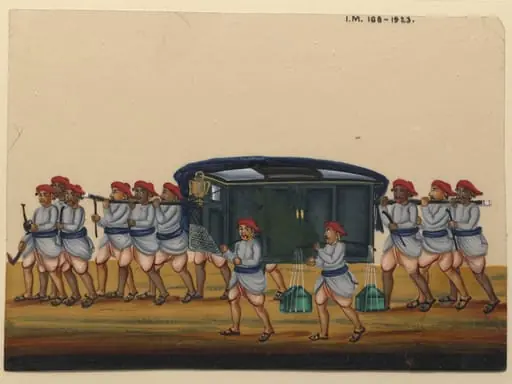 One of twenty-eight paintings, fifteen depicting occupations, thirteen depicting deities.
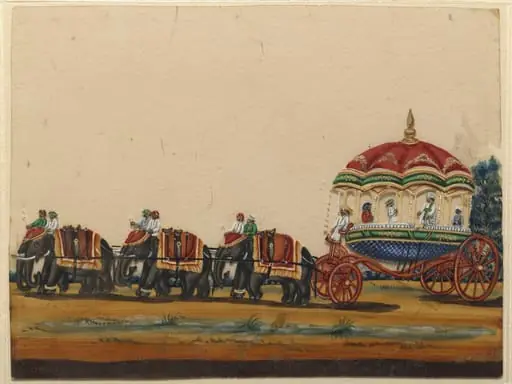 A carriage drawn by six elephants
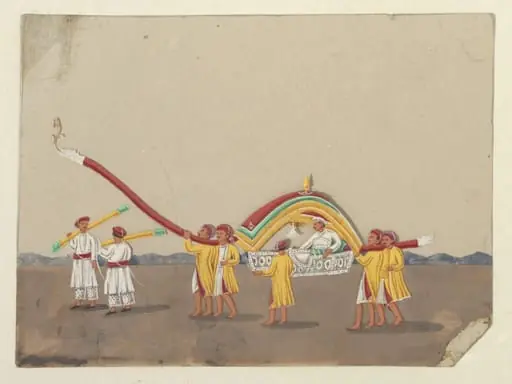 One of eight paintings illustrating modes of transport.
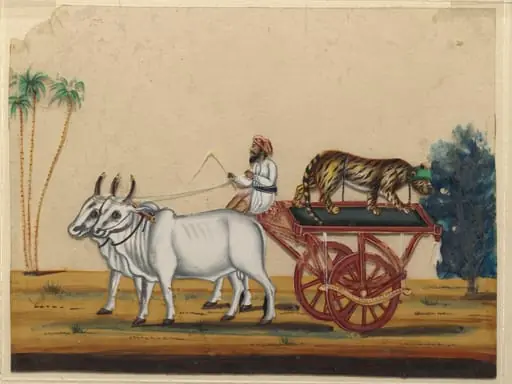 A bullock cart carrying a cheetah.
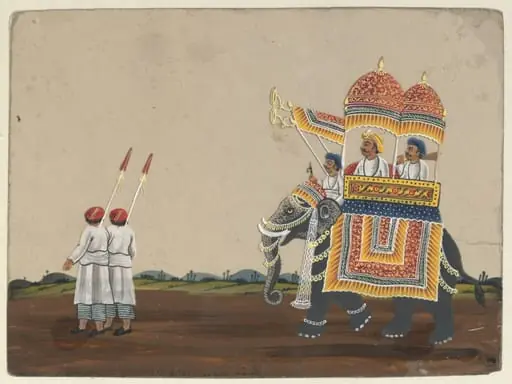 An elephant with a howdah
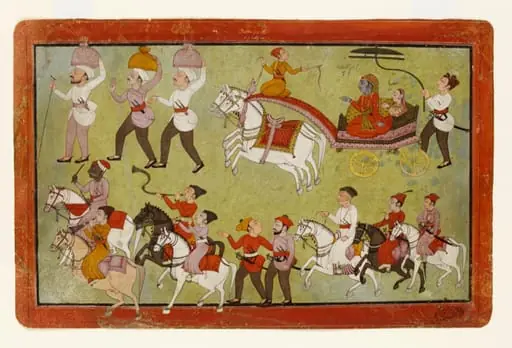 Rama and Sita
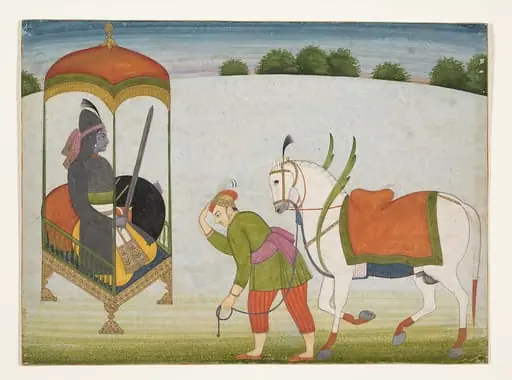 Untitled
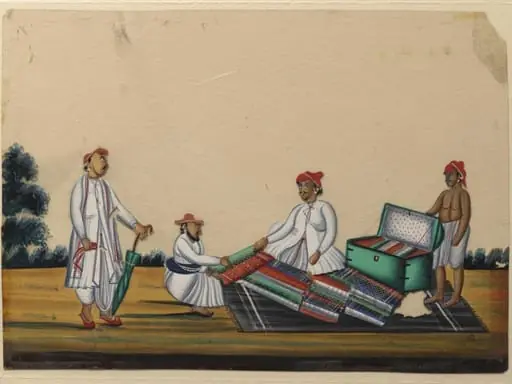 A cloth-seller
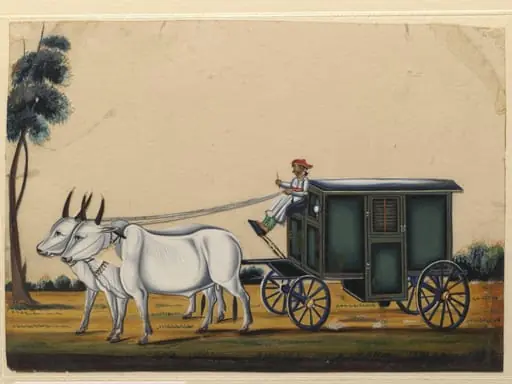 A closed carriage drawn by bullocks