Artwork
A chair-caner and his wife
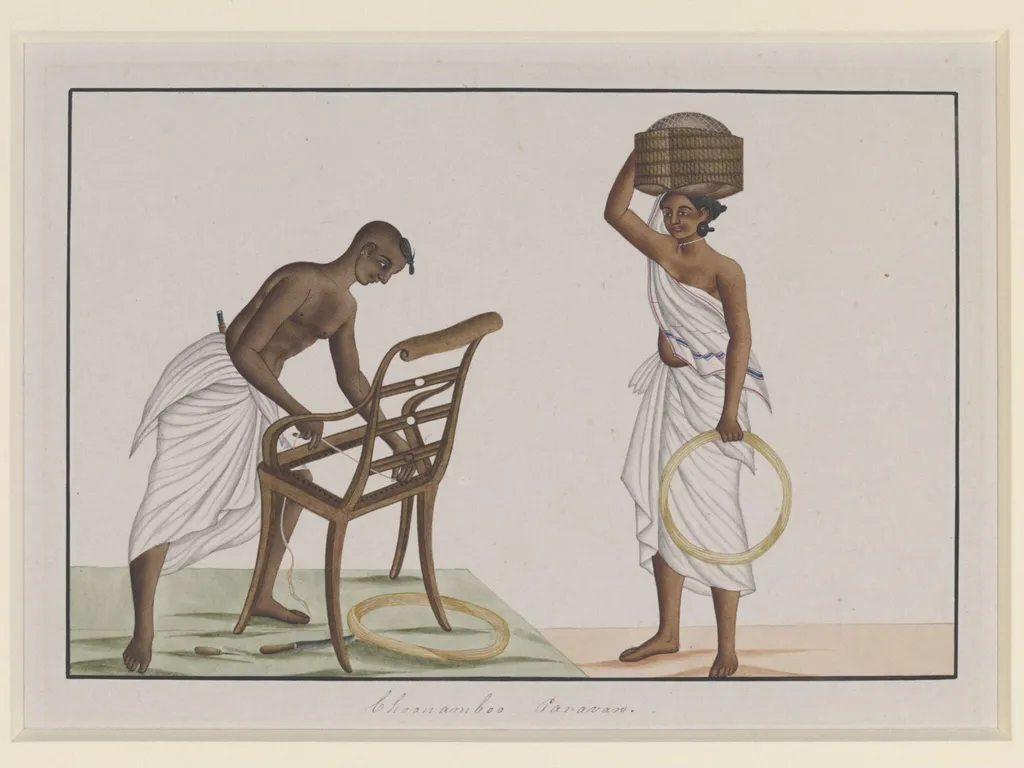
A chair-caner and his wife is a paint painting by the Romanticist artist Unknown. It dates from 1830 and is held in the collection of the Victoria and Albert Museum.
About this work
Overview
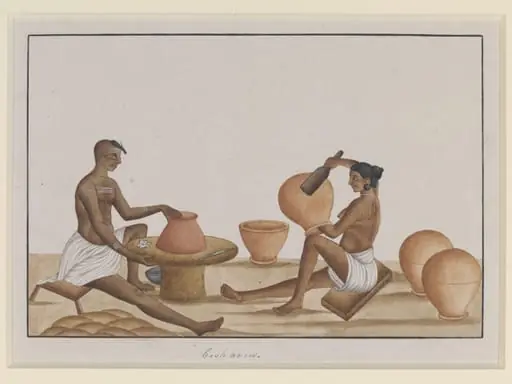
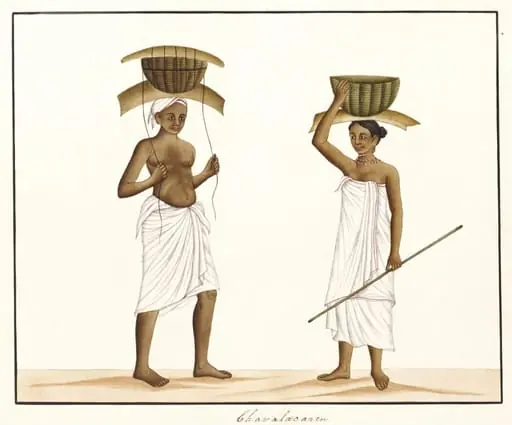
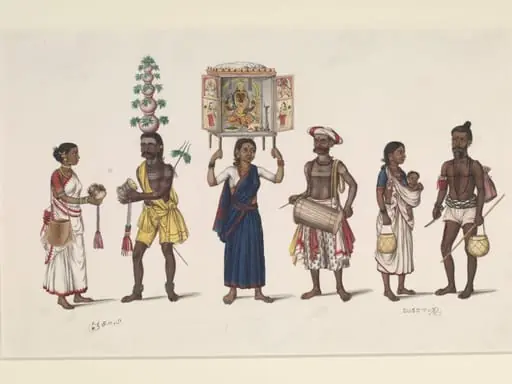
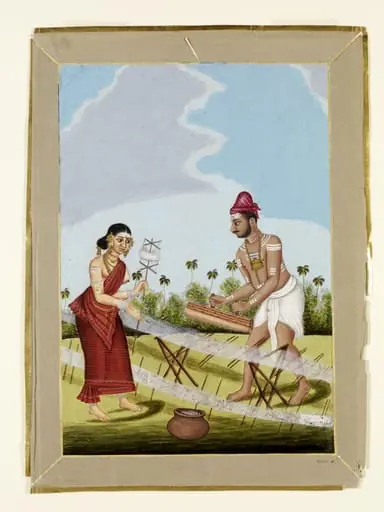
A chair-caner and his wife is a painting from a set of twelve, commissioned by the British in India, showcasing various trades through the lens of Indian artists. The work depicts a couple engaged in their profession, surrounded by the tools and materials of chair caning.
Subject & Meaning
The painting highlights a collaborative aspect of the chair-caner's trade, with the woman actively assisting her husband, emphasizing a partnership in their work. This portrayal offers a glimpse into the social dynamics of artisanal families during the period.
Technique & Style
The painting exemplifies the use of chiaroscuro, an artistic technique that employs strong contrasts between light and dark to create a sense of volume and depth, adding dimensionality to the scene.
History & Provenance
Part of a collection of Company paintings—works produced by Indian artists for British patrons in India—the painting's specific historical ownership and exhibition history before its current location are not detailed here.
Context
Created as part of a series documenting various trades, this painting reflects the British interest in documenting Indian professions and daily life during their rule in India, serving as both an artistic piece and a form of ethnographic record.
Legacy
As a representative of Company paintings, it contributes to the understanding of artistic exchange and cultural documentation under British rule in India, though its individual impact or influence on later art movements is not specifically highlighted.
Artist & collection

 Domestic Scene
 Giacomo and Cardinal Marco, investing Andrea, Abbot of San Zeno, with his Benefice
 The Nymph of Fontainebleau
 Portrait of a Woman
 Madonna and Child with Saints in the Enclosed Garden
 Venus and Minerva
 Family Group of Four on Sofa
 Wall painting from Room H of the Villa of P. Fannius Synistor at Boscoreale