Artwork
A knitter
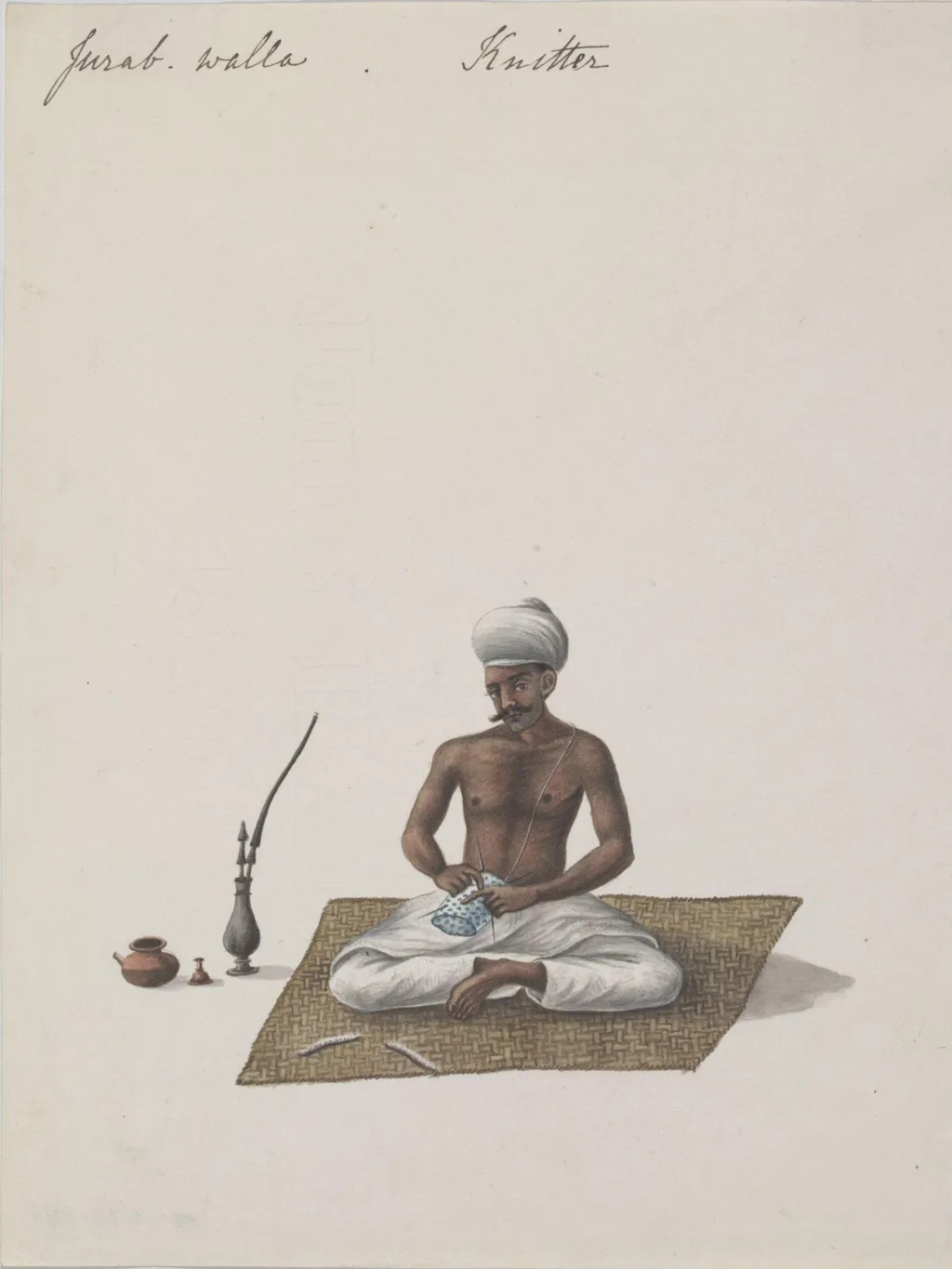
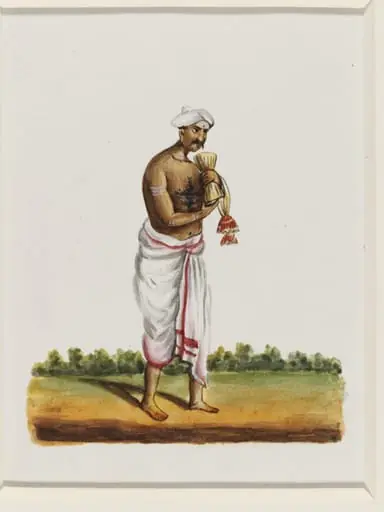
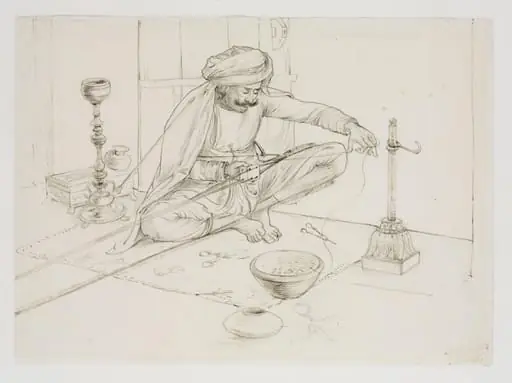
A knitter is a paint painting by the Biedermeier artist Unknown. It dates from 1826 and is held in the collection of the Victoria and Albert Museum. This watercolor painting portrays a man knitting, part of a series of 35 works from 1826 documenting labor and daily trades.
About this work
Overview
This watercolor painting portrays a man knitting, part of a series of 35 works from 1826 documenting labor and daily trades.
This watercolor painting portrays a man knitting, part of a series of 35 works from 1826 documenting labor and daily trades. The figure is seated cross-legged on a woven mat, bare-chested, wearing a white turban and loose trousers. The scene is rendered with delicate brushwork and muted tones, emphasizing quiet concentration over dramatic action. The composition centers on the act of knitting, framed by a few domestic objects nearby.
Subject & Meaning
The subject is a laborer engaged in a solitary, repetitive craft, suggesting themes of routine, skill, and quiet dignity. His attire and physical features hint at a South Asian or Southeast Asian context, though the exact origin remains unspecified. The inclusion of a bell and two pots may imply a domestic or ritual setting, but their function is unclear. The focus on an individual at work reflects an interest in everyday life rather than heroic or mythological narratives.
Technique & Style
Executed in watercolor, the painting employs soft washes and subtle gradations to suggest texture and light. The figure’s skin and fabric are rendered with minimal detail, relying on tone and silhouette rather than precise anatomy. The background is left largely empty, directing attention to the figure and his tools. The style aligns with early 19th-century observational practices, blending documentary intent with the lyrical qualities of Romantic-era watercolor.
History & Provenance
Created in 1826, the painting belongs to a documented series illustrating occupational types, likely commissioned for educational or ethnographic purposes. Its origin is tied to British colonial administrative or artistic circles in India, where such studies were common. The artist’s identity is unrecorded, and the work’s path from creation to current ownership remains undocumented beyond its inclusion in the original series.
Context
During the 1820s, British officials and artists in India compiled visual records of local customs and labor as part of broader colonial documentation efforts. These images often served administrative or ethnographic aims, though they also reflected European aesthetic preferences. This painting fits within that tradition—recording a specific trade while filtering it through a Western visual language, blending observation with stylistic convention.
Legacy
As one of 35 works in a now-dispersed series, this painting contributes to a historical archive of labor practices in colonial South Asia. It offers a rare glimpse into the material culture of skilled artisans, preserved not as a portrait of identity but as a record of action. While not widely exhibited, it remains a quiet testament to the visual documentation of ordinary life during a period of intense cultural exchange.
Artist & collection

 Domestic Scene
 Giacomo and Cardinal Marco, investing Andrea, Abbot of San Zeno, with his Benefice
 The Nymph of Fontainebleau
 Portrait of a Woman
 Madonna and Child with Saints in the Enclosed Garden
 Venus and Minerva
 Family Group of Four on Sofa
 Wall painting from Room H of the Villa of P. Fannius Synistor at Boscoreale