Artwork
A marbled picture of Rustam catching Rakhsh
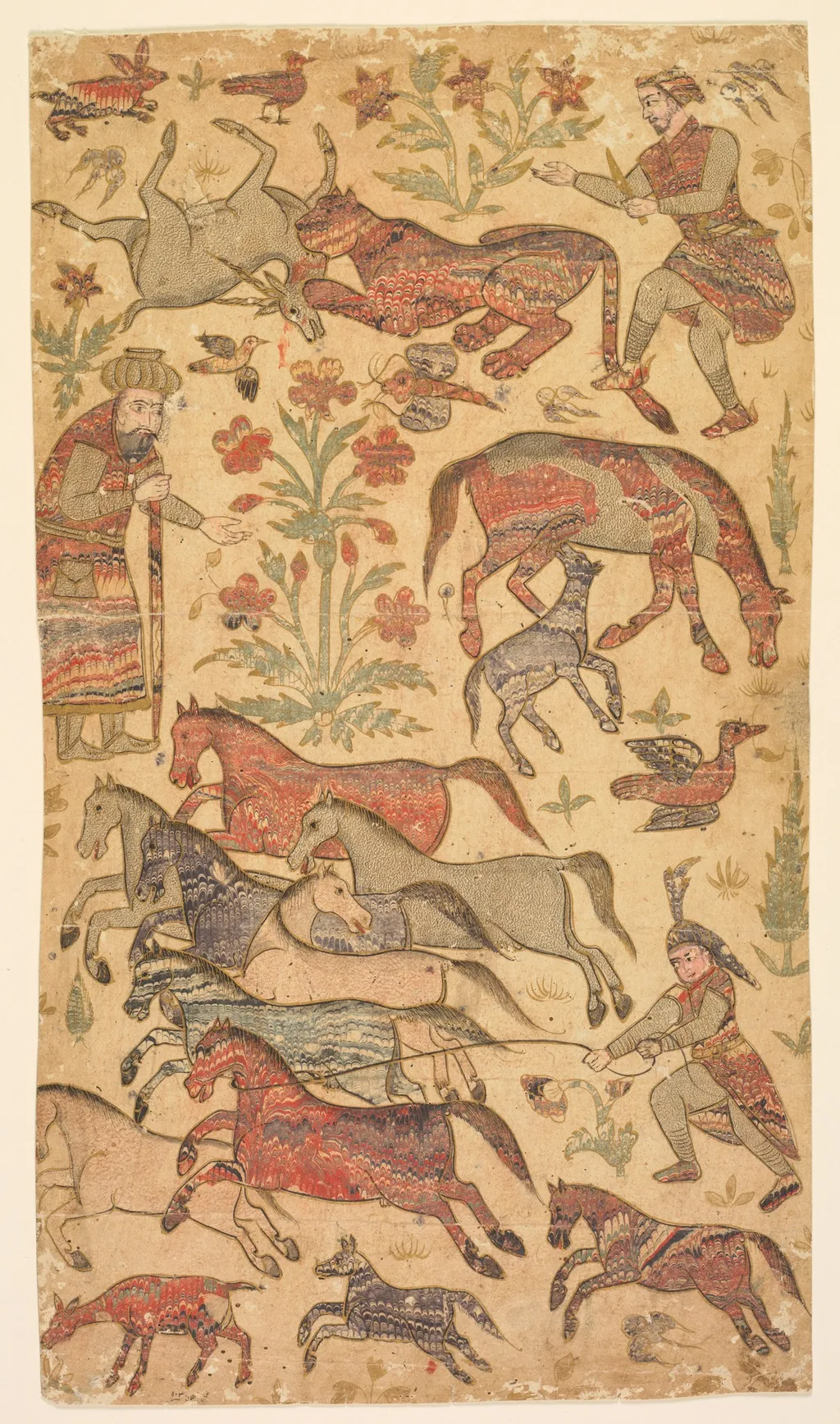
A marbled picture of Rustam catching Rakhsh is an unspecified painting. It dates from 1650 and is held in the collection of the Cleveland Museum of Art. The work portrays a tumultuous encounter in which a mounted figure confronts a massive, lion‑like beast.
About this work
Overview
The work portrays a tumultuous encounter in which a mounted figure confronts a massive, lion‑like beast. Surrounding figures on foot and horseback either observe or become involved in the struggle, creating a sense of frantic motion. The composition is saturated with vivid reds, blues and greens, and the background is populated with birds and foliage, suggesting a wild, untamed setting.
Subject & Meaning
The central narrative appears to reference the legendary Persian hero Rustam and his steed Rakhsh, engaged in combat with a formidable, mythic creature. The presence of armed warriors and the heroic posture of the rider emphasize themes of bravery and confrontation with chaos, while the surrounding participants convey a communal response to the crisis.
Technique & Style
Executed in a marbled painting technique, the surface is marked by intricate patterns on the horses’ tack and the figures’ garments. The artist employs bold, contrasting pigments—particularly reds, blues, and greens—to heighten the drama. Decorative motifs intermingle with the dynamic scene, blending ornamental design with narrative action.
Context
The image draws on Persian epic tradition, specifically the Shahnameh’s tales of Rustam, a cultural touchstone for heroic literature. By depicting the moment of Rustam’s capture of the beast Rakhsh, the painting situates itself within a lineage of visual interpretations of mythic battles that were popular in courtly and manuscript art.
Legacy
Works that combine vigorous storytelling with elaborate decorative surfaces have influenced later depictions of heroic folklore in the region. The painting’s vivid coloration and energetic composition continue to serve as reference points for scholars studying the visual language of Persian epic illustration.
Artist & collection