Artwork
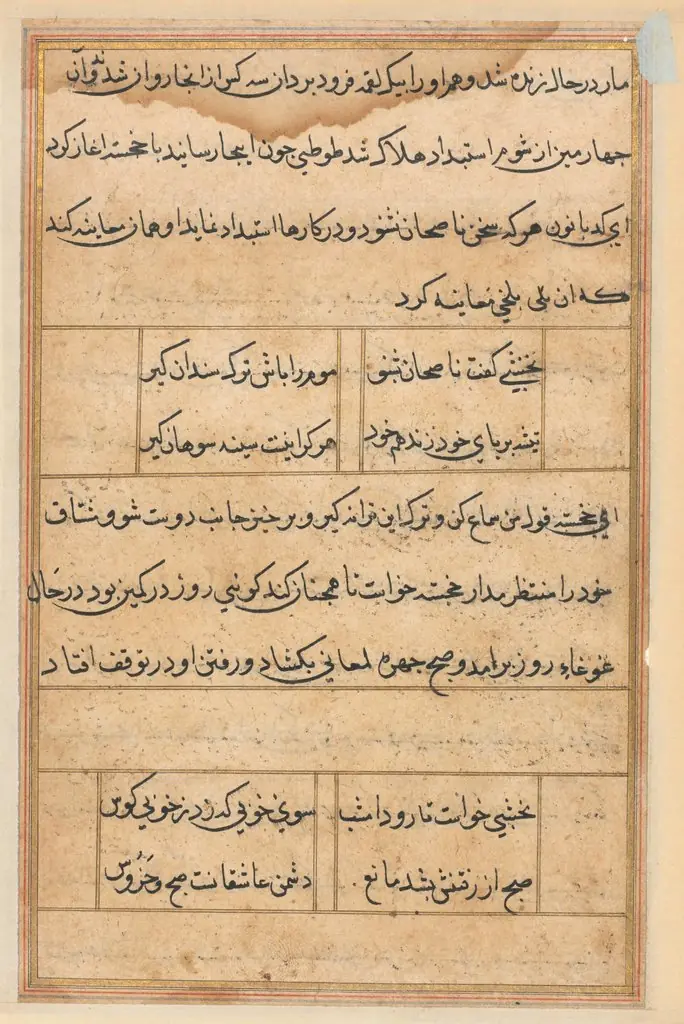
Text of Rustam and Suhrab, from the Shah-nama of Firdausi (Persian, c. 934–1020) (verso)
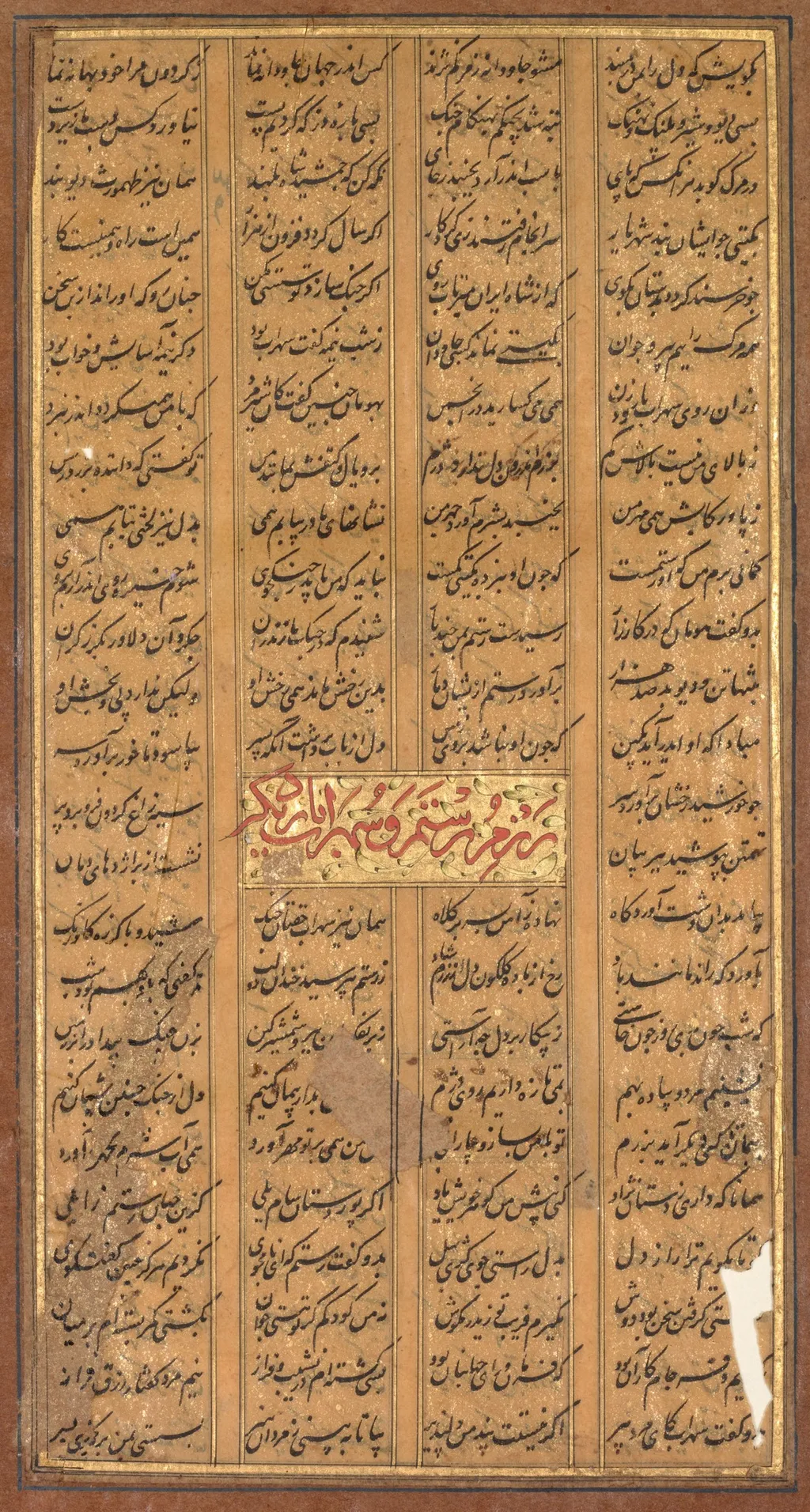
Text of Rustam and Suhrab, from the Shah-nama of Firdausi (Persian, c. 934–1020) (verso) is an unspecified painting. It dates from 1610 and is held in the collection of the Cleveland Museum of Art.
About this work
Overview
This artifact is a single folio from the illustrated Shah‑nama, the epic poem composed by the Persian poet Firdausī in the late 10th to early 11th century. The page presents the narrative of Rustam and Suhrab in dense black calligraphy, occupying the entire surface without accompanying figurative imagery.
Subject & Meaning
The text recounts the tragic encounter between the hero Rustam and his son Suhrab, a central episode in the Shah‑nama that explores themes of destiny, honor, and the consequences of hidden lineage. The passage on this leaf captures the emotional climax of the story through the rhythm of the verse.
Technique & Style
Rendered in a flowing Persian script, the letters are carefully proportioned, with occasional elongations and curvilinear strokes that enhance legibility and aesthetic balance. A modest decorative band near the bottom employs red pigment and gold leaf, providing a restrained yet striking contrast to the monochrome body of the page.
History & Provenance
The manuscript originates from the Islamic Golden Age, a period when Persian literary works were frequently transcribed on parchment or paper for royal and scholarly patrons. The folio now belongs to the collection of the Cleveland Museum of Art, which acquired it as part of its broader assemblage of Persian manuscripts.
Context
During Firdausī’s era, the Shah‑nama served both as a literary masterpiece and a vehicle for political legitimation, reinforcing the cultural identity of Persian-speaking courts. Manuscript production combined calligraphic expertise with limited illumination, reflecting the aesthetic preferences of the time.
Legacy
Pages such as this illustrate the enduring influence of the Shah‑nama on Persian art and literature, informing later illustrated manuscripts and visual storytelling traditions across the Islamic world.
Artist & collection

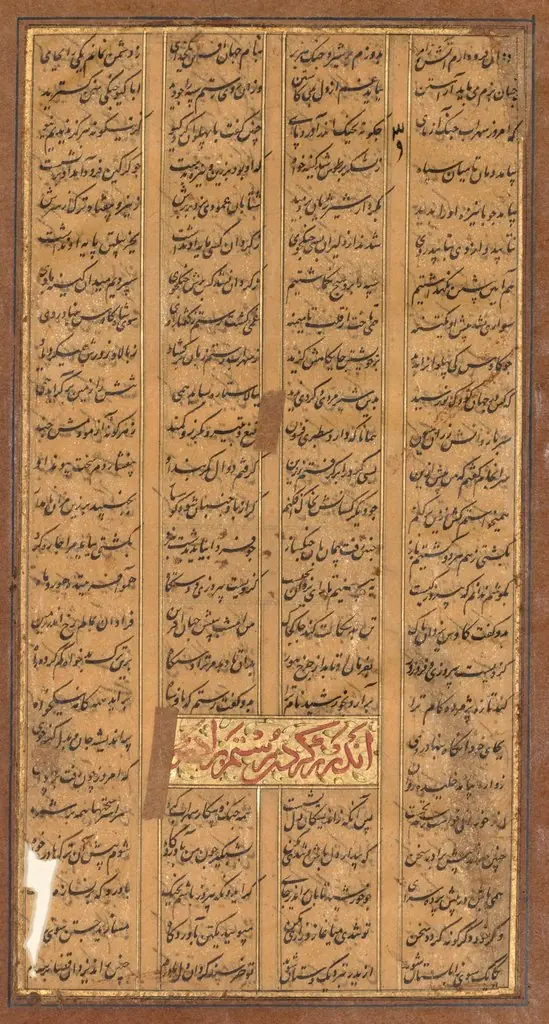 Text of Rustam and Suhrab, from the Shah-nama of Firdausi (Persian, c. 934–1020) (recto)
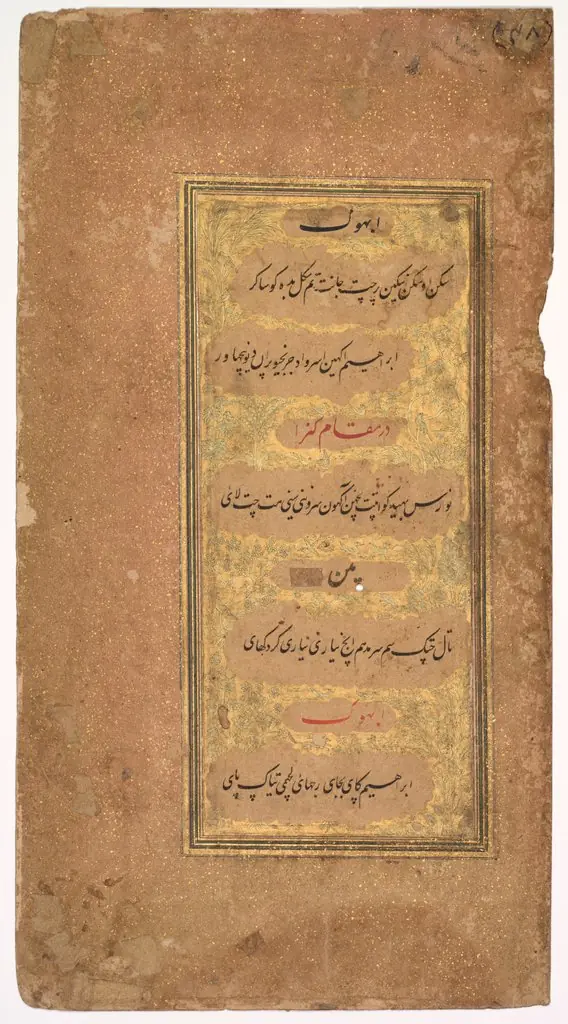 From Dohras (Songs) 40 and 42 from the Kitab-i Nauras (Book of Nine Essences) of Sultan Ibrahim Adil Shah II of Bijapur (r. 1580–1627); verso: From Dohras (Songs) 40 and 36 from the Kitab-i Nauras of Sultan Ibrahim Adil Shah II
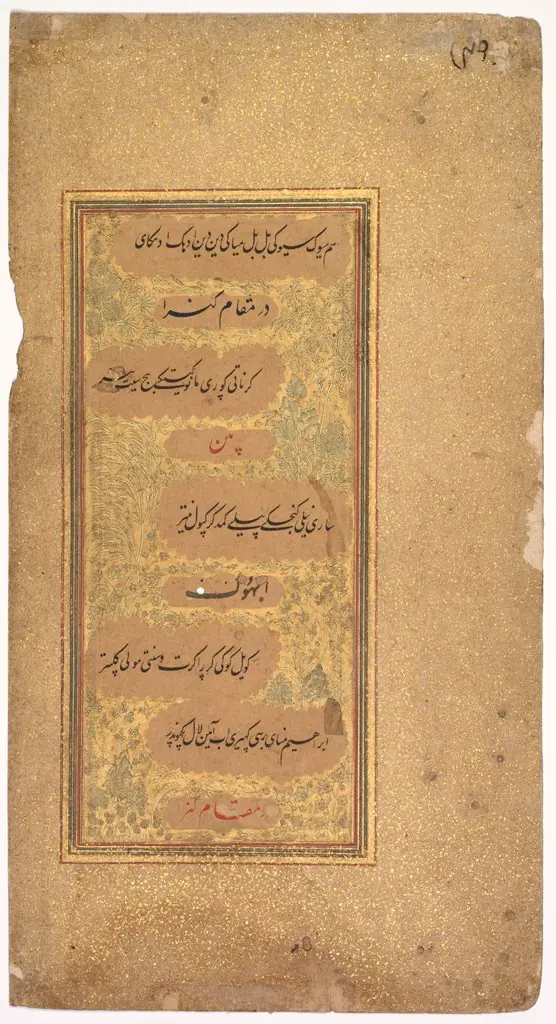 From Dohras (Songs) 40 and 36 from the Kitab-i Nauras of Sultan Ibrahim Adil Shah II (verso)
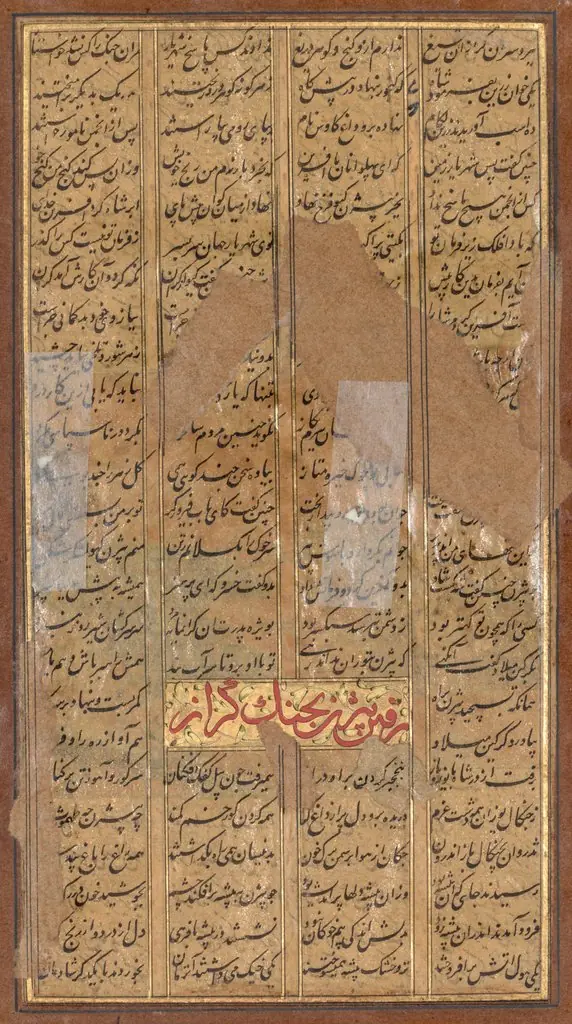 Bijan killing the wild boars of Irman, from a Shah-nama (Book of Kings) of Firdausi (Persian, about 934–1020), (recto)
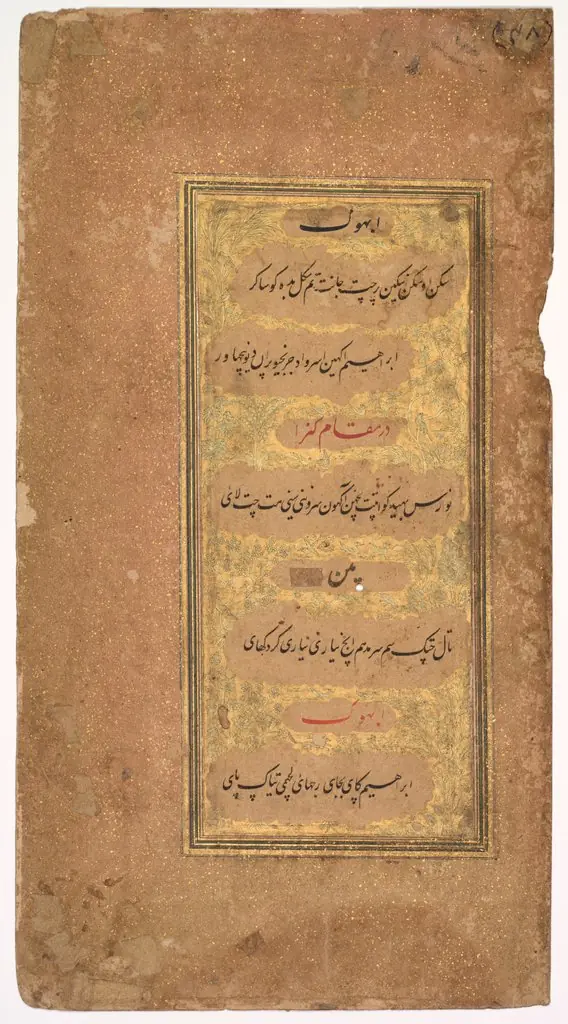 From Dohras (Songs) 40 and 42 from the Kitab-i Nauras (Book of Nine Essences) of Sultan Ibrahim Adil Shah II of Bijapur (r. 1580–1627) (recto)
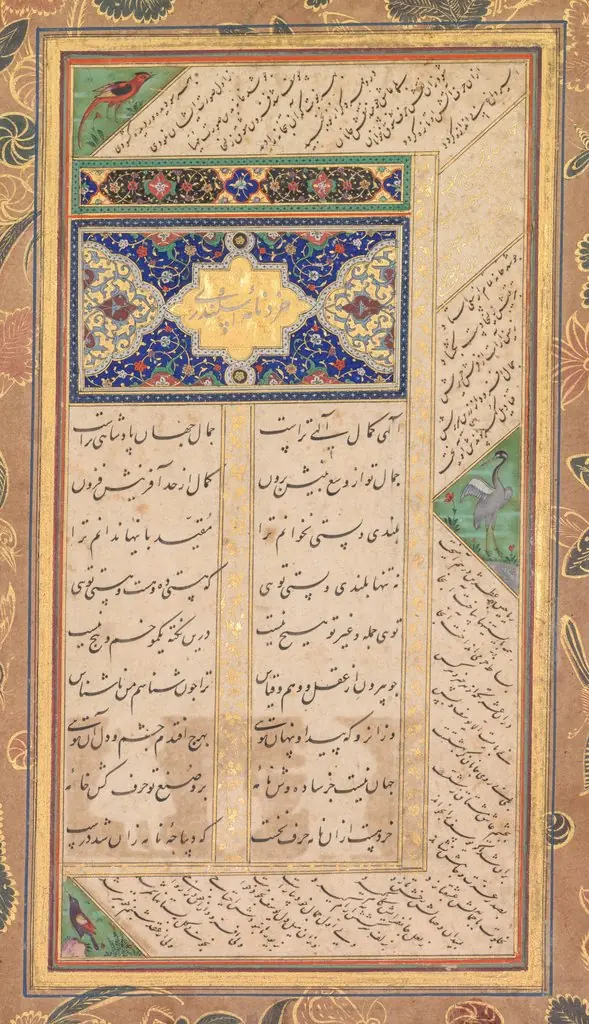 Illuminated page (verso), from a Panj Ganj (Five Treasures) of Abd al- Rahman Jami (Persian, 1414–1492) with two Persian masnavis: Yusuf va Zulaykha (Joseph and Zulaykha) and Khirad-nama-i Iskandari (Alexander’s Book of Wisdom)
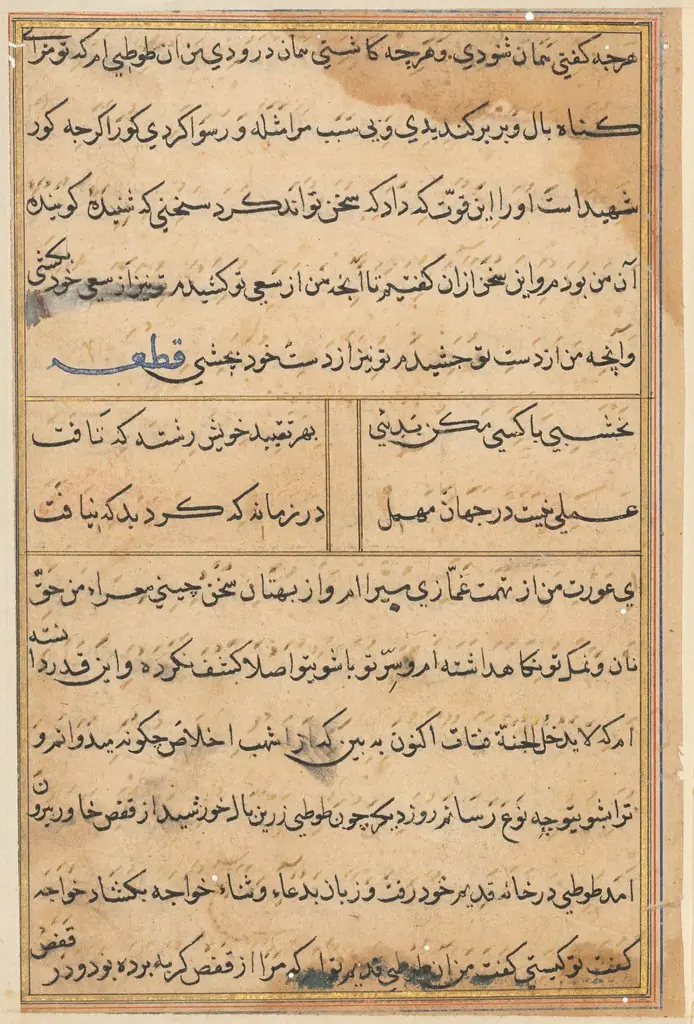 Page from Tales of a Parrot (Tuti-nama): text page
 Page from Tales of a Parrot (Tuti-nama): text page