Artwork
A money-lender (?)
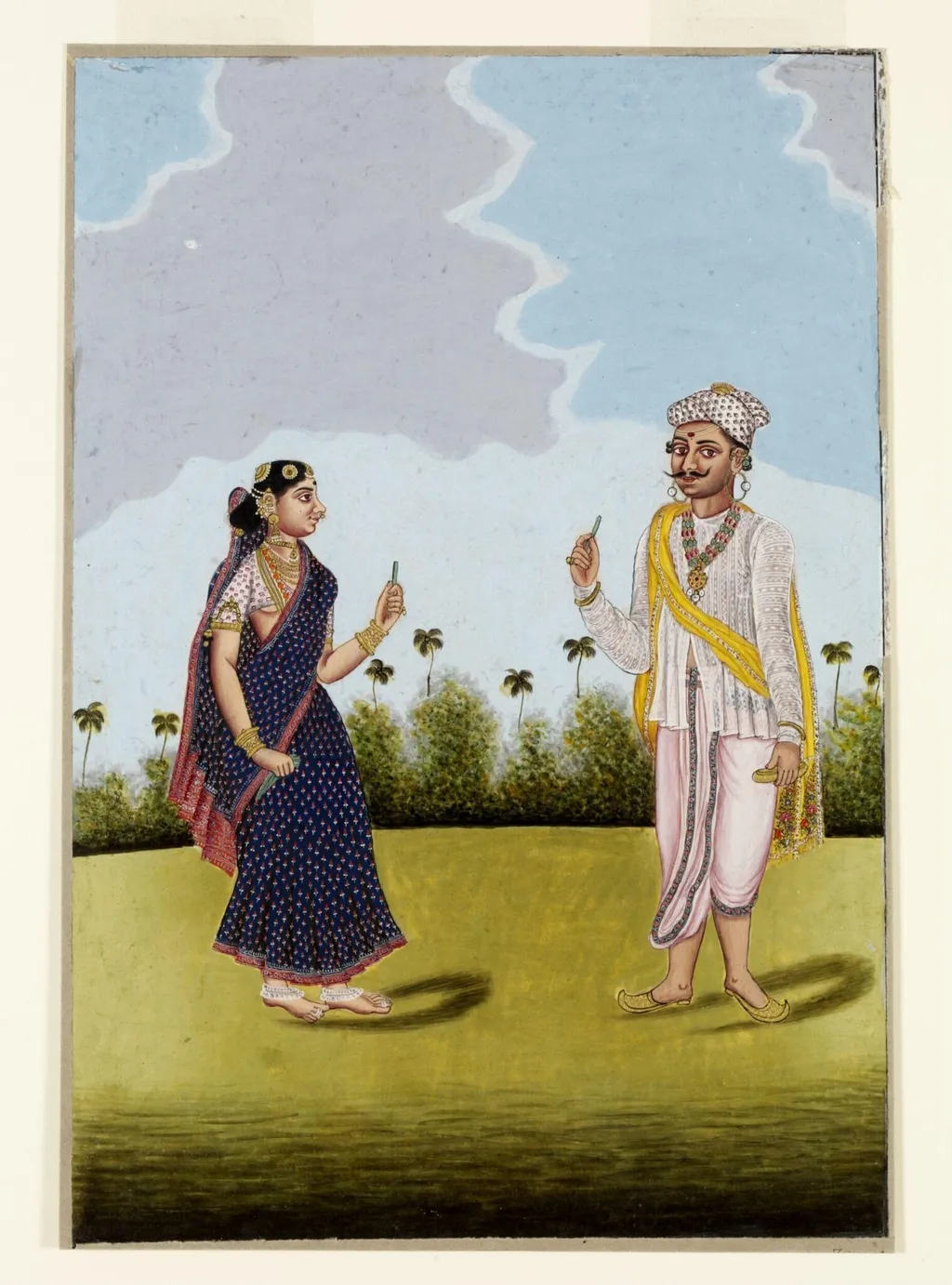
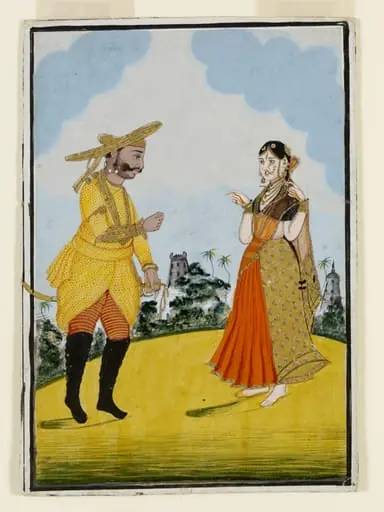
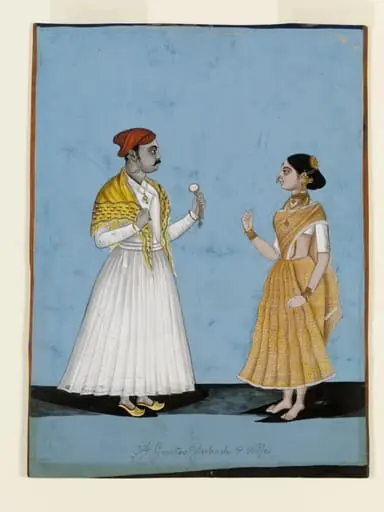
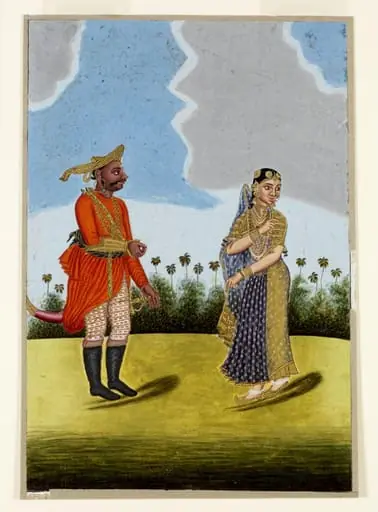
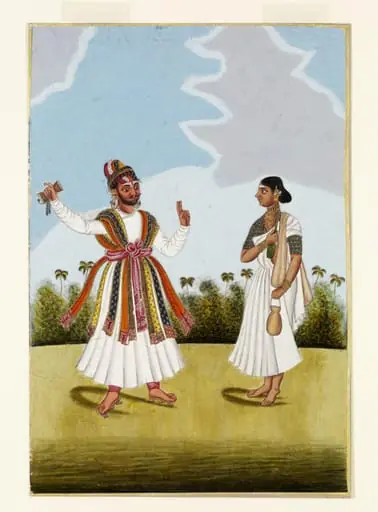
A money-lender (?) is a paint painting by the Romanticist artist Unknown. It dates from 1800 and is held in the collection of the Victoria and Albert Museum. This painting is one of fourteen in a series documenting social roles and daily life in late 18th-century India.
About this work
Overview
Their attire and gestures suggest status and ritual, with attention given to textile detail and personal adornment.
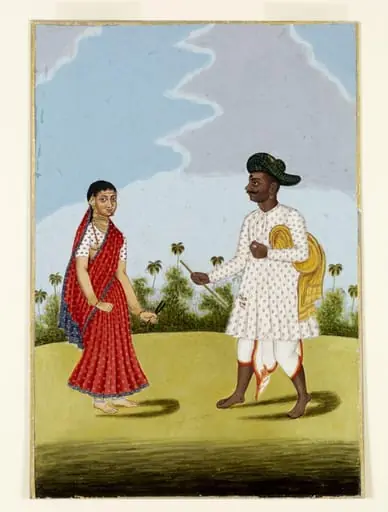
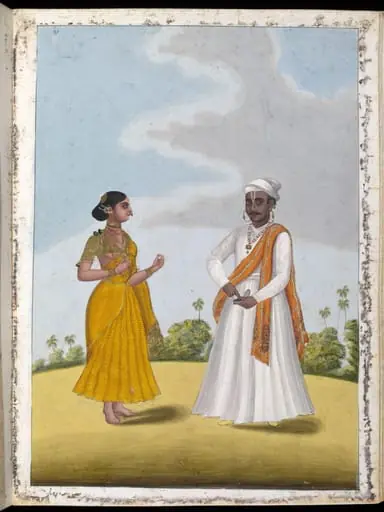
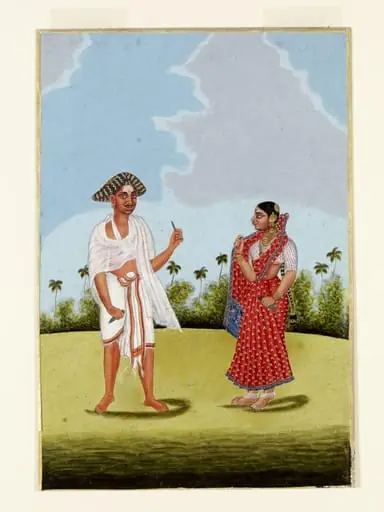
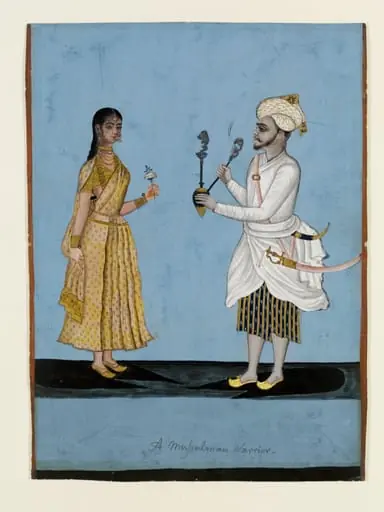
This painting is one of fourteen in a series documenting social roles and daily life in late 18th-century India. It portrays two figures, likely a money-lender and his spouse, positioned outdoors on a pale ground. Their attire and gestures suggest status and ritual, with attention given to textile detail and personal adornment. The composition is balanced, with natural elements framing the figures without overwhelming them.
Subject & Meaning
The figures are depicted holding betel leaf quids, a common cultural practice associated with social interaction and ritual. Their seated posture and matching gestures imply a domestic or professional partnership. The man’s pink garment and the woman’s patterned sari reflect regional dress codes and economic standing. The scene may signify the quiet authority of financial intermediaries within local communities.
Technique & Style
The work employs fine brushwork to render intricate patterns on fabric, jewelry, and foliage. Colors are vivid but controlled, with gold accents and layered pigments enhancing texture. The background features soft gradients in sky and foliage, suggesting atmospheric depth. The polished surface and precise outlines align with regional studio traditions that prioritized clarity and decorative precision over expressive brushwork.
History & Provenance
Created around 1790–1800, the painting likely originated in a north Indian court workshop, possibly under British colonial patronage. It was collected by British officials and later entered the Victoria and Albert Museum’s holdings. The series as a whole was assembled to document Indian social structures, reflecting both ethnographic interest and imperial categorization efforts of the period.
Context
These paintings emerged during a time when British administrators sought to classify Indian society through visual records. The depiction of occupational roles like money-lending was part of a broader effort to map economic and caste hierarchies. While rooted in local traditions, the series was shaped by colonial frameworks, blending indigenous artistic conventions with foreign observational priorities.
Legacy
The series remains a key resource for understanding regional dress, social roles, and artistic practice in late Mughal and early colonial India. Though initially compiled for administrative purposes, the works now serve as historical documents of everyday life. Their preservation in major collections ensures continued scholarly engagement with the visual culture of the period.
Artist & collection

 Domestic Scene
 Giacomo and Cardinal Marco, investing Andrea, Abbot of San Zeno, with his Benefice
 The Nymph of Fontainebleau
 Portrait of a Woman
 Madonna and Child with Saints in the Enclosed Garden
 Venus and Minerva
 Family Group of Four on Sofa
 Wall painting from Room H of the Villa of P. Fannius Synistor at Boscoreale