Artwork
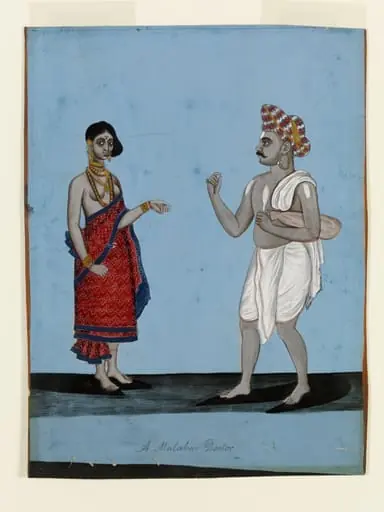
A Malabar fortune-teller
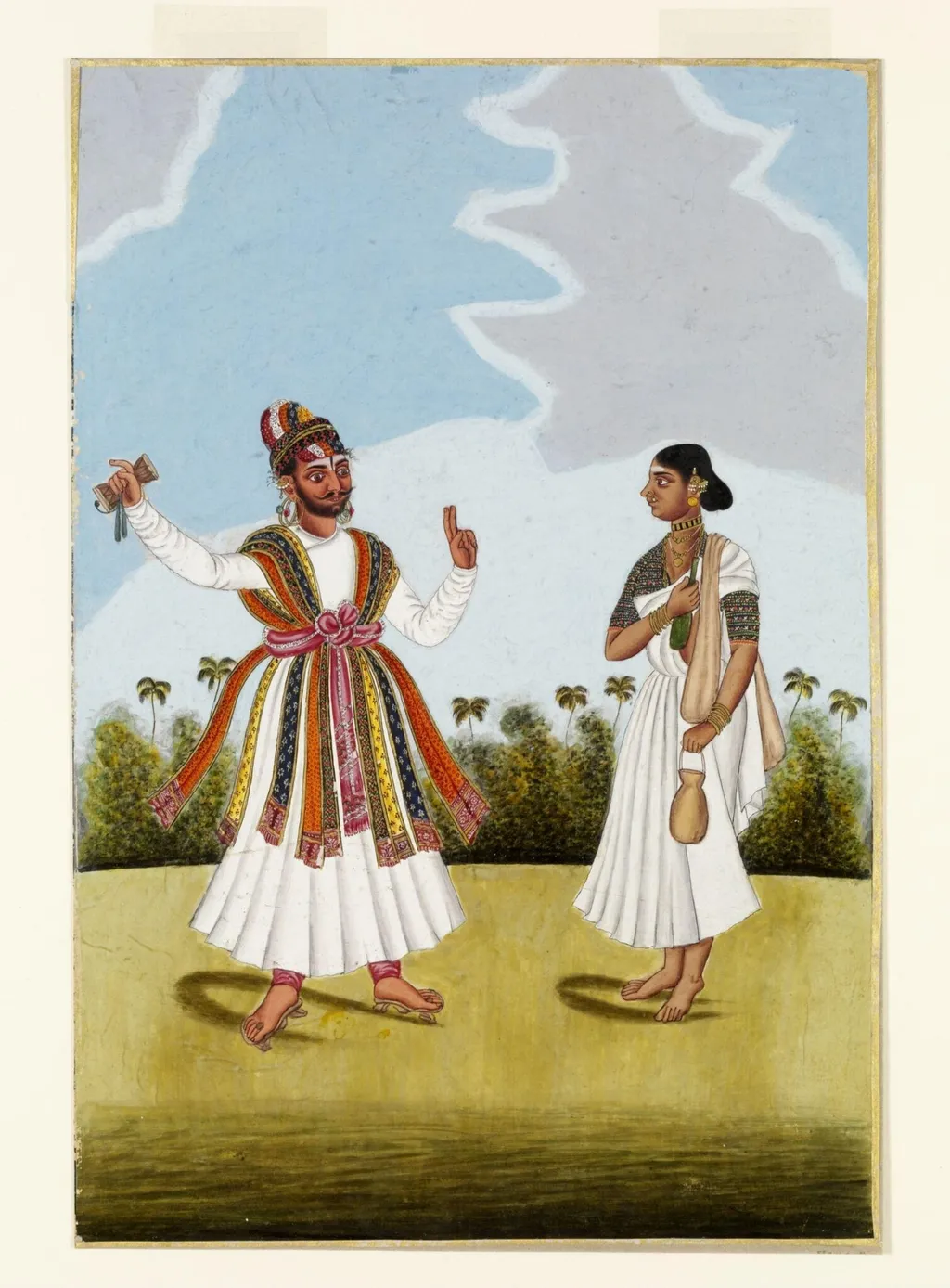
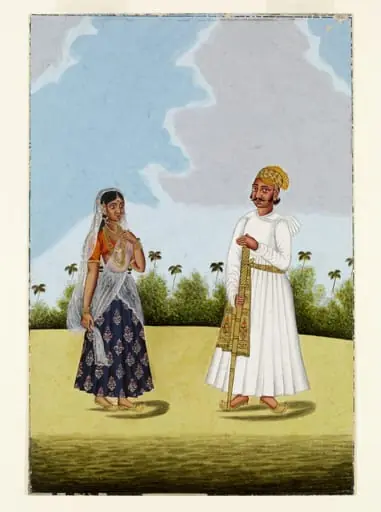
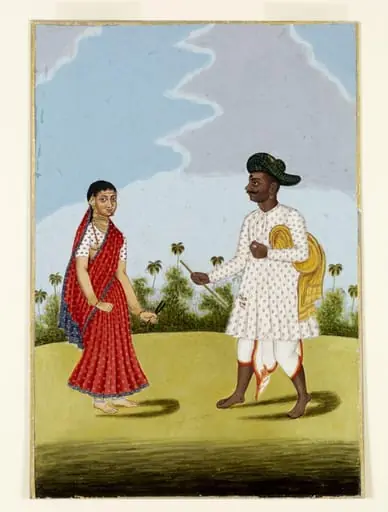
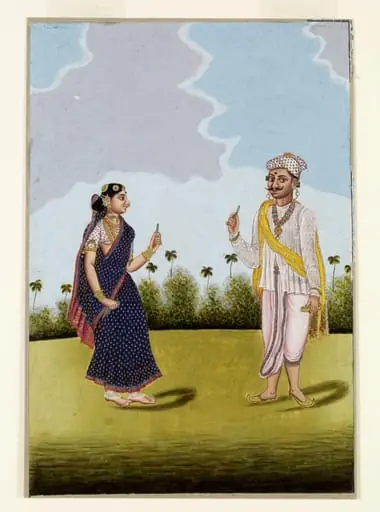
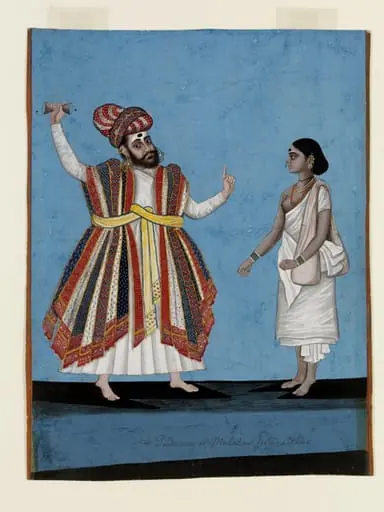
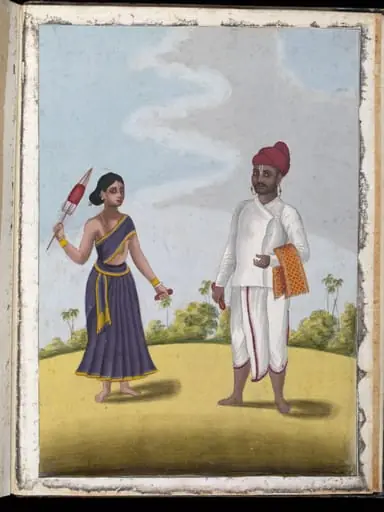
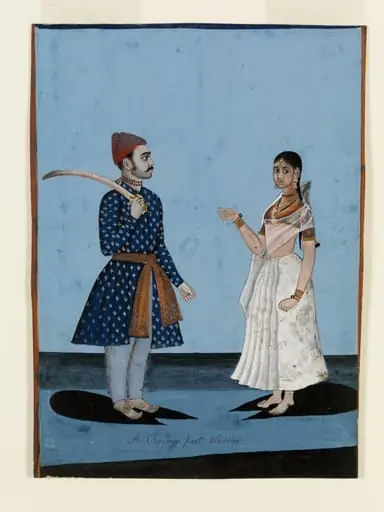
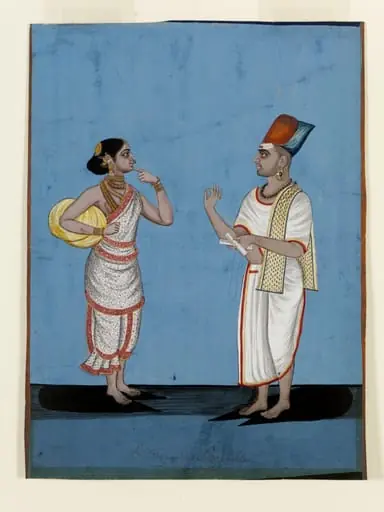
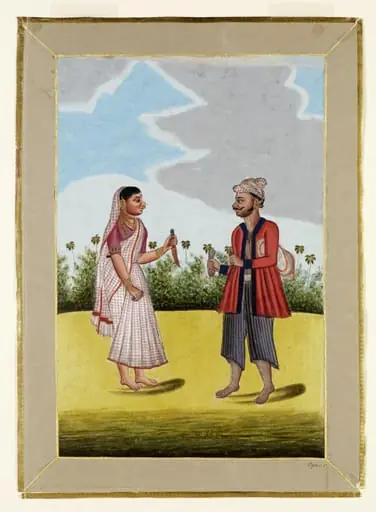
A Malabar fortune-teller is a paint painting by the Romanticist artist Unknown. It dates from 1800 and is held in the collection of the Victoria and Albert Museum. The work portrays a male fortune‑teller from the Malabar coast and his wife, positioned outdoors on a sandy floor.
About this work
Overview
The work portrays a male fortune‑teller from the Malabar coast and his wife, positioned outdoors on a sandy floor. The figures stand barefoot; the man is on the left, the woman on the right. The composition captures a quiet moment of everyday activity rather than a staged event, set against an unadorned background that emphasizes the subjects themselves.
Subject & Meaning
Part of a broader series documenting regional castes and occupations, the painting identifies the male figure as a traditional astrologer, recognizable by his ceremonial attire and the small drum‑like pellet instrument he holds. His wife, holding a green‑wrapped bundle, suggests a domestic role linked to the household’s material culture, together illustrating a specific social function within Malabar society.
Technique & Style
Rendered in vivid pigments, the man’s robe features a multicolored pattern with a striking red sash, while a tall turban crowns his head. The woman wears a plain white dress accented with gold jewelry. The artist employs a clear, linear approach that isolates the figures, allowing the bright costumes to dominate the modest, neutral ground.
History & Provenance
Created as one panel in a series intended to catalogue Indian social groups, the painting entered the collection of the Victoria and Albert Museum, where it is displayed alongside related works. Its acquisition reflects 19th‑century European interest in ethnographic illustration and the documentation of colonial cultures.
Artist & collection

 Domestic Scene
 Giacomo and Cardinal Marco, investing Andrea, Abbot of San Zeno, with his Benefice
 The Nymph of Fontainebleau
 Portrait of a Woman
 Madonna and Child with Saints in the Enclosed Garden
 Venus and Minerva
 Family Group of Four on Sofa
 Wall painting from Room H of the Villa of P. Fannius Synistor at Boscoreale