Artwork
A nymph dancing
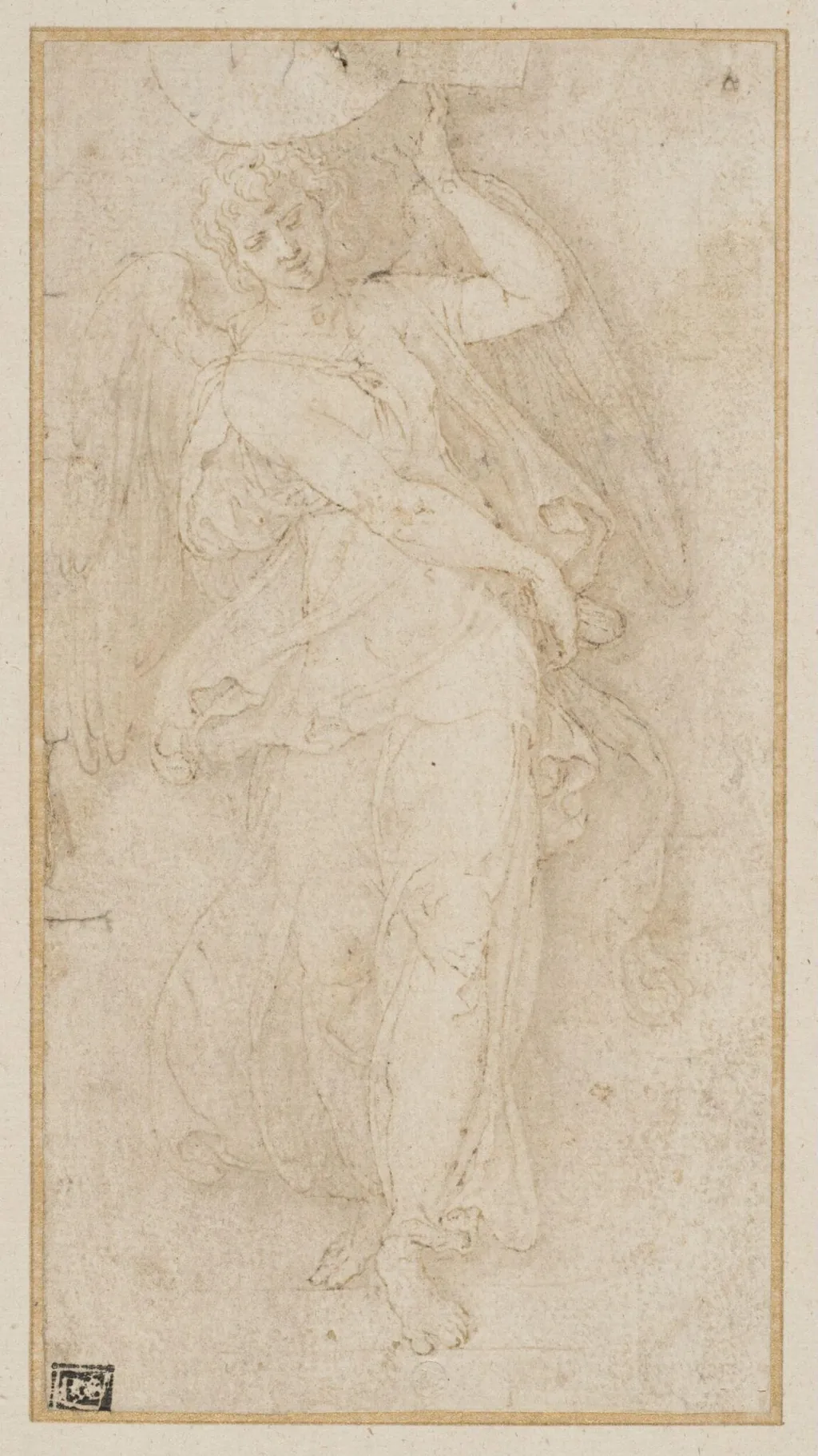
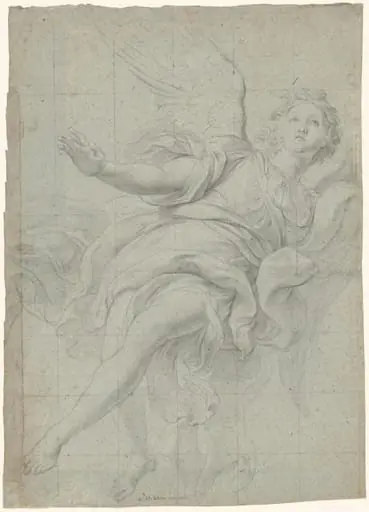
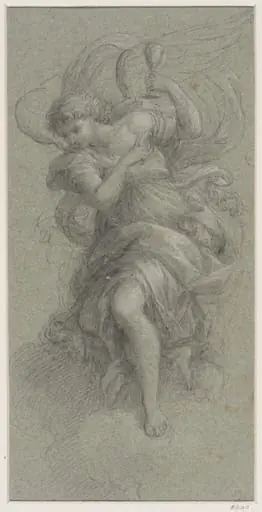
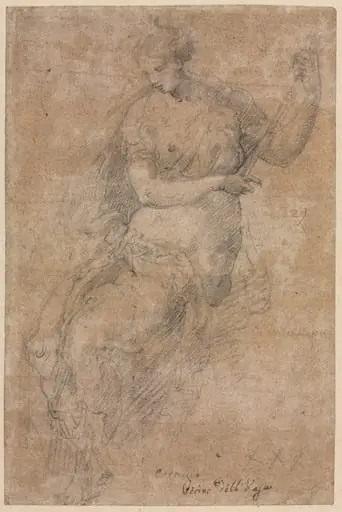
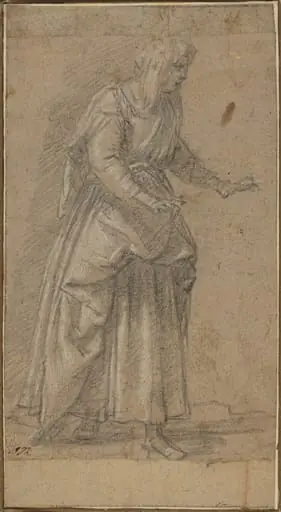
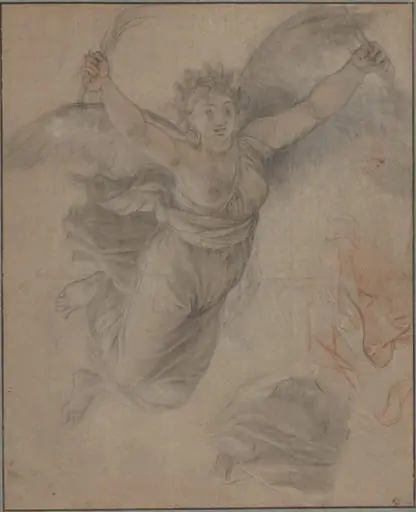
A nymph dancing is a drawing by Unknown. It dates from 1550 and is held in the collection of the Victoria and Albert Museum. A delicate ink drawing captures a female figure in dynamic motion, likely a nymph, mid-dance.
About this work
Overview
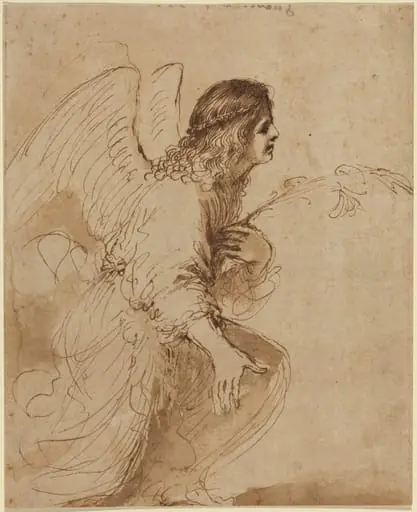
A delicate ink drawing captures a female figure in dynamic motion, likely a nymph, mid-dance. The composition emphasizes fluidity through minimal, rapid strokes. No shading or heavy contours define the form; instead, the artist relies on subtle line weight and direction to imply volume and movement. The work reads as an immediate study, not a finished piece, prioritizing gesture over detail.
Subject & Meaning
The figure appears to be a mythological nymph, identified by her ethereal posture and flowing drapery. Her raised arm and twisting torso suggest a moment of spontaneous motion, evoking natural grace rather than staged performance. The absence of context or setting focuses attention on the body’s rhythm, aligning with classical ideals of movement and harmony in nature.
Technique & Style
The artist employs light, unbroken lines to trace the figure’s contours and the fabric’s flow. Strokes are swift and tentative, revealing a hand in motion rather than a polished finish. The lack of cross-hatching or tonal modeling underscores a focus on line as a means of capturing transient energy, characteristic of preparatory sketches from the period.
History & Provenance
The drawing’s origin and ownership history are not documented in available records. Its informal quality suggests it was created as an exercise or study, possibly within an artist’s private sketchbook. Without inscriptions or known collection trails, its exact date and maker remain unidentified, though its style aligns with Renaissance or early modern drawing practices.
Context
In the broader tradition of European drawing, such quick studies were common among artists training in observation and anatomy. Nymphs and mythological figures were frequent subjects, offering freedom from rigid portraiture. This piece reflects a practice of capturing motion through line—an approach later refined in works by artists like Rubens and Ingres.
Legacy
Though unsigned and unattributed, the drawing exemplifies how artists used ephemeral sketches to explore form and motion. Its simplicity invites comparison with later studies in gesture drawing and modern life classes. It stands as a quiet testament to the enduring value of rapid, observational mark-making in artistic development.
Artist & collection

 Domestic Scene
 Giacomo and Cardinal Marco, investing Andrea, Abbot of San Zeno, with his Benefice
 The Nymph of Fontainebleau
 Portrait of a Woman
 Madonna and Child with Saints in the Enclosed Garden
 Venus and Minerva
 Family Group of Four on Sofa
 Wall painting from Room H of the Villa of P. Fannius Synistor at Boscoreale
![Woman in Toga [verso], by Hubert Robert](https://artifactworldgallery.com/img/hubert-robert--woman-in-toga-verso--1c4b04982206f60e-w320.webp)