Artwork
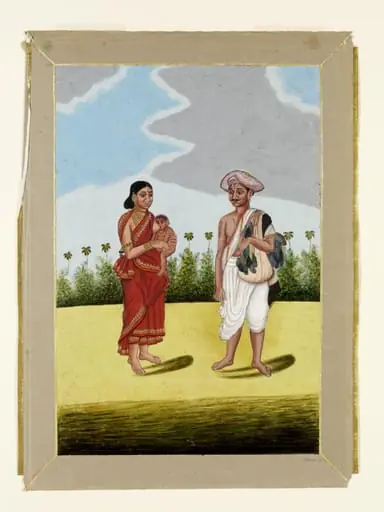
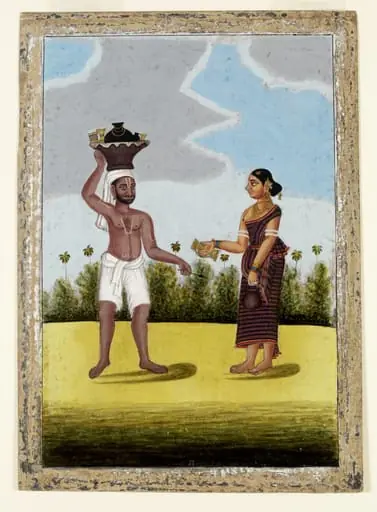
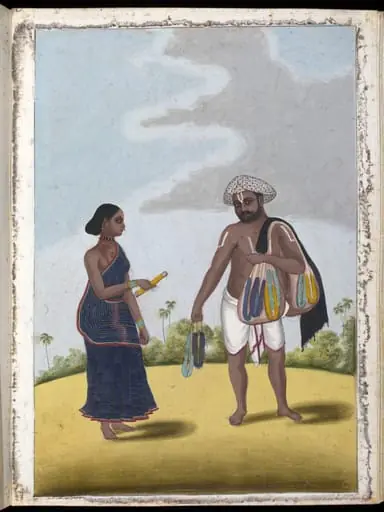
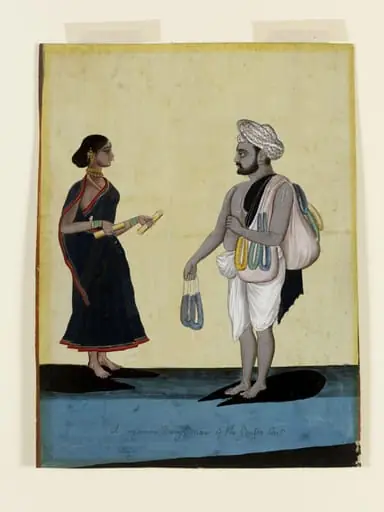
A perfume-seller and his wife
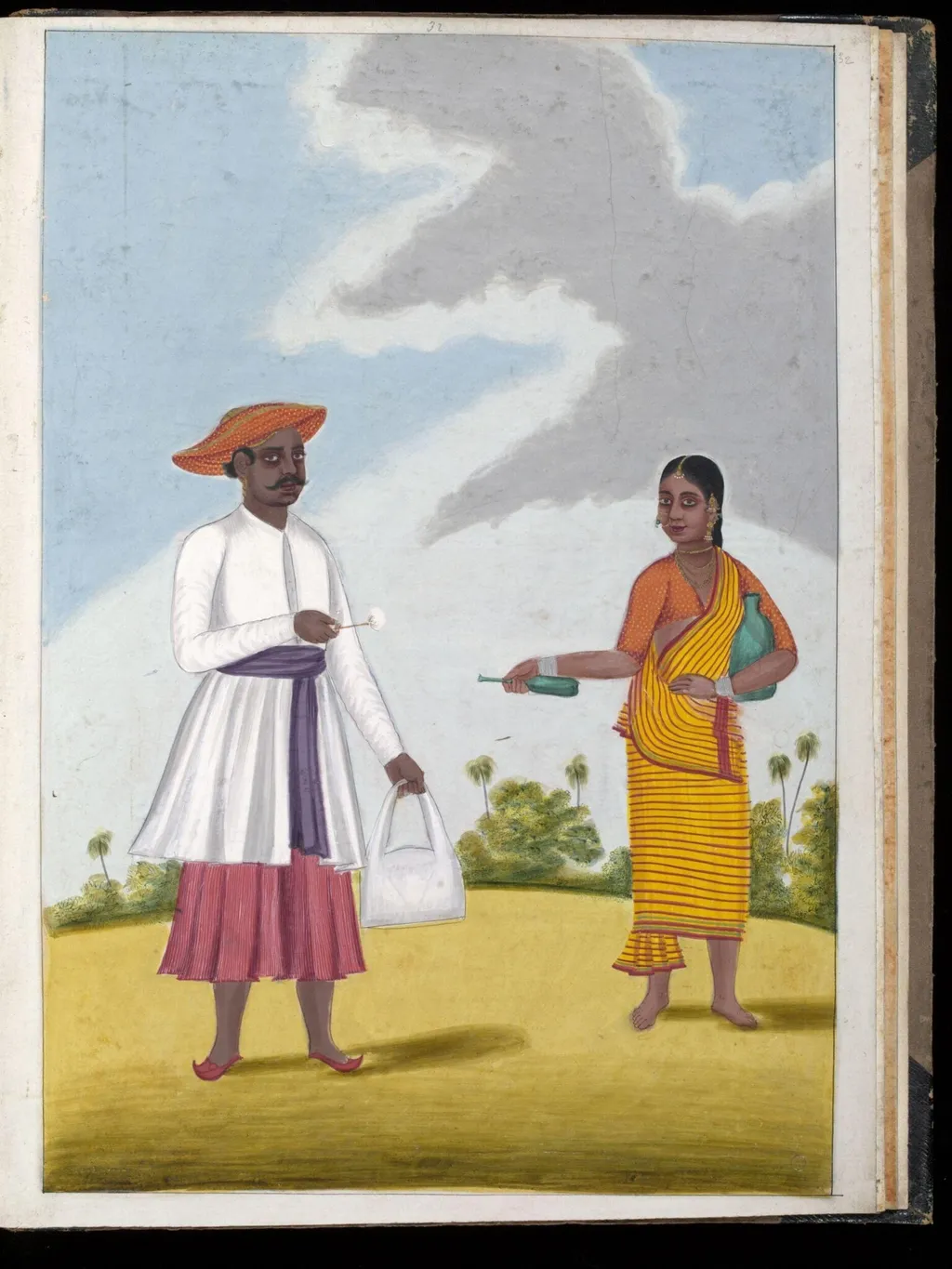
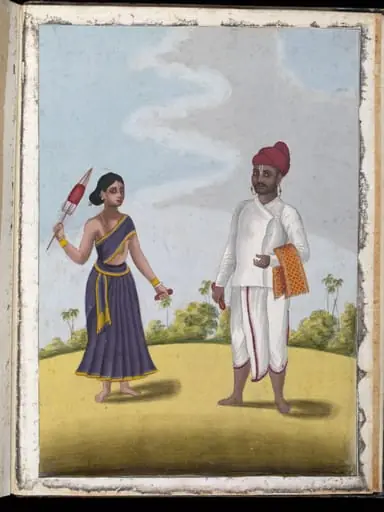
A perfume-seller and his wife is a paint painting by the Romanticist artist Unknown. It dates from 1805 and is held in the collection of the Victoria and Albert Museum. This painting is one of thirty-six in a series documenting regional trades and attire across South Asia.
About this work
Overview
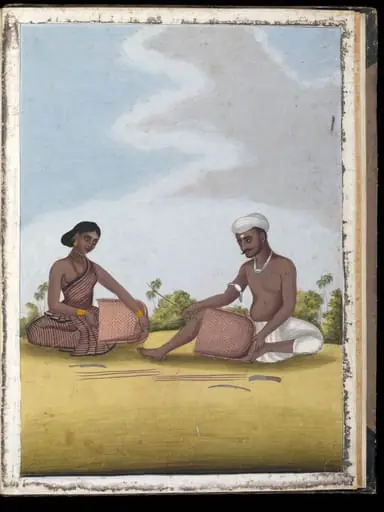
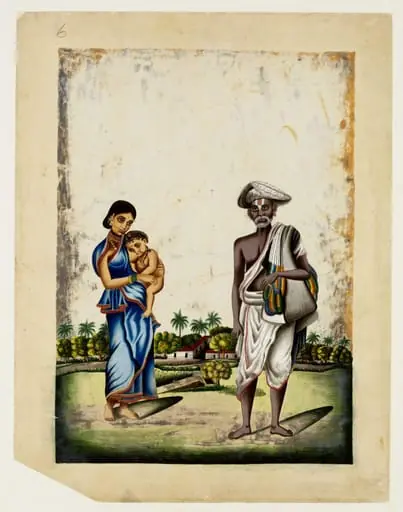
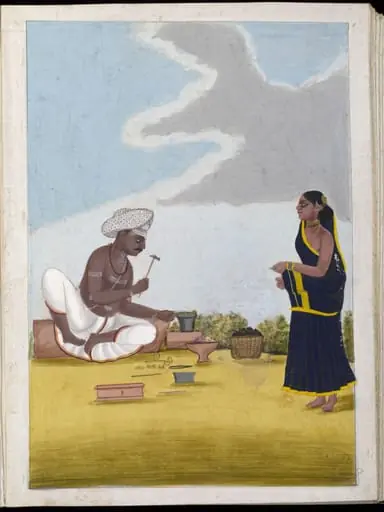
This painting is one of thirty-six in a series documenting regional trades and attire across South Asia. It portrays a perfume-seller and his wife in an outdoor setting, their postures and possessions indicating their occupation. The scene is rendered with attention to textile detail and environmental context, reflecting a systematic effort to record everyday life through visual documentation.
Subject & Meaning
The couple represents a specific occupational role within a caste-based social structure. The man holds a bag of fragrant materials and a staff, while the woman carries containers and a cloth, suggesting shared labor in preparing and selling scents. Their interaction implies collaboration, not hierarchy, and the setting reinforces their connection to local, possibly rural, commerce.
Technique & Style
The painting employs fine brushwork to render intricate patterns on clothing and jewelry, with muted earth tones contrasting the vivid hues of the woman’s sari. Background trees are lightly sketched, providing depth without distraction. The figures are rendered with naturalistic posture and expression, avoiding idealization in favor of observational accuracy.
History & Provenance
Created in the early 19th century, the work likely originated in a courtly atelier commissioned to document regional livelihoods. The album was assembled for British colonial collectors, serving both ethnographic interest and aesthetic curiosity. It entered the Victoria and Albert Museum’s collection through documented acquisitions from the period.
Context
The series emerged during a time when colonial administrators sought to catalog Indian society through visual means. These images were not merely decorative but functioned as records of social organization, material culture, and regional diversity. The depiction of bare feet and natural settings aligns with depictions of non-elite labor in contemporary Indian painting traditions.
Legacy
The album remains a valuable resource for understanding pre-colonial and early colonial occupational identities in South Asia. While originally produced for foreign audiences, its detailed depictions now inform scholarly studies on gender roles, craft economies, and the visual representation of labor in 19th-century India.
Artist & collection

 Domestic Scene
 Giacomo and Cardinal Marco, investing Andrea, Abbot of San Zeno, with his Benefice
 The Nymph of Fontainebleau
 Portrait of a Woman
 Madonna and Child with Saints in the Enclosed Garden
 Venus and Minerva
 Family Group of Four on Sofa
 Wall painting from Room H of the Villa of P. Fannius Synistor at Boscoreale