Artwork
A washerman's wife
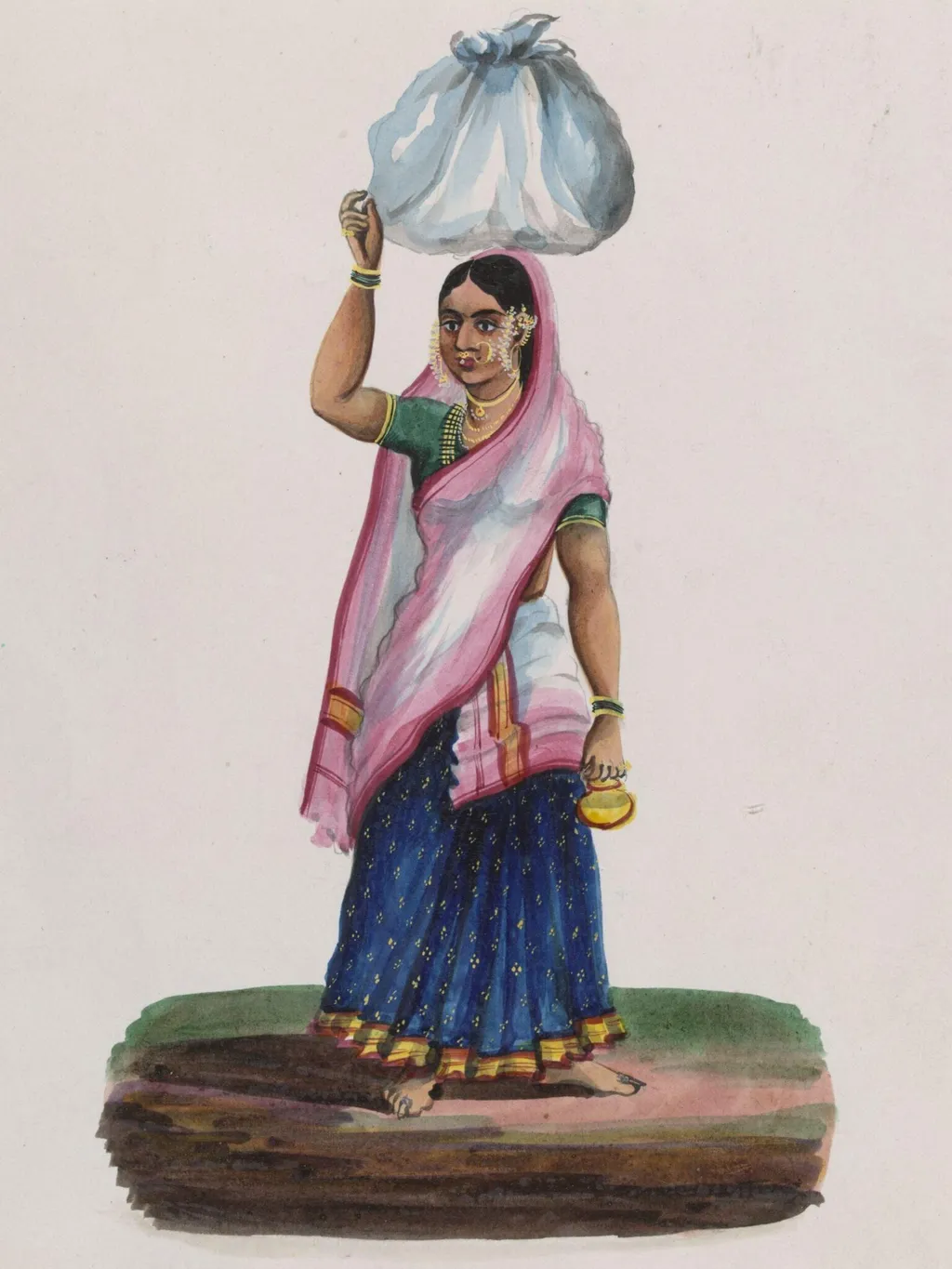
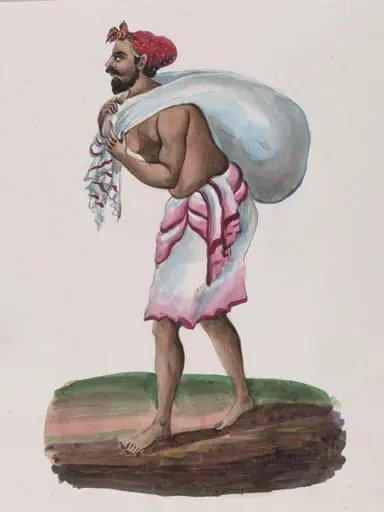
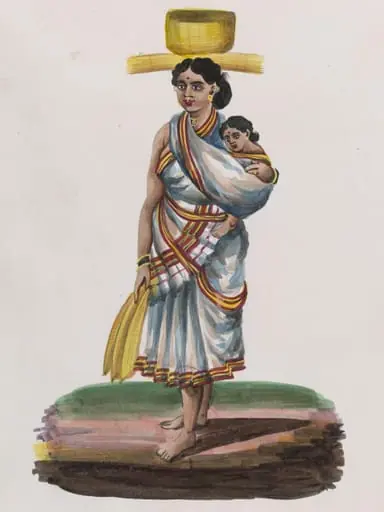
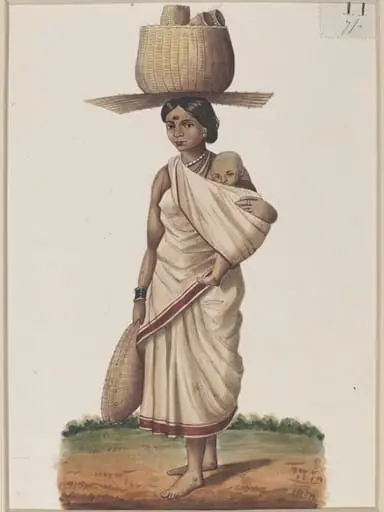
A washerman's wife is a paint painting by the Impressionist artist Unknown. It dates from 1870 and is held in the collection of the Victoria and Albert Museum. Created in 1870, this drawing portrays a washerwoman from South India, part of a series of twelve works documenting local castes and trades.
About this work
Overview
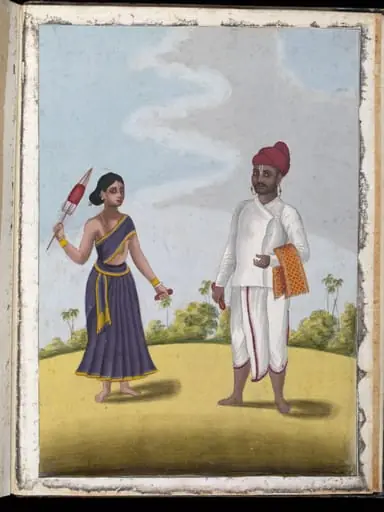
Created in 1870, this drawing portrays a washerwoman from South India, part of a series of twelve works documenting local castes and trades. Rendered in ink and watercolor, it captures a moment of daily labor with minimal embellishment. The artist focused on ordinary people engaged in routine tasks, avoiding idealized or ceremonial depictions common in colonial-era art.
Subject & Meaning
The woman, identified by her occupation, carries a heavy load of laundry balanced on her head, a common practice among laboring women in the region. Her modest attire and the small brass pot she holds suggest practicality over ornamentation. The image conveys dignity in labor, presenting her not as a symbol but as a real individual within her social context.
Technique & Style
The drawing employs flat, unmodulated colors and clear outlines, emphasizing form over depth. Bold hues—pink, green, dark blue with gold accents—are used economically to distinguish clothing and accessories. The composition is straightforward, with no background details, directing attention to the figure and her burden, reflecting a documentary approach to visual ethnography.
History & Provenance
This work originated as part of a commissioned series intended to record South Indian occupational groups during British colonial administration. Likely produced by a local artist under European supervision, the drawings were compiled for ethnographic study. Their survival offers rare insight into indigenous visual practices of the period.
Context
In the late 19th century, colonial authorities sought to classify Indian society through visual and textual records. This drawing aligns with that effort but diverges by focusing on quiet, unglamorous labor rather than elite or ritual life. It reflects a growing, albeit paternalistic, interest in documenting the lives of working-class communities.
Legacy
Though not widely exhibited at the time, these illustrations now serve as valuable historical records of regional dress, labor, and social structure. They contribute to broader scholarly efforts to recover non-elite perspectives in colonial-era visual culture, offering a counterpoint to romanticized or exoticized portrayals of Indian life.
Artist & collection

 Domestic Scene
 Giacomo and Cardinal Marco, investing Andrea, Abbot of San Zeno, with his Benefice
 The Nymph of Fontainebleau
 Portrait of a Woman
 Madonna and Child with Saints in the Enclosed Garden
 Venus and Minerva
 Family Group of Four on Sofa
 Wall painting from Room H of the Villa of P. Fannius Synistor at Boscoreale