Artwork
A Watercourse near Abcoude
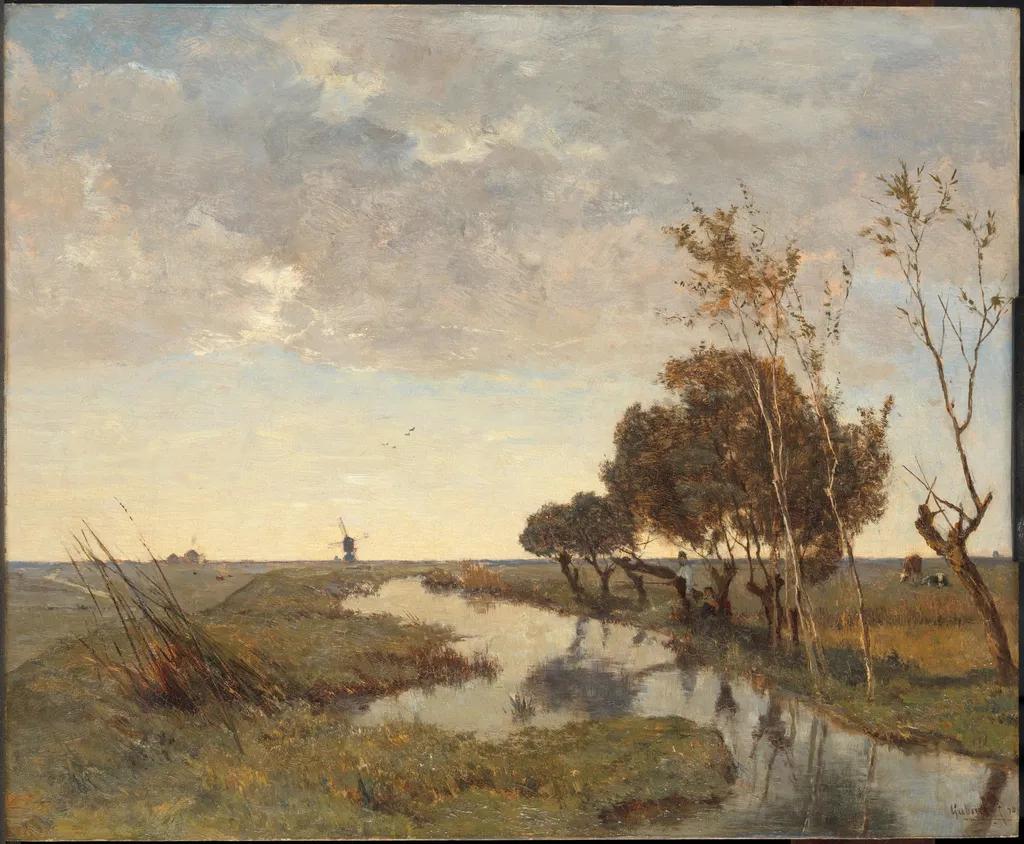
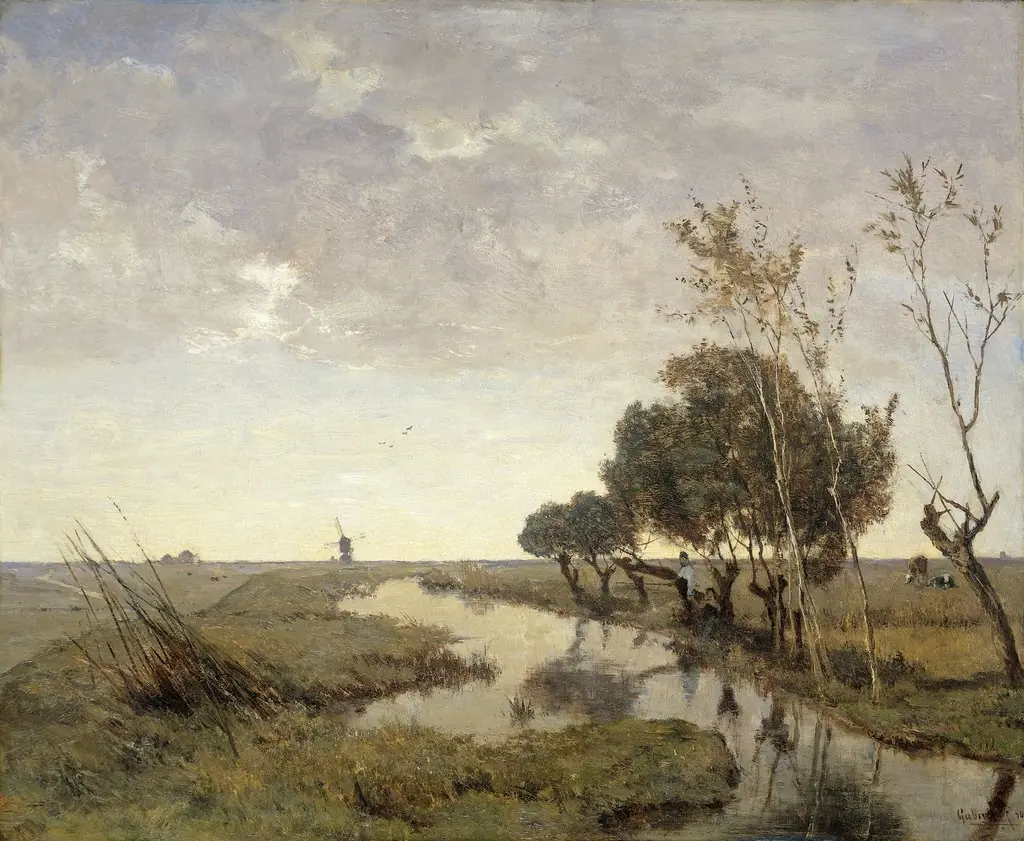
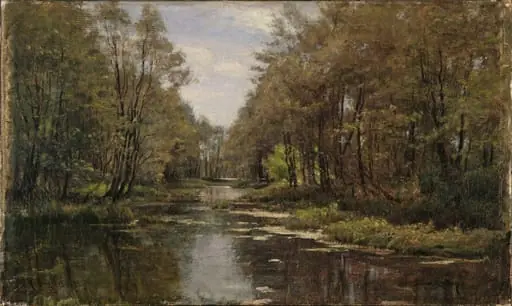
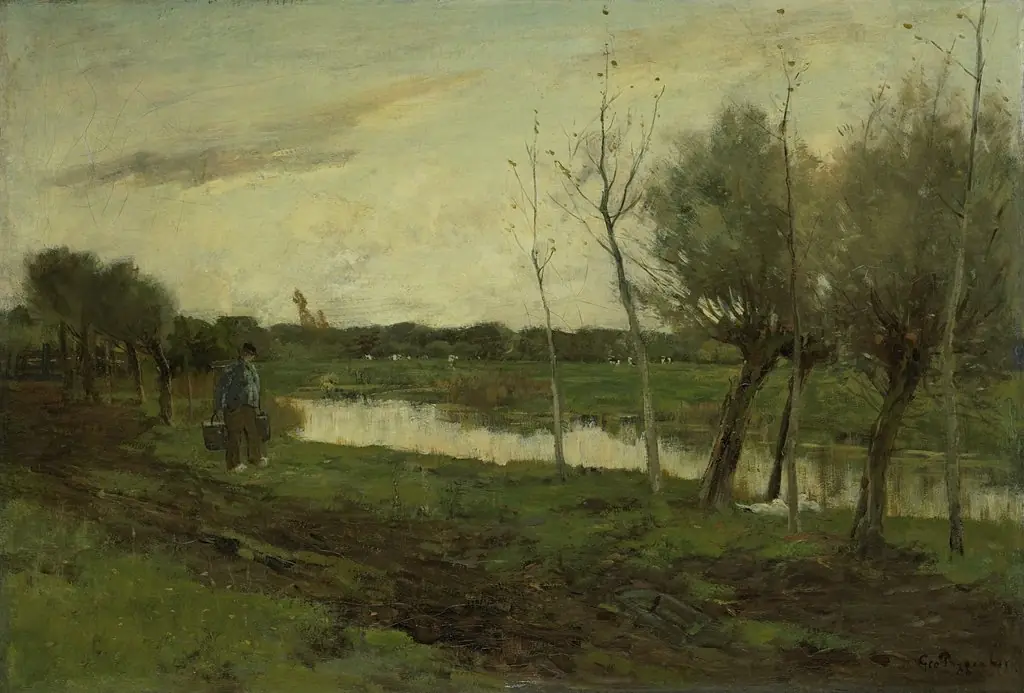
A Watercourse near Abcoude is an unspecified painting by the Dutch Golden Age artist Unknown. It dates from 1878 and is held in the collection of the Rijksmuseum. This undated landscape depicts a quiet watercourse in the polder near Abcoude, a rural area in the Netherlands.
About this work
Overview
The composition focuses on the interplay of water, vegetation, and distant infrastructure, capturing a moment of everyday rural life with minimal intervention.
This undated landscape depicts a quiet watercourse in the polder near Abcoude, a rural area in the Netherlands. The scene is unassuming, with no signature or date, suggesting it may have been a private study rather than a commissioned work. The composition focuses on the interplay of water, vegetation, and distant infrastructure, capturing a moment of everyday rural life with minimal intervention.
Subject & Meaning
A solitary figure fishes along the bank, his presence subtle and unobtrusive, reinforcing the tranquility of the setting. In the distance, a windmill stands as a functional landmark, emblematic of Dutch land management. The pollarded willows—pruned regularly for timber—hint at human adaptation to the wet landscape, not merely decoration but utility embedded in the environment.
Technique & Style
The brushwork is swift and fluid, suggesting the painting was completed in a single session, likely en plein air. Forms are suggested rather than meticulously rendered, with loose strokes defining water, foliage, and sky. The palette is restrained, dominated by muted greens, browns, and grays, enhancing the quiet, atmospheric tone without dramatic contrast or embellishment.
History & Provenance
The painting’s origins are undocumented, with no known record of its early ownership or exhibition history. Its anonymity aligns with many Dutch 17th-century landscape studies, often created for personal use or local trade. It entered the Rijksmuseum’s collection without a known provenance trail, typical of works acquired from regional collections or estate sales.
Context
In the 17th century, Dutch artists increasingly turned to local topography as subject matter, reflecting civic pride and a growing interest in the engineered landscape. Polders, canals, and pollarded trees were not merely scenery but symbols of human mastery over nature. This work reflects that cultural shift, portraying utility and serenity as inseparable.
Legacy
Though unsigned and unremarkable in scale, the painting exemplifies a quiet tradition of Dutch landscape observation. Its unpretentiousness and attention to ecological detail influenced later generations of artists who valued everyday scenes over grand narratives. Today, it remains a quiet testament to the aesthetic value of ordinary rural life in the Netherlands.
Artist & collection

 Domestic Scene
 Giacomo and Cardinal Marco, investing Andrea, Abbot of San Zeno, with his Benefice
 The Nymph of Fontainebleau
 Portrait of a Woman
 Madonna and Child with Saints in the Enclosed Garden
 Venus and Minerva
 Family Group of Four on Sofa
 Wall painting from Room H of the Villa of P. Fannius Synistor at Boscoreale