Artwork
Adoration of the Magi
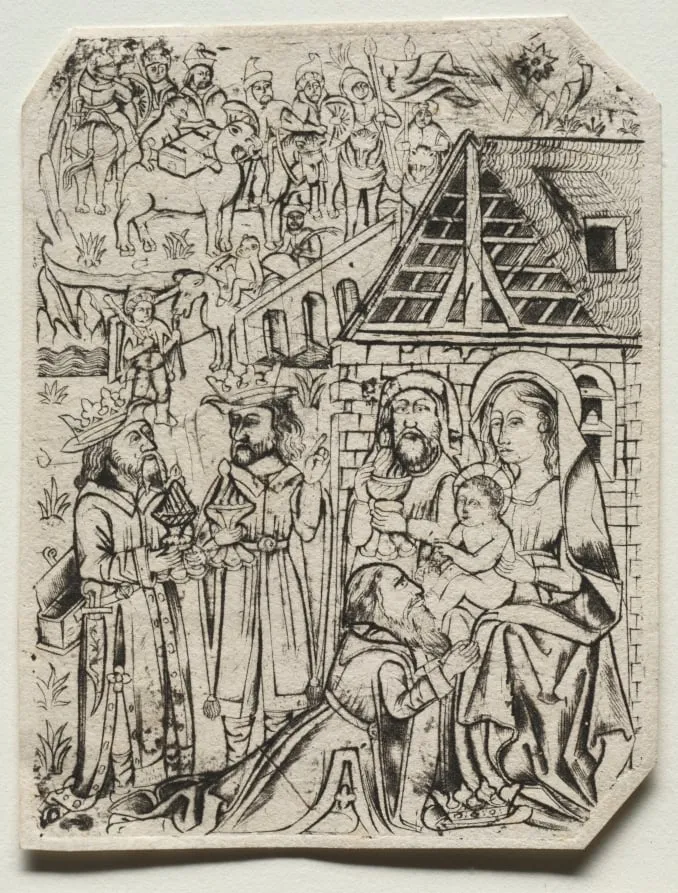
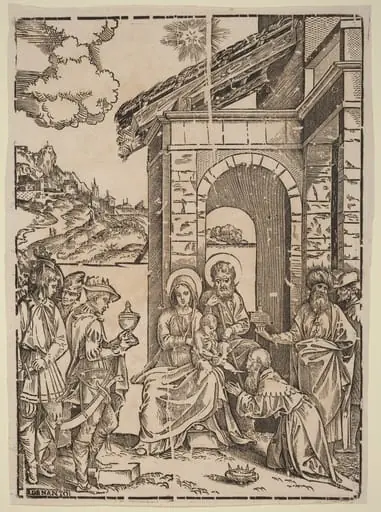
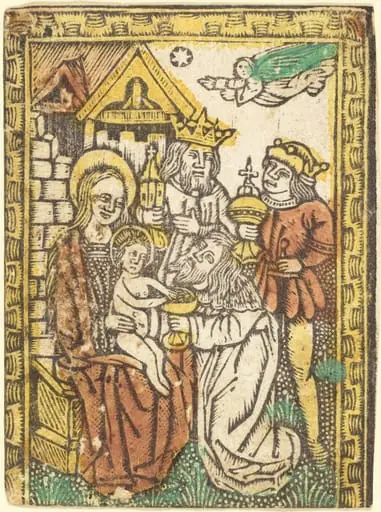
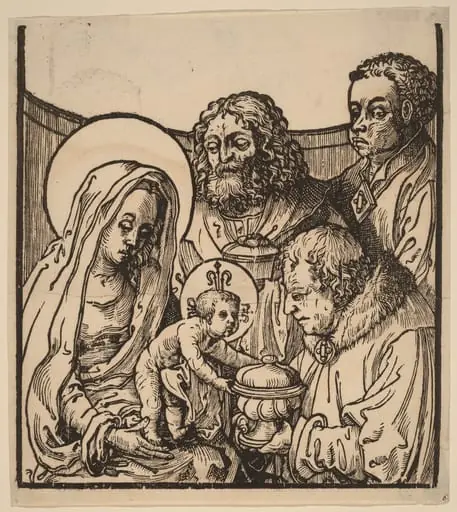
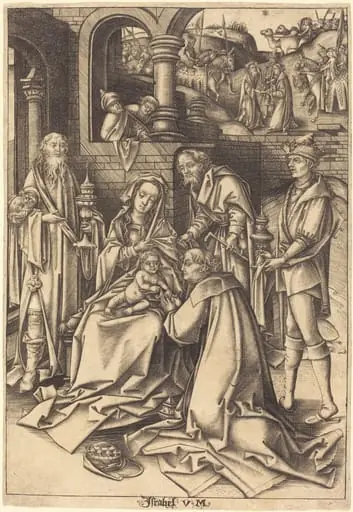
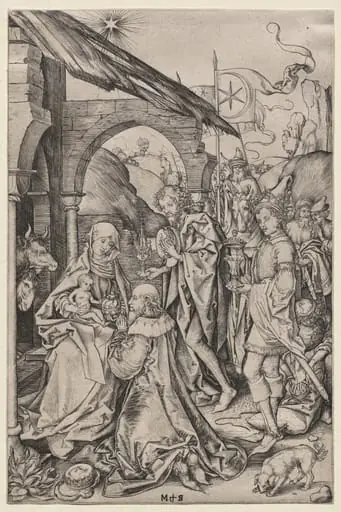
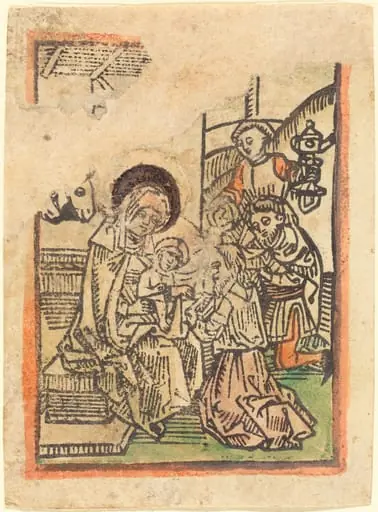
Adoration of the Magi is a print by the Renaissance artist Unknown. It dates from 1404 and is held in the collection of the Cleveland Museum of Art. This print depicts the biblical moment when the Magi present gifts to the infant Jesus, accompanied by the Virgin Mary.
About this work
Overview
This print depicts the biblical moment when the Magi present gifts to the infant Jesus, accompanied by the Virgin Mary.
This print depicts the biblical moment when the Magi present gifts to the infant Jesus, accompanied by the Virgin Mary. The composition centers on a modest structure housing the central figures, while a lively outer scene includes onlookers, animals, and a ladder, suggesting a bustling, multi-layered event. The visual language is linear and simplified, typical of early printed images intended for wide dissemination.
Subject & Meaning
The scene illustrates the Adoration of the Magi, a traditional Christian narrative in which three wise men honor the newborn Christ. The presence of gifts—gold, frankincense, and myrrh—symbolizes Christ’s kingship, divinity, and mortality. The inclusion of diverse figures and animals underscores the universal significance of the event, extending beyond elite viewers to common audiences.
Technique & Style
Executed in a clear, linear style, the print relies on bold outlines and minimal shading to define forms. Figures are arranged with symbolic rather than naturalistic spatial depth, emphasizing narrative clarity over realism. The use of woodcut or engraving techniques allowed for multiple impressions, making the image accessible to a broader public during a period of growing print culture.
History & Provenance
This print likely originated in the late 15th or early 16th century, a time when religious imagery was mass-produced in Europe. Though the specific artist or workshop is unconfirmed, similar compositions were common in German and Netherlandish print shops. Its survival in multiple copies suggests it was widely circulated, possibly for devotional use in homes or churches.
Context
Produced during the Northern Renaissance, this print reflects the era’s blend of religious devotion and emerging secular print markets. While Italian artists emphasized perspective and anatomy, Northern creators prioritized detailed storytelling and symbolic clarity. Such prints served both spiritual and educational roles, reinforcing biblical narratives for audiences with limited literacy.
Legacy
This print exemplifies how religious themes were adapted for mechanical reproduction, influencing later devotional imagery. Its compositional simplicity and focus on narrative made it a model for subsequent generations of printmakers. Though overshadowed by larger painted altarpieces, such works played a vital role in shaping popular religious visual culture across Europe.
Artist & collection

 Domestic Scene
 Giacomo and Cardinal Marco, investing Andrea, Abbot of San Zeno, with his Benefice
 The Nymph of Fontainebleau
 Portrait of a Woman
 Madonna and Child with Saints in the Enclosed Garden
 Venus and Minerva
 Family Group of Four on Sofa
 Wall painting from Room H of the Villa of P. Fannius Synistor at Boscoreale
![The Birth of Christ [verso], by German 16th Century](https://artifactworldgallery.com/img/german-16th-century--the-birth-of-christ-verso--76b597791431f5d1-w320.webp)