Artwork
The Adoration of the Magi
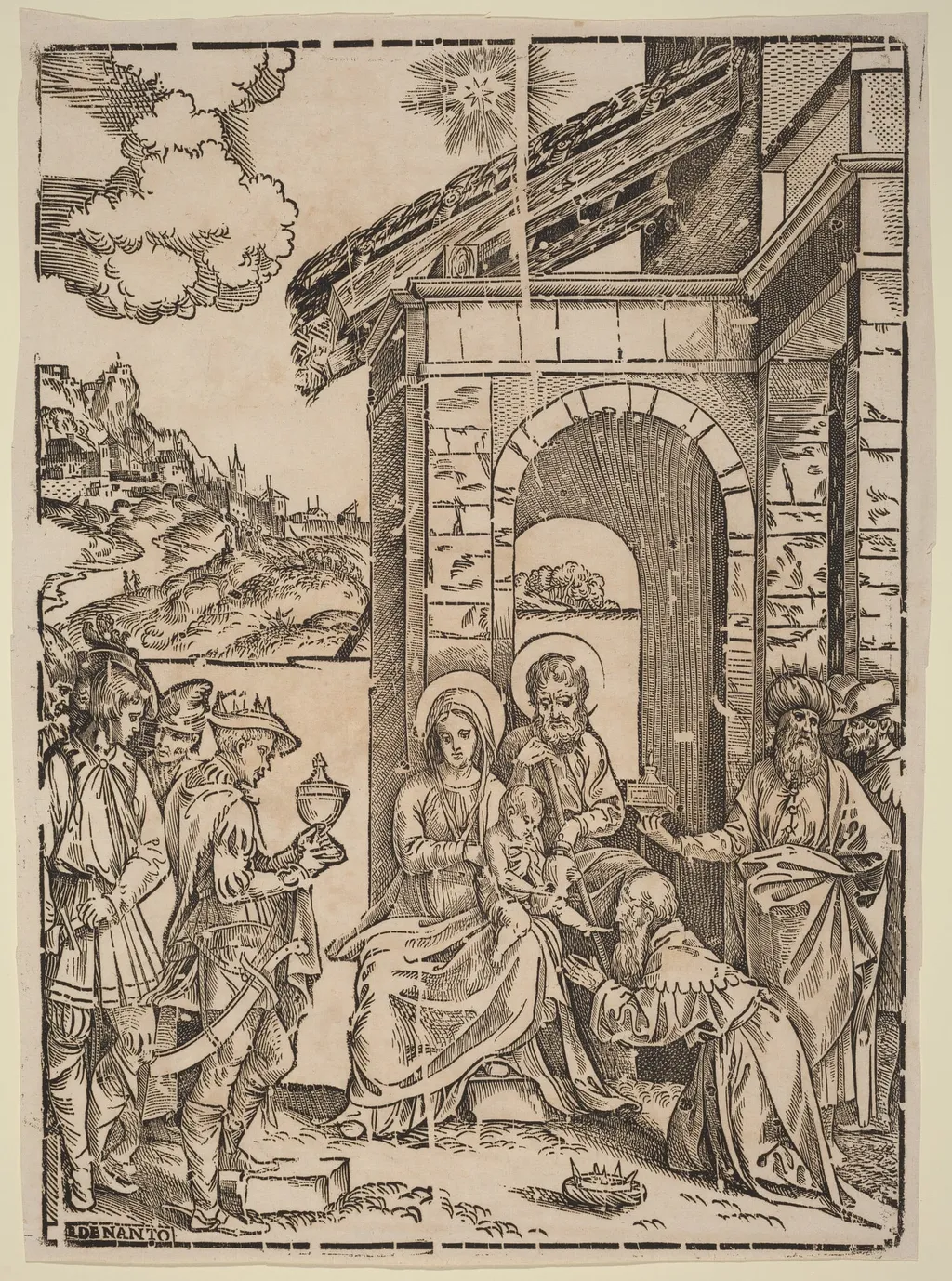
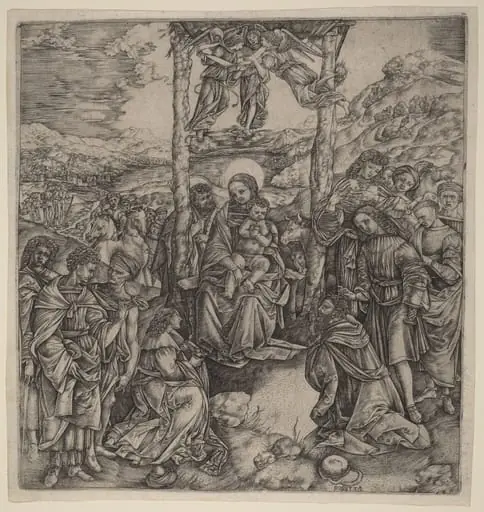
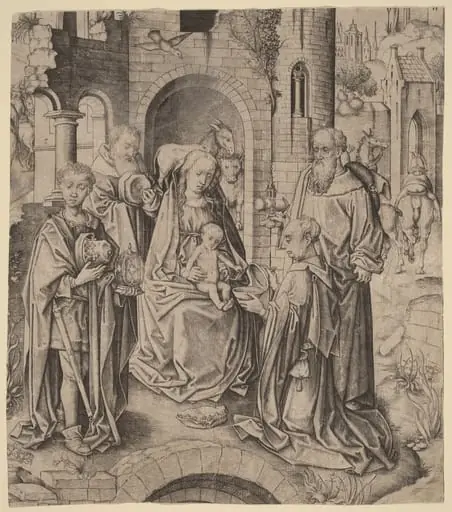
The Adoration of the Magi is an ink print by the Renaissance artist Francesco Denanto. It dates from 1522 and is held in the collection of the National Gallery of Art.
About this work
Overview
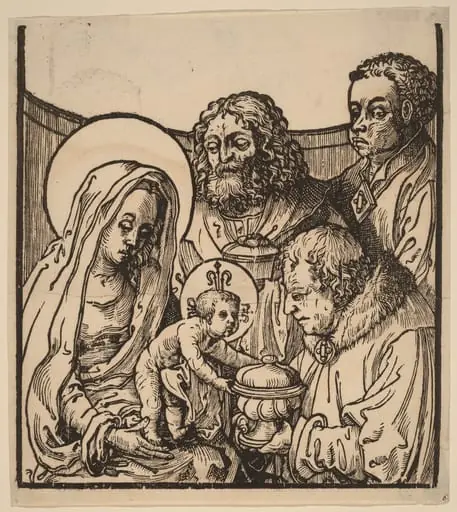
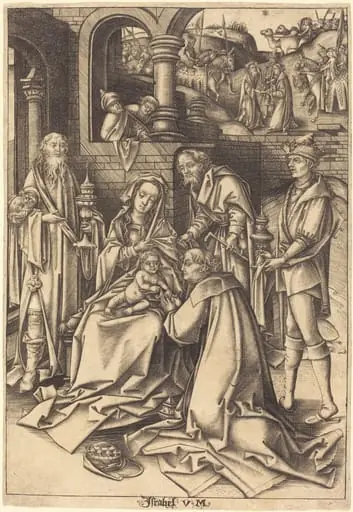
Francesco Denanto’s 1522 woodcut presents the biblical episode of the Adoration of the Magi. Executed as a single‑sheet print, the image captures the moment when the three wise travelers kneel before the infant Jesus, who is cradled by Mary. The composition is framed by an architectural backdrop that adds spatial depth to the devotional scene.
Subject & Meaning
The work illustrates the traditional narrative of the Magi offering tribute to the newborn Christ, emphasizing themes of reverence and the recognition of divine kingship. The three figures are shown in richly patterned garments, each bearing a symbolic gift that underscores their status and the universal acknowledgment of the infant’s significance.
Technique & Style
Denanto employed the woodcut medium, carving the design into a block of wood and printing it in black ink on paper. The linear quality of the medium yields crisp outlines and a stark contrast between light and shadow, while the intricate detailing of the robes and architectural elements demonstrates the high level of craftsmanship typical of early 16th‑century printmaking.
History & Provenance
Created in 1522, the print is attributed to the Italian engraver Francesco Denanto, an artist active during the High Renaissance. Surviving copies are held in several European print collections, indicating that the image was circulated among collectors and devotional practitioners shortly after its production.
Context
The Adoration of the Magi was a popular subject in Renaissance art, reflecting both theological interest and the patronage of wealthy merchants who identified with the traveling wise men. Denanto’s choice of a woodcut format allowed for broader dissemination, aligning with the period’s growing demand for affordable religious imagery.
Artist & collection


 The Adoration of the Magi
 The Adoration of the Magi
 The Adoration of the Magi
 The Adoration of the Magi
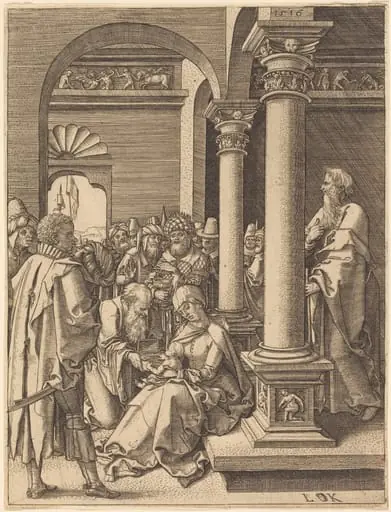
 The Adoration of the Magi
 The Adoration of the Magi
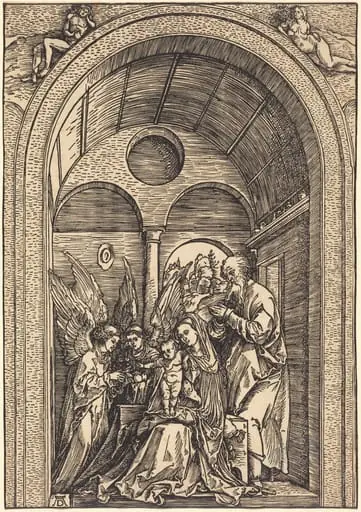 The Holy Family with Two Angels in a Vaulted Hall
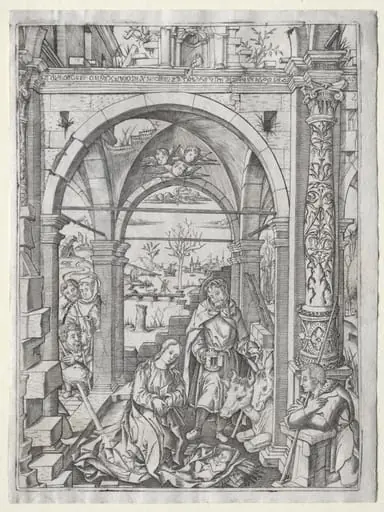 Adoration of the Shepherds
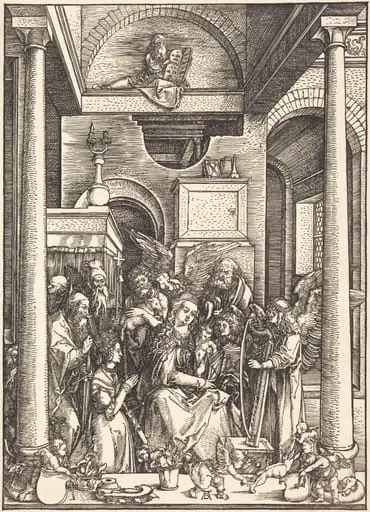 The Glorification of the Virgin
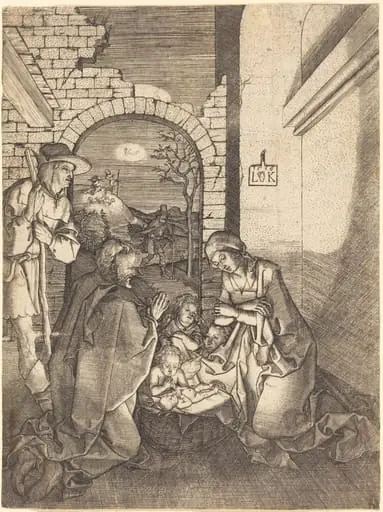 The Nativity
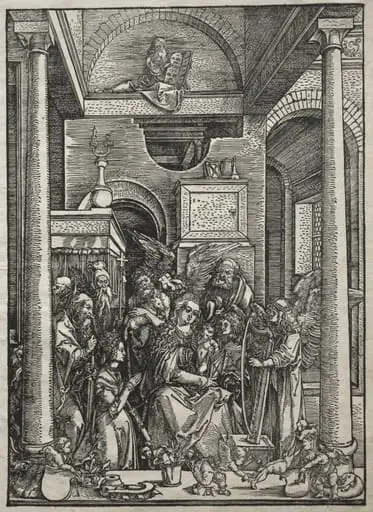 Life of the Virgin: Adoration of the Virgin and Child by Saints and Angels