Artwork
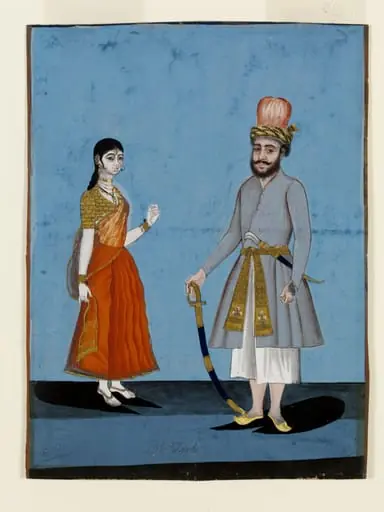
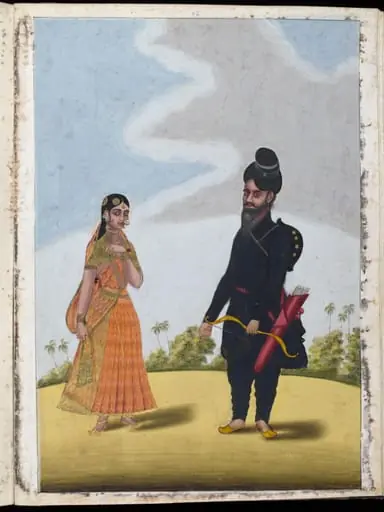
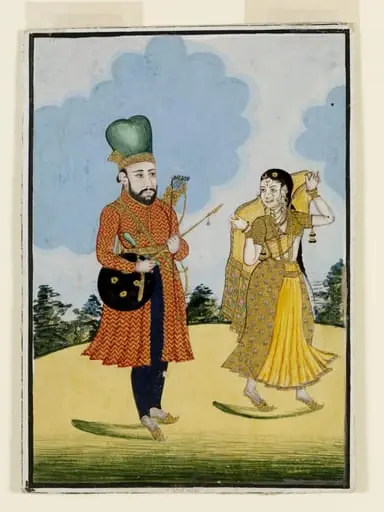
An Arab couple
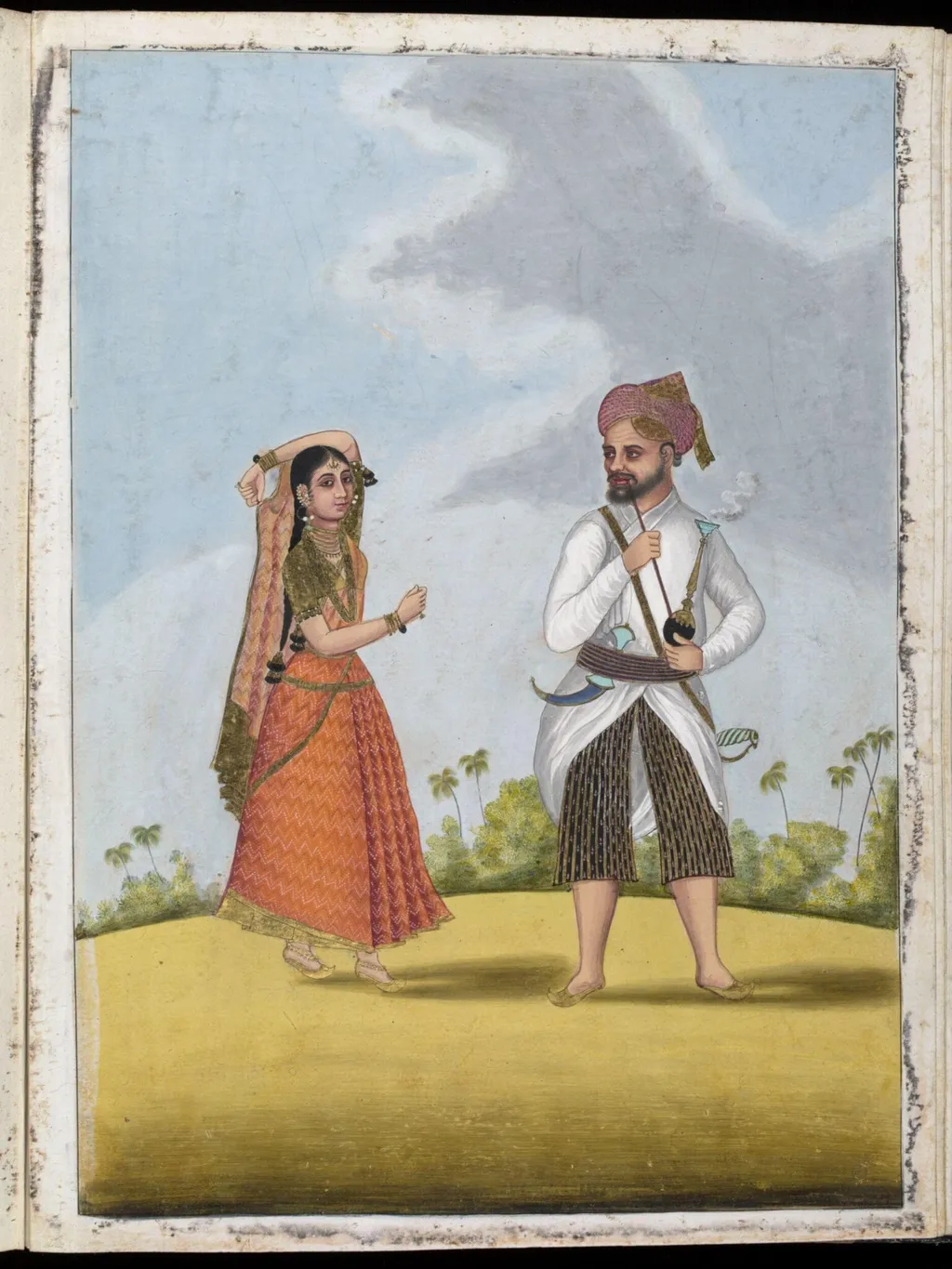
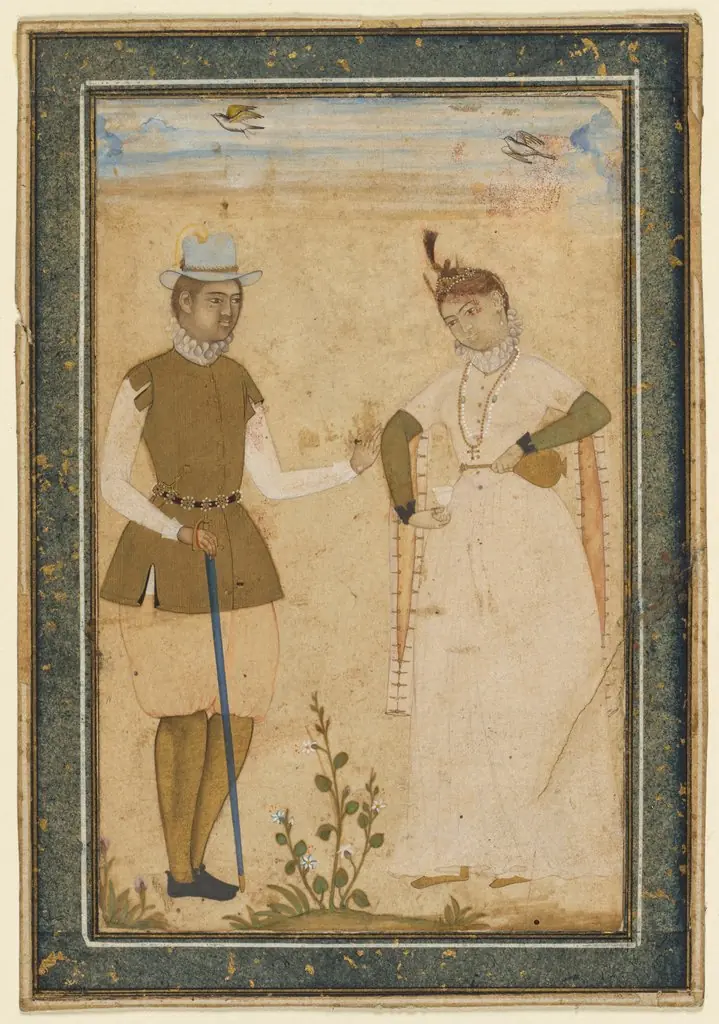
An Arab couple is a paint painting by the Orientalist artist Unknown. It dates from 1805 and is held in the collection of the Victoria and Albert Museum. This 1805 painting is part of a larger album containing 36 scenes documenting regional trades, attire, and daily life.
About this work
Overview
This 1805 painting is part of a larger album containing 36 scenes documenting regional trades, attire, and daily life. It portrays a man and woman in a quiet outdoor setting, their garments and accessories indicating a cultural context from the Middle East or North Africa. The work was likely created to record visual ethnographic detail rather than to convey narrative or mythological themes.
Subject & Meaning
The figures represent a domestic pair, their postures and possessions suggesting social roles rather than specific identities. The man holds a hookah, a symbol of leisure or social ritual, while the woman raises her arm, possibly in gesture or adjustment of her garment. Their presence evokes everyday life, emphasizing dignity in routine rather than spectacle or drama.
Technique & Style
The painting employs soft brushwork and warm, muted tones to create a calm atmosphere. The background features a pale sky with scattered clouds and a row of palm trees, framing the figures without distraction. Details in fabric and posture are rendered with precision, reflecting an observational approach common in ethnographic illustration of the period.
History & Provenance
The work originates from a commissioned album produced around 1805, likely in a region under Ottoman influence or European colonial interest. Such albums were often compiled for European collectors or institutions seeking systematic documentation of non-European cultures. Its current location and ownership history are not widely documented.
Context
Created during a time of increased European interest in the visual cultures of the Ottoman Empire and North Africa, this painting reflects a trend toward ethnographic recording. It aligns with broader efforts to classify and preserve regional costumes and customs, often through the lens of foreign observers rather than local artists.
Legacy
As part of a rare surviving album of its kind, the painting contributes to historical studies of cross-cultural representation. It offers insight into how non-European subjects were visually cataloged during the early 19th century, serving as a document of both cultural observation and the limitations of outsider perspectives.
Artist & collection

 Domestic Scene
 Giacomo and Cardinal Marco, investing Andrea, Abbot of San Zeno, with his Benefice
 The Nymph of Fontainebleau
 Portrait of a Woman
 Madonna and Child with Saints in the Enclosed Garden
 Venus and Minerva
 Family Group of Four on Sofa
 Wall painting from Room H of the Villa of P. Fannius Synistor at Boscoreale