Artwork
A Turkish couple
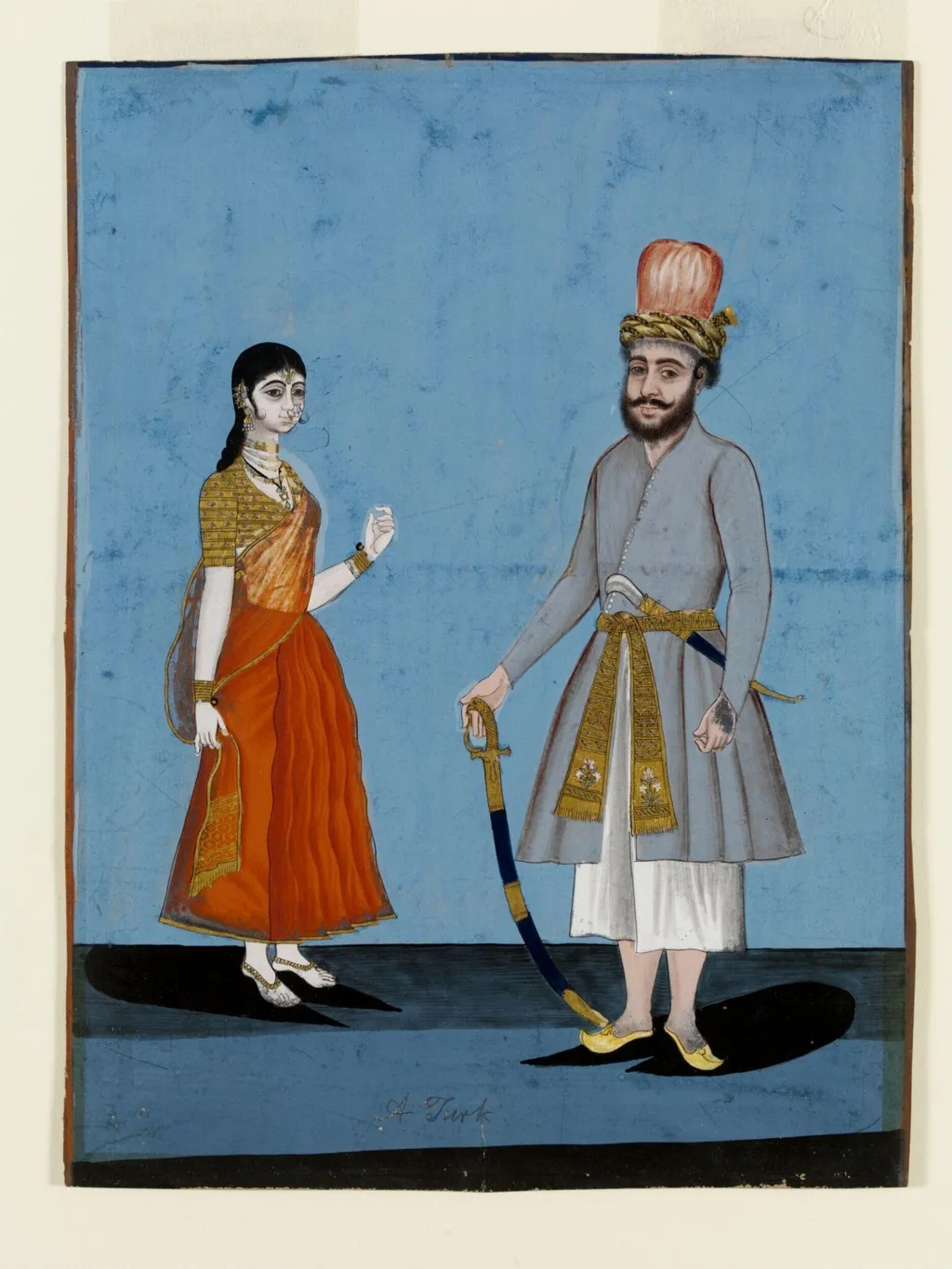
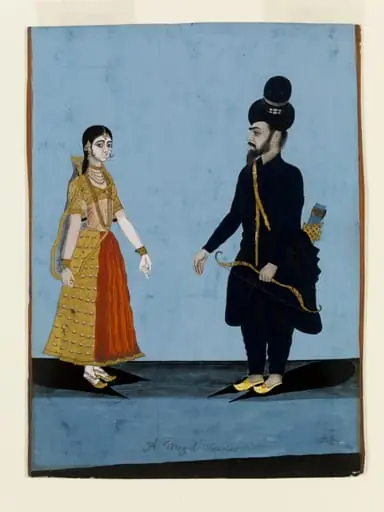
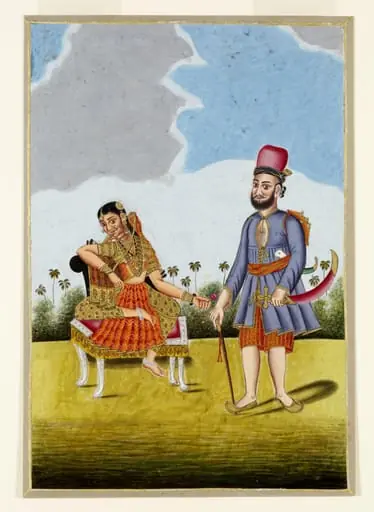
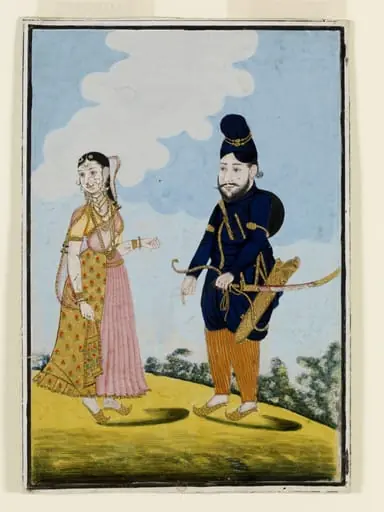
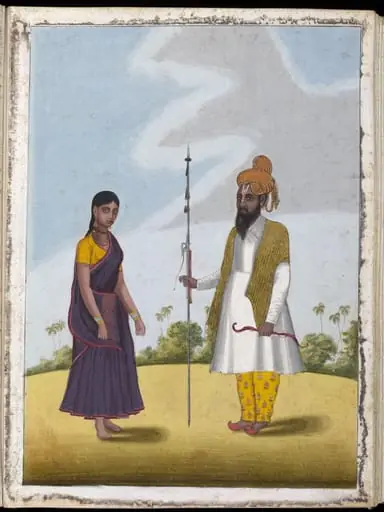
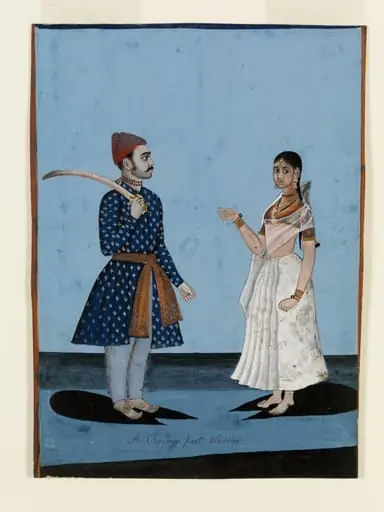
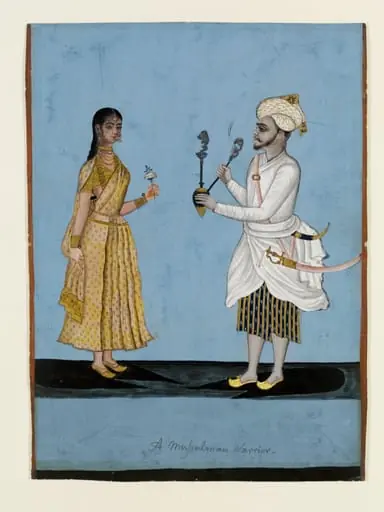
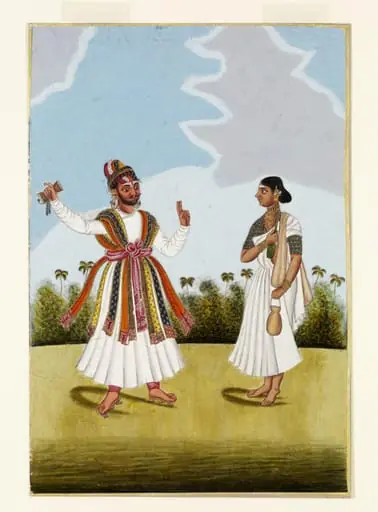
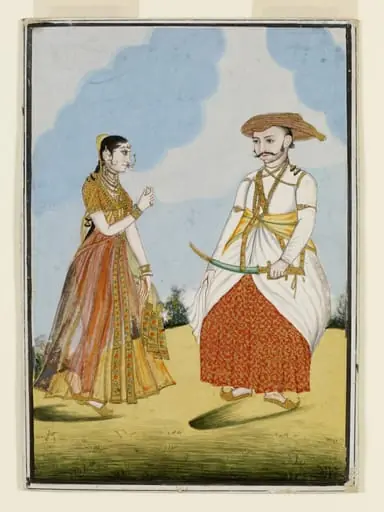
A Turkish couple is a paint painting by the Rococo painting artist Unknown. It dates from 1780 and is held in the collection of the Victoria and Albert Museum.
About this work
Overview
This painting is one of six costume studies depicting figures from Ottoman society, created as part of a systematic visual record of dress and social roles.
This painting is one of six costume studies depicting figures from Ottoman society, created as part of a systematic visual record of dress and social roles. Executed in watercolor or gouache, the work presents a Turkish couple in formal attire, rendered with attention to textile detail and symbolic accessories. The artist, signing as 'A Turk,' likely intended these studies as ethnographic documentation rather than portraiture.
Subject & Meaning
The couple represents a domestic or civic elite, distinguished by their ornate garments and regalia. The man’s tall red hat, gold-trimmed coat, and sword suggest military or administrative status, while the woman’s layered skirts and jewelry indicate wealth and social standing. Their side-by-side posture conveys partnership, reflecting societal norms of gendered roles within Ottoman elite households, without overt narrative or emotional expression.
Technique & Style
The figures are rendered in flat, vivid colors with minimal shading, emphasizing pattern and silhouette over depth. Gold detailing on fabric edges and jewelry is applied with precision, likely using metallic pigments. The dark floor and plain blue background isolate the subjects, focusing attention on costume. The brushwork is controlled and decorative, aligning with 19th-century European traditions of ethnographic illustration rather than fine art portraiture.
History & Provenance
The six drawings were collected and presented to the India Museum by P.F. Campbell-Johnston in the mid-19th century. In 1879, they were transferred to what would become the Victoria and Albert Museum, where they were cataloged in 1880 as two framed sets of colored costume illustrations. Their display in Room 8 suggests they were exhibited as educational material, reflecting Victorian-era interest in imperial cultures and material diversity.
Context
These works emerged during a period when European institutions systematically documented the dress and customs of colonized and allied regions. The Ottoman Empire, though independent, was frequently studied through such visual records. The artist’s self-identification as 'A Turk' raises questions about authorship—whether the maker was Ottoman, European, or a local artist working under foreign patronage—highlighting the complex dynamics of cultural representation at the time.
Legacy
The set remains a valuable resource for scholars of Ottoman material culture, offering insight into textile design, gendered dress codes, and the visual language of status. Though not widely exhibited today, their preservation in the Victoria and Albert Museum ensures continued access for research. They exemplify how costume studies served both anthropological curiosity and imperial documentation in the 19th century.
Artist & collection

 Domestic Scene
 Giacomo and Cardinal Marco, investing Andrea, Abbot of San Zeno, with his Benefice
 The Nymph of Fontainebleau
 Portrait of a Woman
 Madonna and Child with Saints in the Enclosed Garden
 Venus and Minerva
 Family Group of Four on Sofa
 Wall painting from Room H of the Villa of P. Fannius Synistor at Boscoreale